The Moldovan authorities are trying to destroy the last ties with Russia. Analysis

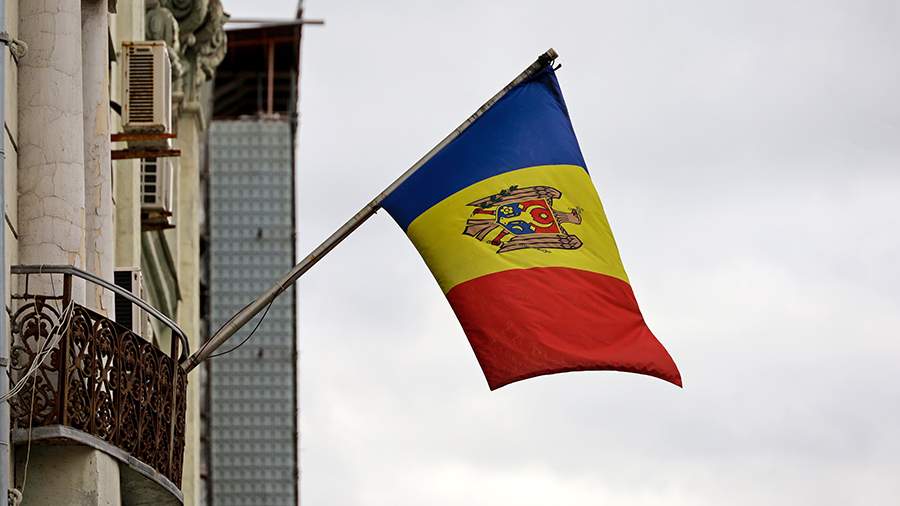
Moldova has denounced the agreement on cooperation with Russia in the field of culture, on the basis of which the Russian House operated in the republic. On December 3, the resolution approved by the parliament was signed by Moldovan President Maia Sandu. What is happening in the republic and why hopes of joining the European Union force Moldova to sever all ties with Russia — in the Izvestia article.
Cleaning up the political field
• The ruling party of Moldova actually received a mandate from repatriates and migrants. The pro-European Action and Solidarity Party (PAS) won the autumn elections in the republic with 50.2% of the vote, which secured a one-party majority in parliament, supported by the President and the Prime Minister. However, the actual support of the PAS in the country is provided primarily by migrants, who brought the party more than half of all the votes it received — 27%.
• Another 17% of the votes in the elections were provided by Moldovan diasporas abroad, with 78.51% of them cast for PAS. Earlier, Moldovan President Maia Sandu was able to retain her post only thanks to votes received from abroad: in fact, this is the only country in Europe where the votes of citizens living abroad play such a big role.
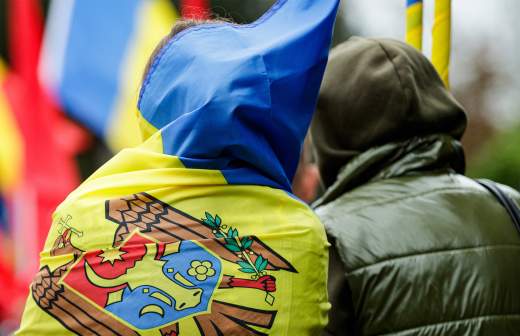
• Chisinau has limited the opportunity for Moldovan citizens in Russia to vote: only 10,000 ballots were allocated to the nearly half-million diaspora. In addition, there were only two polling stations in Russia for Moldovan citizens, and both were in Moscow, while 75 polling stations were open in Italy, where half as many Moldovans live.
• Politicians advocating economic cooperation with Russia were ousted from the political field, subjecting them to prosecution. Two days before the election, Irina Vlah's "Heart of Moldova" party, which was part of a Patriotic bloc advocating maintaining ties with Russia, was withdrawn from participation. Victoria Furtune's "Great Moldova" party was excluded from the race on the actual election day on September 28. The pretext for this decision was to accuse the parties of non-transparent financing.
• The authorities tried to cut off Transnistria from the electoral process, despite the fact that 90% of the inhabitants of the unrecognized republic have Moldovan citizenship. First, the number of polling stations in Transnistria was reduced to 12, then half of them were moved inland. On election day, the repair of bridges across the Dniester River began, which further complicated access to polling stations for voters, and police searches of all those leaving Transnistria were tightened (we told you more about how the election campaign in Moldova took place here).
• Despite the obstacles, the Patriotic Bloc, which includes the Party of Socialists, led by former President Igor Dodon, received significant support within the country — 24.2% of the votes were cast for it. Also, unexpectedly for observers, support for the right—wing populist party associated with the Romanian nationalists doubled in the republic - 5.62% voted for the political party Democracy at Home.
Weak economy
• Moldova is considered one of the weakest economies in Europe due to its dependence on the agricultural sector and the food industry. Agriculture accounts for 14.3% of GDP, and food production accounts for a quarter of the entire Moldovan industry. These are quite vulnerable sectors of the economy, where the income level depends on weather conditions. One tenth of the Moldovan GDP is made up of income from citizens working abroad.
• In terms of energy security, Moldova is one of the most vulnerable countries in Europe, as it is completely dependent on imports of gas, petroleum products and coal. The country suffered greatly from the forced abandonment of Russian gas, which affected the volume of industry. At the same time, its carbon footprint is six times higher than the average for the European Union, which means that in 2026, when EU trade duties related to coal emissions come into force, Moldova's economy may again be under attack.

• The country will need significant investments to make a "green transition" to renewable energy sources. The EU has already announced significant investments in the Moldovan economy, but the European Union is linking its financial assistance in the form of concessional loans with the implementation of reforms, and for their implementation a one-party majority in parliament was needed. By the end of 2024, Moldova's public debt amounted to 38.5% of GDP: it is expected to reach 43% by 2026.
• Weak support for the ruling party within the country is explained by the fact that it has not fulfilled its promises to the population: rising wages could not protect against record inflation, and the forced abandonment of Russian energy sources further increased the burden on citizens who have to pay exorbitantly for electricity from EU countries. Social payments helped to mitigate the increase in tariffs, but starting in 2026, Chisinau will abandon this support measure: now the compensation will apply only to heating and will become targeted. The EU is not very happy with Sandu's government either, as she failed to implement the promised reforms during her first term.
Persecution of Russian culture
• Against this background, Moldova denounced the agreement with Russia on the establishment and operation of cultural centers. The denunciation will lead to the closure of the Russian Center for Science and Culture, which has been named the Russian House — it will complete educational and cultural activities in the republic by July 4, 2026. The Russian Foreign Ministry called the denunciation of the agreement another step aimed at destroying centuries-old Russian-Moldovan ties.
• For a long time, Russian in Moldova retained the status of the language of interethnic communication, but in 2018 the law was declared obsolete. In 2020, at that time, the President of the republic, Igor Dodon, signed a law on the return of the status of the Russian language, but when the country was led by Maya Sandu, the law was declared unconstitutional. Currently, Russian has no official status and is not protected in any way in Moldova, where Romanian is the official language.
• Economic ties between Chisinau and Moscow are weakening, but Moldova continues to import certain goods from Russia. Nevertheless, experts do not rule out that Chisinau's next step will be a decision to withdraw from the Commonwealth of Independent States.
During the preparation of the material, Izvestia interviewed:
- Head of the Ukraine Department of the Institute of CIS Countries, political scientist Ivan Skorikov;
- Boris Kuznetsov, Director of the Center for International and Regional Policy in St. Petersburg.
Переведено сервисом «Яндекс Переводчик»
