Russia has developed an autonomous minibus with artificial intelligence


Navio technology company has introduced the L5 autonomous shuttle in Russia, which runs on electric power and has a modular interior architecture. It is intended for passenger transportation both as a city shuttle and as a transfer at airports, campuses or resort areas. This is stated in the company's message, which was received by Izvestia on November 19.
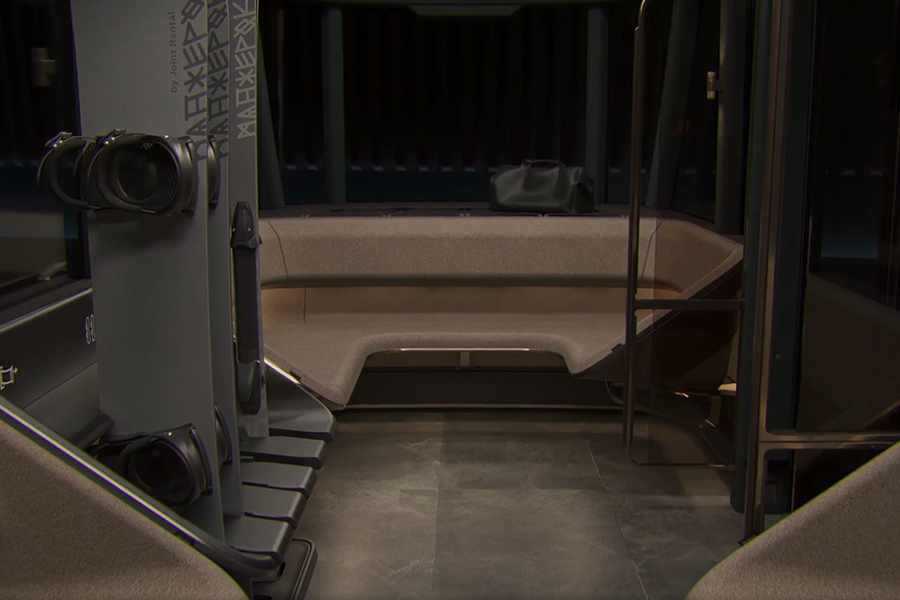
Despite its compact exterior dimensions, the shuttle can accommodate up to 36 passengers. It is possible to transform the interior space. The Navio L5 does not have a driver's seat, it is controlled by a system controlled by generative artificial intelligence, which complies with traffic regulations and makes safe maneuver decisions. It is stated that the shuttle is fully ready to integrate an automated driving system corresponding to the SAE (Society of Automotive Engineers) classification level 5.
It is noted that in 2025, Navio began a technological transition in the development of autonomous vehicles from the traditional algorithmic approach to the use of generative artificial intelligence (GenAI). One of the key planned stages is the integration of VLA models (Vision—Language-Action), thanks to which autonomous vehicles will be able to understand the world around them: they see the whole scenario, connect it with the context and are able to interpret meanings like a human.
During the tests of the autonomous system in the photorealistic simulator, it is planned to fill in the AI driver's skill segments - a complete list of functions that a person performs behind the wheel of a car, as well as teach the model to make the right decisions in rare and critical scenarios.

Earlier, on November 17, it was reported that the Russian government adopted a decree extending the experimental legal regime (EPR), which allows unmanned trucks to drive on public roads, until 2028. Innovations have appeared in the EPR — the movement of "highly automated vehicles" (VATS) has become possible without the presence of a person in the cabin.
All important news is on the Izvestia channel in the MAX messenger.
Переведено сервисом «Яндекс Переводчик»
