The expert spoke about the benefits for Russia from oil supplies to Serbia and Hungary.
- Новости
- Economy
- The expert spoke about the benefits for Russia from oil supplies to Serbia and Hungary.

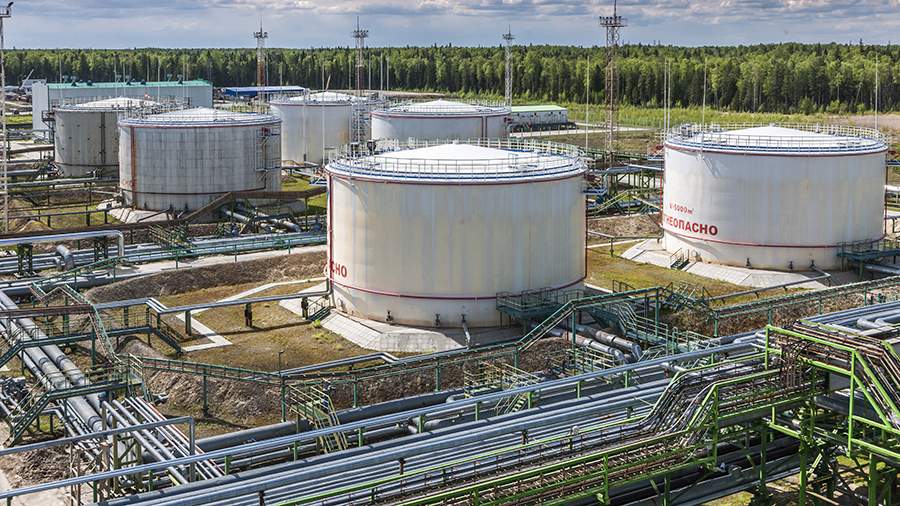
Hungary, Serbia and Russia have agreed to build a new oil pipeline that will connect the two countries and ensure uninterrupted supplies of Russian oil. This project may affect both the balance of power in the European energy market and the structure of fuel prices. Maxim Chirkov, Associate Professor of the Department of Economic Policy and Economic Measurements at GUU, told Izvestia about this on July 24.
"Of course, Russia's position in the European energy market will strengthen. Although, again, it is possible that there may be counteractions from the European Union," the expert noted.
According to Chirkov, the implementation of the project will lead to an increase in Russian oil supplies and increase the economic dependence of the countries through which the pipeline will pass. He noted that this would provide additional income for both Russia and Serbia and Hungary. According to the expert, by reducing energy costs, these countries will be able to increase their competitiveness compared to other EU countries.
The economist pointed out that the construction of pipelines provides Russia with sustainable logistical advantages, since pipeline transport remains cheaper and more competitive regardless of weather conditions or geopolitical constraints. This, in his opinion, promises positive consequences for the country.

Chirkov also noted that the project could become a source of economic discord within the European Union. At the same time, according to the expert, the tension is likely to come not from citizens, but from political elites, who, according to him, have driven their countries into a Western-centric model of isolation. At the same time, Hungary and Serbia, having access to cheaper energy resources, will be able to win competition in pan-European markets, which, according to the expert, will cause discontent in the leadership of other EU countries.
"In Europe, the construction of such pipelines will have a positive impact, well, for these countries, of course. But if we talk about Europe as a whole, there will be a very serious upset in different Eurasian countries, that is, countries that receive the Russian measure — fuel prices there will certainly be relatively low. Those countries that do not receive the measure will certainly be relatively high and will grow faster. Fuel prices depend on the cost of oil, the cost of refining oil, and the forecast of supplies. In this case, if we take Europe as a whole, the countries will differ greatly in fuel and energy prices," Chirkov added.
He stressed that this will be especially noticeable in Serbia and Hungary: in these countries, the trend towards lower costs will increase, primarily in the energy sector. It is mainly about fuel, but other types of energy, according to him, will also cost less than in other EU countries.
Hungarian Minister of Foreign Affairs and Foreign Economic Relations Peter Szijjarto announced on July 21 that Hungary, Serbia and Russia had discussed the construction of a new oil pipeline to supply oil from Russia.
Before that, in April, he announced that the construction of the oil pipeline between Hungary and Serbia would be completed in 2028. Szijjarto stressed that through this oil pipeline Hungary will be able to provide raw materials to the Serbian oil refinery in Pancevo, which plays a key role in the country's energy supply.
All important news is on the Izvestia channel in the MAX messenger.
Переведено сервисом «Яндекс Переводчик»
