Forces on the water: Faroes threaten Russian fishing in the Atlantic


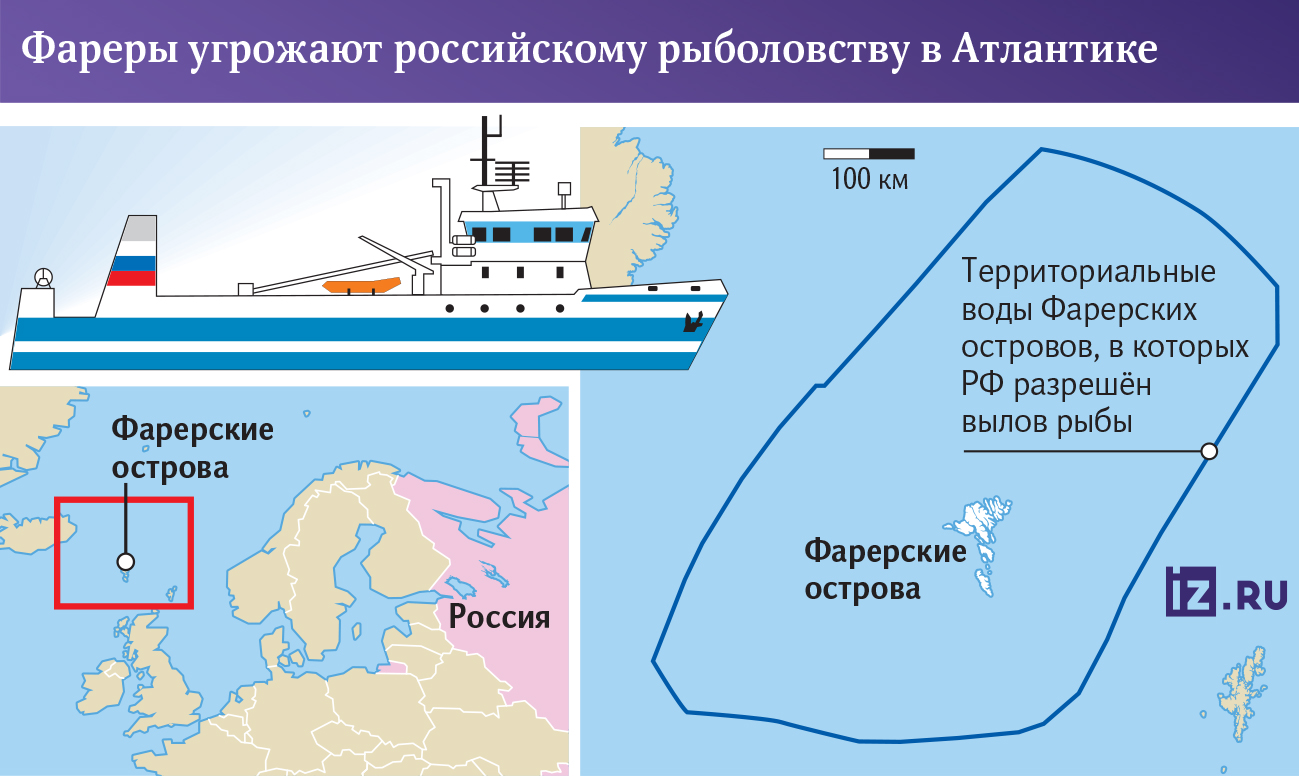
The authorities of the Faroe Islands are calling for the complete curtailment of cooperation with the Russian Federation, and Russian vessels are discriminated against in violation of the agreement in force since 1977, Ambassador to Denmark Vladimir Barbin told Izvestia. Danish autonomy is important for Russia primarily as a transshipment base: our trawlers use local ports for transshipment of catch and supplies. Currently, according to Izvestia, preparations are underway for the 49th meeting of the Joint Russian-Faroese Fisheries Commission, which may take place as early as December. At the same time, the Faroese government is promoting a law giving them the right to impose sanctions against Russian fishing companies. Such restrictions could derail the extension of the agreement and deal a blow to bilateral relations and trade.
Faroe Islands tighten rules for Russian courts
For almost half a century, the Faroe Islands— an autonomous part of Denmark, have served as a key transshipment base for our ships in the North Atlantic. However, in recent years, the authorities of the autonomous region have been step by step tightening the regime for vessels flying the Russian flag.
The government of the autonomous Republic is increasingly calling for a complete curtailment of cooperation with the Russian Federation and getting rid of dependence on its market, Russian Ambassador to Denmark Vladimir Barbin told Izvestia.
— Russia's cooperation with the Faroe Islands is going through a difficult time today. Restrictions are being imposed on our fishermen. Today, only those vessels that are involved in the implementation of the agreement on fisheries relations in force since 1977 have permission to enter Faroese ports and receive services there. However, even in this case, the crews of our ships are discriminated against, they are forbidden to leave the port territory," the ambassador said.
For almost half a century, the Faroe Islands have been an important transshipment and service base in the North Atlantic for Russia. In addition, according to the agreement, our vessels receive the right to catch blue whiting, mackerel and herring in the Faroe Islands, which expands fishing opportunities. At the same time, the port infrastructure of the Faroe Islands makes it possible to service and repair Russian vessels. But on July 5, 2022, cooperation began to decline.
The island authorities have closed ports to all Russian-flagged vessels, making an exception only for fishing vessels. A year later, this measure was extended to those that do not fish strictly within the framework of a bilateral agreement. From now on, actions in the port are limited to changing the crew, bunkering, delivering supplies, unloading and reloading the catch.
The Ministry of Foreign Affairs of the Faroe Islands is not considering changes to the terms of cooperation in the near future.
— In accordance with the legal framework in force in the Faroe Islands, fishing vessels flying the flag of the Russian Federation can enter Faroese ports if they have a license issued under the bilateral fisheries agreement between the Faroe Islands and the Russian Federation, subject to compliance with a number of additional requirements, for example, regarding catch on board, — reported "Izvestia" in the Foreign Ministry.
In their approaches to foreign policy issues, the Faroe Islands are guided by the NATO and EU states and strive to pursue a similar policy towards Russia, Barbin stressed. As part of the 17th package of sanctions, on May 20, 2025, the European Union imposed sanctions on Russian fishing companies operating in the northern seas - Norebo JSC and Murman Seafood. On July 7, Norway joined these restrictions, which, like the Faroe Islands, is not a member of the European Union. The reason for the sanctions were accusations of the alleged involvement of Norebo and Murman Seafood in espionage and "hybrid activities."
— In this regard, the Government of the Faroe Islands has pushed through parliament the adoption of a bill allowing it to impose sanctions against Russian companies. The decision was not made unanimously," the diplomat stressed.

Opponents of such innovations pointed out their destructive nature for the economy of the autonomous region, as well as the fact that no evidence of the involvement of Russian companies in any activity other than fishing was presented, the Russian ambassador said. All charges are based on the assessments of the special services of both Norway and the EU authorities, but have not been confirmed by court decisions or an independent investigation.
"All these points jeopardize the agreement on mutual relations in the field of fisheries of 1977 and may lead to the final destruction of the constructive relations that have developed between Russia and the Faroe Islands for many decades," Barbin said.
Both Norebo and Murman Seafood have fishing licenses in the Faroe Islands. According to the Faroese State Maritime Agency, 28 Russian vessels have fishing licenses in the waters of the autonomy, which is the largest foreign fleet in the waters. Melkart-2, a Murman Seafood company vessel, is also on this list. In 2023, two more vessels of the same company, Melkart—3 and Melkart-5, unloaded more than 360 tons of fish in the Faroe Islands.
Nevertheless, this did not stop the Faroese government from continuing its course of worsening relations with Russia. A final vote on the bill was scheduled for December 2.
The Faroes are suffering losses
The agreement between Russia and the Faroe Islands has been extended annually since 1977. The date of the 49th session of the Joint Russian-Faroese Fisheries Commission has not yet been determined this year, but the parties are in contact on this issue, the Ministry of Fisheries of the Faroe Islands told Izvestia.
— Meetings of the Russian–Faroese fishing commission usually take place in late November or early December. However, this year it is expected that the negotiations will take place later than usual due to the postponement of the meeting of the Joint Norwegian-Russian Fisheries Commission, the ministry said.
For several years in a row, there has been a risk that the agreement between the Russian Federation and the Faroe Islands will not be extended due to the policy of autonomy itself, says Nikita Lipunov, a junior researcher at MGIMO. This can have negative consequences for both sides.
According to the 1977 agreement, the Faroe Islands receive quotas from our country for fishing cod, haddock, flounder and northern shrimp in the Russian part of the Barents Sea, which gives their fleet access to one of the richest fishing areas in the world. In addition, the agreement supports Faroe Islands' stable trade relations with the Russian market and the utilization of local processing facilities. If in 2021 24% of Faroese exports went to Russia, then in 2025 - 8%, Barbin said.
The analysis of the Danish National Bank for 2024 showed that Russia remains one of the largest markets for Faroe Islands. After a sharp drop in 2022, exports to Russia increased again, and if we exclude salmon, then fishing supplies have approximately returned to their previous level. At the same time, the document emphasized that Russia remains the main buyer of Faroese herring and mackerel, which are difficult to reorient to other markets.

Not only export companies, but also ports are suffering from the deterioration of ties. The University of the Faroe Islands directly reported in its report that restrictive measures against Russia have led to a sharp decrease in the activity of our vessels in these waters.
This affected the sectors of the economy that supplied the Russian fleet in the North Atlantic. We are talking about the maintenance of ships in the harbors of the Faroe Islands. In this case, the sanctions that may be imposed against Norebo and Murman Seafood will only worsen the situation.
"If the Faroes do agree to include these companies in the sanctions list, then it is likely that the bilateral commission will not be able to agree on fishing quotas for next year and thus extend the agreement," Lipunov said.
At the same time, there are not many alternative locations for overloading the catch, the expert says. If the Faroese ports become inaccessible to our fishermen, then the vessels will either have to return to the Russian ones or carry out transshipment directly at sea, and this carries certain risks, unnecessary time and financial costs.
Переведено сервисом «Яндекс Переводчик»
