Scientists talked about the role of Australopithecus Afarensis in the origin of man
- Новости
- Science and technology
- Scientists talked about the role of Australopithecus Afarensis in the origin of man

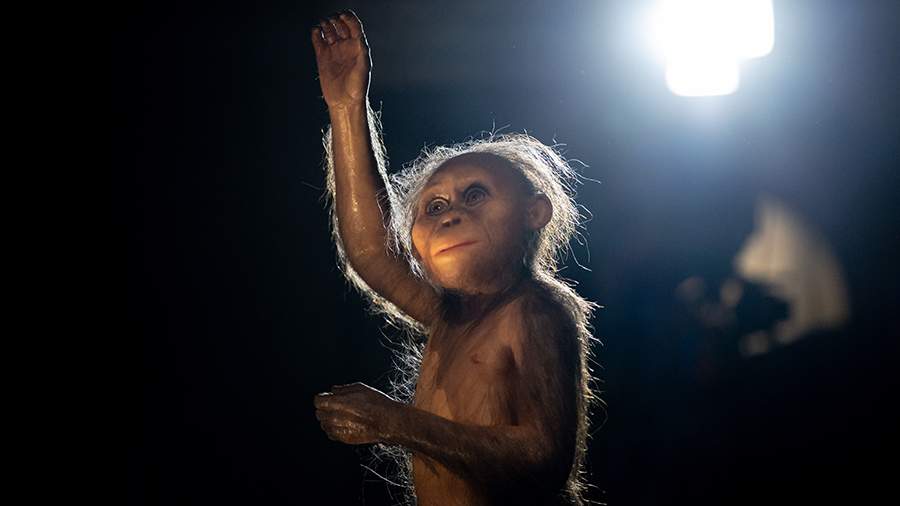
Scientific evidence from the last decade continues to correct the classical model of human origin. Australopithecus Afarensis, the species to which the legendary Lucy belonged, discovered in 1974, was for decades considered the ancestor of all late hominins and a key link on the way to the genus Homo. However, new findings in northern Ethiopia cast doubt on this conclusion. This was announced on November 26 by the Natural History Museum (NHM).
Fresh materials from the Burtele and Vaitileita regions in northern Ethiopia confirm the existence of an independent species, Australopithecus deyiremeda. The first set of bones was discovered in 2015, however, due to the small amount of material, a number of scientists doubted the validity of the allocation of a new species. New jaw and dental fragments, as well as confirmation that the previously found foot belongs to the same remains, close this dispute: we are talking about a real separate hominin.
Morphological analysis has shown that Australopithecus deyremeda is closer to an older species, Australopithecus anamensis, rather than to the Afar Lucy species. The head of the research, Dr. Fred Spur, notes that such a conclusion is "capable of provoking serious discussion," since for decades the evolutionary model has been built around the Afar species as a key ancestor. The new data indicate that anamensis may be the original form for several subsequent species, including Homo.

The parallel existence of several hominins 3.3–3.5 million years ago is also confirmed by the geography of the finds. While Australopithecus afarensis and deiiremeda lived in what is now Ethiopia, another species, Kenyanthropus, inhabited the western regions of Lake Turkana in Kenya. Differences in diet and lifestyle indicate that the species did not compete directly: Deiiremeda ate leaves, nuts and fruits and spent a lot of time in trees, while the Afar species led a predominantly terrestrial lifestyle and ate a more mixed diet.
Researchers admit the possibility of contacts between species, but the lack of DNA in such ancient remains does not allow us to assess the possibility of interbreeding. The team of the lead author of the new study, Professor Johannes Haile-Selassie, plans to continue excavations in the region to clarify the degree of kinship of ancient hominins. One of the key questions remains the structure of the foot of Australopithecus anamensis, which will help clarify its position in the hominin tree and the degree of its relationship with other species.

The ScienceNet portal reported that high rates of autism among people may be closely related to the process of human evolution. Scientists believe that autism, like schizophrenia, may be the result of unique changes in human genetics that ensured the survival of ancestors.
All important news is on the Izvestia channel in the MAX messenger.
Переведено сервисом «Яндекс Переводчик»
