- Статьи
- Science and technology
- The sea of discoveries: the compass organ of birds and the ancient city of metallurgists on the Irtysh

The sea of discoveries: the compass organ of birds and the ancient city of metallurgists on the Irtysh

Russian neurophysiologists have used meowing to train AI to recognize emotions, and physicists have created material for personal supercomputers. Moscow biologists have found cyanobacteria in the capital's reservoirs that are dangerous during the flowering period. Also in Europe, researchers have discovered an organ in birds that helps them hear the Earth's magnetic field, and in Kazakhstan, archaeologists have studied an ancient city with advanced metallurgy that changed the perception of prehistoric Central Asia. The most interesting events from the world of science can be found in the weekly Izvestia collection.
Toxic strains of cyanobacteria found in ponds of the capital
Cyanobacteria, which synthesize dangerous compounds, live in Moscow reservoirs. This conclusion was reached by researchers from the Timiryazev Institute of Plant Physiology of the Russian Academy of Sciences. They examined samples taken from 12 ponds and lakes. The analysis showed the presence of strains of microorganisms in them that secrete substances that disrupt the functioning of liver cells in animals and humans.
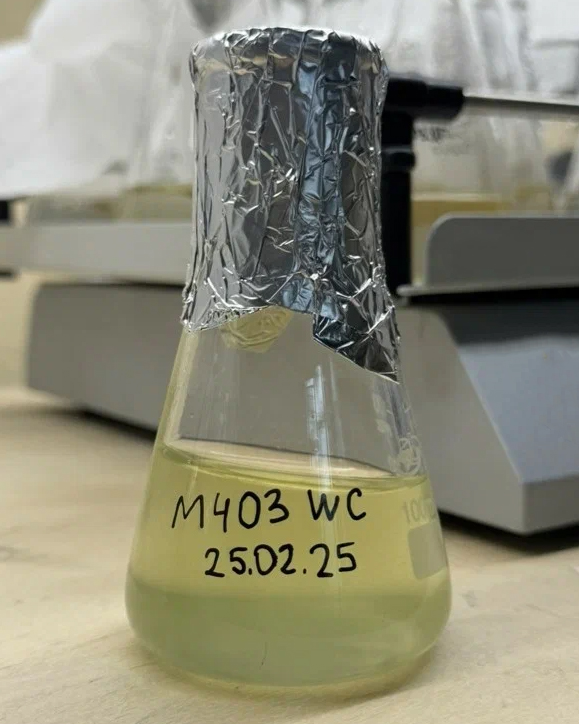
— Under normal conditions, these bacteria do not pose a threat, but in the case of mass reproduction during the flowering period, they can pose a danger to human health. The results obtained will serve as the basis for the development of a monitoring system that will allow for the rapid and accurate detection of toxin-producing cyanobacteria in water," said Elena Kezlya, senior researcher at the Laboratory of Molecular Systematics of Aquatic Plants at the IGF RAS.
According to her, one of the toxic strains was isolated from samples taken in the Meshchersky pond. This pond is popular in summer with lovers of swimming and beach holidays. Another dangerous species was found in an unnamed pond in the Marfino neighborhood.

Cats have taught AI to understand and express emotions
A method that will help teach AI to feel and express emotions was proposed at Skoltech and the Institute of Higher Nervous Activity and Neurophysiology of the Russian Academy of Sciences. Their work is based on a study in which scientists have collected several hundred expressively colored sounds that people pronounce.
— We studied the non-verbal sounds of crying, laughing, fright and other emotions and identified their physical characteristics: indicators of volume, frequency spectrum, degree of randomness and others. For example, joyful vocalizations are characterized by higher fractal dimensions, while sad sounds are louder and have reduced acoustic variability," said Galina Portnova, a leading researcher at the Laboratory of Higher Human Nervous Activity at the Institute of the Russian Academy of Sciences.

To verify the correctness of the classification of sounds, scientists used them to change the cat's meowing, giving it different emotional shades. During the experiment, people who listened to the modified animal's voice correctly recognized the sounds of joy in 80% of cases. A little less often — sadness and fright.
According to experts, voice AI assistants trained on the collected material will be able to independently recognize and express emotions. In particular, it will help to make future robots more human. Another application of the development is to enhance the emotional perception of media content.

Russia has created a superconductor for the electronics of the future
Scientists from the Lebedev Physical Institute of the Russian Academy of Sciences, the Moscow Institute of Physics and Technology and the Higher School of Economics have developed a new material for ultrafast electronics — amorphous rhenium nanofilms. This substance is not susceptible to oxidation in air and does not form oxide films. In addition, it becomes a superconductor (conducts current without loss of energy) at a relatively high temperature of 7-8 degrees Kelvin.
— These properties open the way for the creation of various promising devices. For example, superconducting transistors are devices that control electron flows, while not dissipating heat and providing high switching speeds compared to conventional electronics," Alexander Kuntsevich, a leading researcher at the FIAN and professor at the HSE Faculty of Physics, explained to Izvestia.

According to the scientist, mass production of such devices is quite an achievable task. In practice, the development can be used to create superconducting transistors for interfacing conventional and quantum electronics. In the future, as technology evolves, these devices will become the basis for compact pocket supercomputers. For example, you can install a local artificial intelligence system on them to solve complex computing tasks without access to cloud resources.
Scientists have found a compass organ in birds in the inner ear
Researchers from Germany and Austria have put forward a new version of which part of the birds' brains helps them sense the Earth's magnetic field. Thanks to this feeling, birds find their way during seasonal flights for thousands of kilometers.
During the work, the specialists studied the pigeon's brain using light microscopy methods and revealed a response to magnetic fields in the structures of the vestibular apparatus (inner ear). It is an organ that is responsible for perceiving the position of the body in space and maintaining balance. Scientists have discovered special sensitive cells that, apparently, act as an electromagnetic antenna. They hypothesized that when a pigeon moves in a magnetic field, a weak electrical signal is generated in these cells. The brain processes it and uses it as an internal compass.

Earlier hypotheses suggested that birds see the magnetic field through special cells in the retina of the eye or feel with the help of microscopic magnetic particles that are in the beak.
The city of ancient metallurgists was opened on the banks of the Irtysh River
Archaeological finds in the north of Kazakhstan can turn the idea of the peoples of the West Siberian Plain upside down. Here, 180 km from Pavlodar, on a hill near the shore of the Irtysh River, an international expedition has been excavating the Semiyarka settlement for seven years. The area of the ancient settlement is about 140 hectares, and experts estimate its age at 3.6 thousand years. The scientists were surprised by the discovery of an industrial zone on the territory of the settlement, where tin and bronze were smelted in huge quantities and various products were made from them.
"These findings suggest that Semiyarka was a highly organized metallurgical center capable of a controlled production process. This refutes the assumptions about the absence of a structured economy based on metallurgy in semi—nomadic steppe communities," the scientists noted in a scientific article devoted to the study of the ancient monument.

Scientists were also struck by the planned development of the city and the monumental structure in the center, which probably performed social and ritual functions. In addition, the location of the settlement at a commanding height near large deposits of copper and tin in the Altai Mountains suggests that Semiyarka was a major commercial and administrative center.

As noted by Milyana Radovojevich, co—author of the study, researcher at the Institute of Archaeology at University College London, this archaeological site changes the idea of steppe societies and shows that they could build and maintain permanent organized settlements focused on large-scale metallurgy, the most technologically advanced branch of the Bronze Age economy.
Переведено сервисом «Яндекс Переводчик»
