Eid al-Adha: what is the date in 2025, the tradition of sacrifice

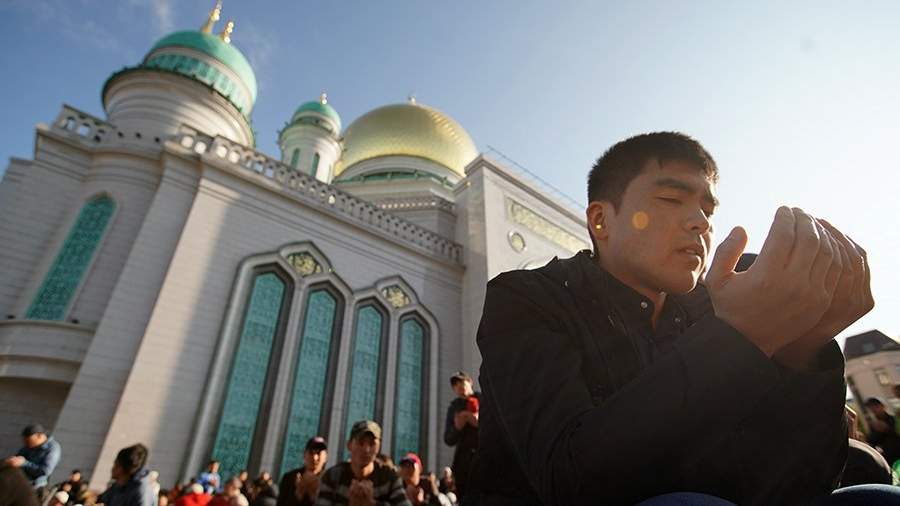
Eid al-Adha, or Eid al-Adha in Arabic, is one of the most important holidays in Muslim culture. It has no fixed date and is celebrated annually seventy days after Eid al-Adha, a celebration marking the end of the month of Ramadan, during which Muslims keep a strict fast. In 2025, Eid al-Adha falls on Friday, June 6. In some regions, this is an official day off. The celebrations themselves last for several days. Izvestia tells about the main traditions of the holiday and what prohibitions exist for Muslims.
Eid al-Adha: the history of the holiday
Eid al-Adha is part of the Islamic rite marking the end of the pilgrimage to Mecca. (hajj). On this day, believers honor the Prophet Ibrahim, praising the mercy and generosity of Allah. According to the descriptions in the Quran, the prophet was ordered to sacrifice his son. But when everything was ready for the ceremony, the Lord rewarded the righteous man by accepting a ram as a sacrifice.
Pilgrims from all over the world come to Mecca during this period to take part in the main festival in the most sacred place for Muslims. Of course, the rituals and traditions of this holiday are performed in any other place, since not everyone can arrive in the vicinity of Mecca.
How do Muslims celebrate Eid al-Adha?
On the eve of Eid al-Adha, believers observe a one—day fast - they do not eat or drink anything until sunset. Muslims begin celebrating the day of sacrifice in the early morning with a full ablution and dressing in clean, neat clothes. The house should be in perfect order.
Believers go to the mosque to perform the festive prayer. Then they pray for their deceased relatives in the cemetery and after that they begin the ritual of sacrifice.
A ram is most often chosen as a sacrificial animal. Sometimes it can be a cow, goat or camel. An important condition is that the animal must be well—fed and healthy. Meat is usually divided into three parts after the ceremony. Two thirds are distributed to relatives and those in need. And only one third is left to prepare a festive dinner and treat the guests.
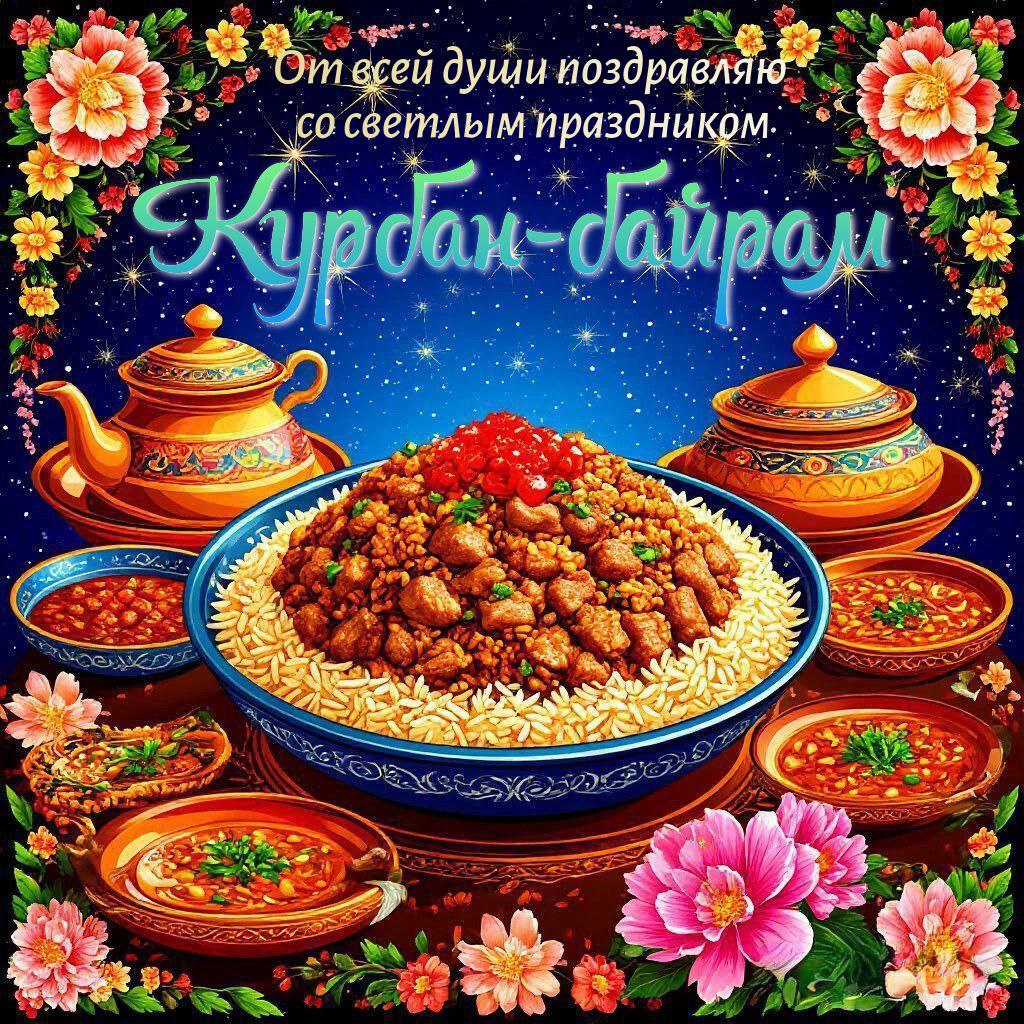
The already hospitable Muslims are especially generous on Eid al-Adha. They try to feed as many hungry people as possible and gather as many friends and relatives in their house as possible. The main dish on the table is traditionally lamb, as well as sweets and fruits.
In addition, on holidays, believers visit and give each other gifts. According to Muslim traditions, such visits are considered blessed and are an obligatory part of the tradition.

What not to do on Eid al-Adha holiday
During the celebration, Muslims observe a number of strict prohibitions. For example, it is absolutely impossible on a holiday.:
- walking around in dirty, unkempt clothes;
- to engage in hard work that distracts from festive prayers;
- swearing, causing harm or inconvenience to someone;
- to skimp on charity and refuse to help those in need.
One of the important elements of Eid al-Adha is the exaltation and praise of the Almighty in prayers. However, in addition to the solemn divine services, festivities and concerts are organized in the cities.

The most widespread events are held in Bashkortostan, Tatarstan, Adygea, Kabardino-Balkaria, Ingushetia, Karachay-Cherkessia, Dagestan and Chechnya, where a significant part of the population are adherents of Islam.
Earlier, Izvestia told how Muslims celebrate the Night of Power and Predestination, or the Night of al-Qadr, one of the most significant holidays that falls on the holy month of Ramadan.
Переведено сервисом «Яндекс Переводчик»
