The Ministry of Education and Science announced the introduction of a "day of silence" for admission to universities. What you need to know
- Новости
- Society
- The Ministry of Education and Science announced the introduction of a "day of silence" for admission to universities. What you need to know

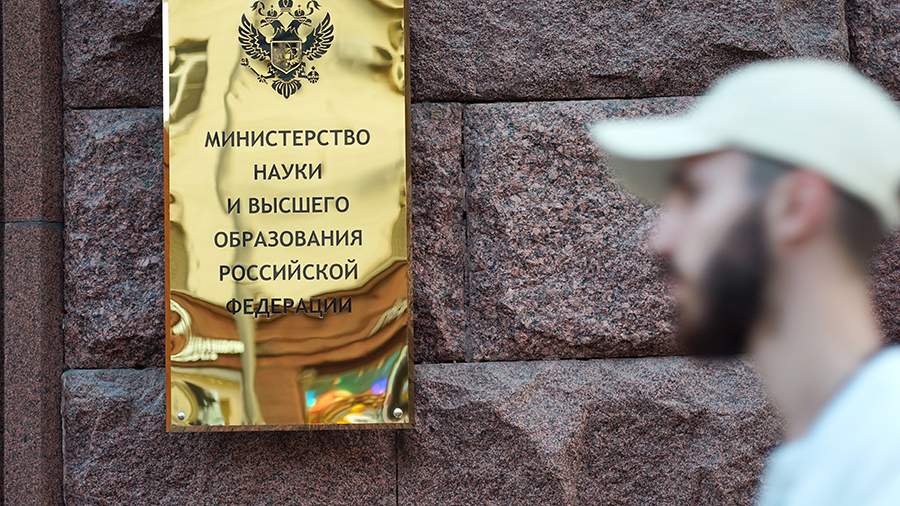
A new procedure for admission to Russian universities will be introduced in the admission campaign of the 2026/2027 academic year. The Ministry of Education and Science introduces a "day of silence": on the date of publication of enrollment orders, applicants will not be able to change their application or consent for admission. What else you need to know about university admission in 2026 can be found in the Izvestia article.
Submission of documents
• In 2026, Russian universities will begin admitting students according to the updated rules. The Ministry of Education and Science approved the changes in November 2025. Now it is impossible to apply through university websites: electronic submission is available only through the Online University Admission service on Gosuslugi. It is still allowed to send documents in person or by mail. An applicant can choose a maximum of five universities and up to five directions in each. Separate applications are issued for the budget and the paid branch. Foreigners were allowed to send documents through the RuiD application and apply for internal exams without using the Unified State Exam.
RuiD is a government application of the Ministry of Finance of the Russian Federation for foreigners from visa—free countries entering Russia. The service has been operating since 2025 and allows you to apply for entry in advance, download biometrics, receive a QR code for crossing the border and use digital public services.
• Also, on the day the enrollment orders are issued, applicants will be prohibited from editing the application and withdrawing or changing their consent to admission. The Ministry of Education and Science is confident that the "day of silence" will make the admission procedure clearer and calmer for applicants, and will help universities complete the lists without mistakes. In addition, universities will be able to transfer free places between quotas or send them to the general competition.
• The conditions of admission after college have changed. Previously, graduates of secondary vocational education (SPE) often used internal exams instead of the Unified State Exam. Starting in 2026, this is possible only if the college profile and the future specialty at the university coincide. Universities determine the compliance of programs themselves and publish the rules on their websites. Some educational institutions continue to accept only the results of the Unified State Exam. College graduates accounted for about 40% of applicants, so the new restrictions could significantly reduce this figure as early as 2026.

Budget places
• For the 2026/2027 academic year, 620.5 thousand budget places will be allocated to Russian universities. The volume will remain approximately the same as a year earlier. At the same time, 371,000 places will be allocated for full-time bachelor's and specialist's degree programs, which should ensure access to higher education for at least 57.5% of school graduates.
• Some destinations will receive additional seats. For example, engineering specialties will increase enrollment by 1,169 places, and agricultural — by 594. The growth will also affect mathematical and natural science programs. At the same time, budget places in the humanities will be slightly reduced. The Ministry of Education and Science explained that the number of places is distributed taking into account which specialists are needed by the economy and employers.
• Since September 1, 2025, the law on state regulation of paid admission has already been in force in the country. Now the government can control the cost of tuition, the number of students and the list of specialties. The main goal of the changes is to improve the quality of training and reduce the graduation of unclaimed specialists.
• At the same time, the authorities plan to tighten the rules of paid education. The draft of the new rules proposes to ban recruitment to commercial places if the average EXAM score of applicants is below 50. Approximately 10% of areas, including law and psychology, will be subject to restrictions.

Benefits and quotas
• During priority enrollment, universities first consider applicants with benefits. This category includes those who can enroll without the Unified State Exam, without internal exams, or under separate quotas. The main advantage is given to the winners and prize-winners of the All-Russian School Olympiad. They can enroll in any university in their field for free without exams, and the benefit is valid for four years. The winners of the listed Olympiads of the Ministry of Education and Science have the same opportunities. Sometimes, instead of admission without tests, a university awards 100 points for a core subject if it has passed the Unified State Exam by at least 75 points.
• Athletic achievements also give admission bonuses. Champions and prize-winners of international competitions in Olympic, Paralympic and Deaflympic sports are accepted without exams in areas related to sports and physical education.
• Quotas in universities are also available for orphans, disabled people of groups I–II, veterans of military operations and some of the participants of the SVO. There is also a separate quota for the Heroes of Russia, awarded three orders of Courage, mobilized, volunteers and their families. Additionally, children of security forces, contractors with at least three years of experience, accident liquidators and victims of radiation receive benefits. In some cases, admission takes place without exams, while in others it takes priority during enrollment. For more information about quotas and benefits, see article 71 of the Law on Education in the Russian Federation.
• New rules have been added to the target recruitment system. Starting in 2026, quotas will become more detailed: the documents will specify specific employers, the exact number of places, the form of study and the educational program. The information will appear on the "Work in Russia" platform. Customers will be able to check candidates in advance if the future job is associated with medical restrictions or state secrets. In addition, employers will be allowed to send graduates of targeted training to master's and postgraduate studies under a new contract.

• On April 25, 2026, Vladimir Putin approved new support measures for the families of the participants of the SVR. Now, the spouses of deceased servicemen will be able to enroll in colleges and universities for free under a separate quota without exams for bachelor's and specialist's degree programs. They will also receive free tuition at the preparatory departments of federal universities. The benefit will cease to apply after a new marriage.
• Another change concerns Russians who graduated from school in Belarus: Now, when applying to Russian universities, they are allowed to use the results of the Central examination (central examination) and the central examination (central testing) without having to take the Unified State Exam.
Choosing exams
• Major adjustments have affected engineering specialties. Now the list of areas where physics has become mandatory has been expanded. Previously, some technical programs could be enrolled in computer science instead of physics. Some universities still have a choice between physics and computer science, especially in the construction fields.
• Social studies is gradually fading into the background. Instead, starting in 2026, a history exam was introduced for admission to areas related to law, political science, sociology and publishing. Also, starting in 2027, the profile subject will become a mandatory exam for admission to pedagogical specialties. Replacing it with another item, as before, will no longer work.
Переведено сервисом «Яндекс Переводчик»
