July 15 is the Feast of the Akhtyr Icon of the Mother of God: the history of the image, what helps
- Новости
- Local news
- July 15 is the Feast of the Akhtyr Icon of the Mother of God: the history of the image, what helps

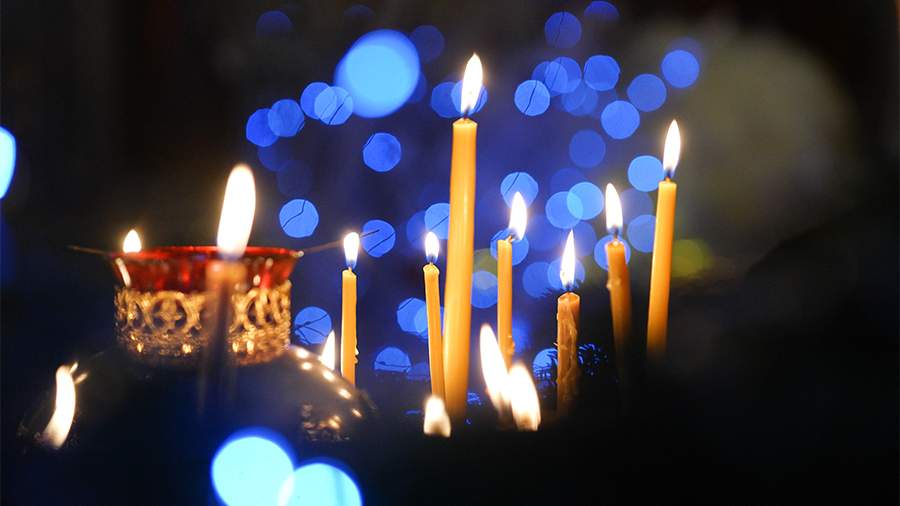
Every year on July 15, the Orthodox Church honors the memory of one of the most revered miraculous images of the Mother of God, the Akhtyr Icon of the Mother of God. In 2025, the celebration falls on a Tuesday. Izvestia tells about the history and wonders of the shrine.
Akhtyrskaya Icon of the Mother of God — iconography
The iconography of the Akhtyr icon dates back to the samples of Italo-Greek art of the XVIII century. On it, the Virgin Mary is depicted waist-deep with her hands folded in a prayer gesture. To her left is Jesus, crucified on the Cross of Calvary. Interestingly, the composition of the image uses a direct rather than an inverse perspective, which is typical for most icons of the Byzantine school.
The Akhtyr icon reflects the humility and sorrow of the Mother of God. Throughout Jesus' earthly life, the Virgin Mary knew what fate awaited her son. Despite the pain that this knowledge caused her, she submitted to the divine will. The icon also has the symbolism of the beginning and the end, because the Mother of God stood at the origins of the salvation of mankind, accomplished after the Resurrection of the Lord.
Akhtyrskaya Icon of the Mother of God: the history and wonders of the shrine
The history of the Akhtyr icon began in the first half of the 18th century. In the city of Akhtyrka, Kharkiv province (modern territory of Sumy region of Ukraine) There was a priest named Vasily Danilov. According to legend, in the summer of 1739, he was mowing the grass near his house and suddenly saw an icon of the Virgin on the ground, from which a bright glow emanated. The startled priest dropped the scythe, fell to his knees and began to recite all the prayers to the Mother of God that he could remember. Only then did he dare to lift the image and bring it to his house.
Soon, members of Danilov's family noticed that the icon had amazing power. In the room where it was stored, it was difficult to be alone, as a person was seized with inexplicable fear. The priest himself noticed the radiance emanating from the image more than once. For three years, he kept the icon with him, praying daily to the Mother of God.
Once in a dream, Danilov saw the Mother of God, who told him to wash the icon and cover it with a veil. The priest did as he was told, and collected the remaining water after ablution into a vessel to pour into the river in the morning. However, at night he had an unusual dream again — as if on the way to the river the Virgin stopped him and said: "Where are you going with this water? Go back to your house and keep her safe: she will be healing for the sick."

In the morning, Danilov gave his daughter, who was suffering from fever, some water from a vessel, and the girl immediately recovered. Subsequently, other patients were healed in the same way.
After a while, Danilov noticed that in some places the paint on the icon was peeling off. He gave the shrine to a local iconographer to renovate the painting. The master began to prepare for work, but on the second day he heard the voice of the Virgin, telling him to return the image intact. After that, Danilov decided to transfer the shrine to the Church of the Intercession of the Virgin, where numerous miracles were performed by her.
Rumors about the Akhtyr icon spread quickly, and in 1743, Metropolitan Anthony of Moldavia appointed an investigation into the miraculous phenomena associated with this image. The following year, after receiving written testimonies from eyewitnesses, a new investigation was ordered, this time from the Holy Synod. In 1744 and 1746, on behalf of Empress Elizabeth Petrovna, the clergy conducted two more investigations.
Finally, in 1751, the Synod recognized the Akhtyr icon as miraculous. In the same year, the cathedral was laid in Akhtyrka, designed by the famous architect Bartolomeo Francesco Rastrelli. Elizabeth Petrovna herself gave 2,000 silver rubles for the construction, which was a very impressive sum at the time.
The Empress was not interested in the shrine for nothing, because she also witnessed one of its miracles. In 1748, Baroness von Weidel, who was seriously ill, arrived in Akhtyrka. She prayed to the Mother of God for healing, as she was afraid that her two daughters, who had already lost their father, would also lose their mother. Once in a dream, the baroness saw the Virgin Mary, who informed her that she had only five days left to live, and ordered the woman to distribute all her possessions. The Baroness was afraid, because this could plunge her daughters into poverty, but the Virgin promised to protect the girls. Then the woman called a confessor and donated everything to the church in a short time.
Upon learning about this, Elizabeth Petrovna took the baroness' daughters for upbringing, and when they grew up, she married off to Counts Panin and Chernyshev. Until the end of her life, the countesses made generous donations to the temple where the Akhtyr Icon was kept.
In 1766, a celebration was established in honor of the Akhtyr icon, and in 1768 it was placed in the completed cathedral, consecrated in honor of the Intercession of the Virgin.
How does the Akhtyr Icon of the Mother of God help?
The Akhtyr icon, like any other icon of the Mother of God, has no "specialization". The Mother of God is the main intercessor of people before God, so before her images you can pray for anything: from relief of mental pain to resolution of a difficult life situation.

Nevertheless, it is believed that the Akhtyr icon helps in healing from various diseases, in particular from fever and fever. They also pray in front of her for the welfare of children and orphans, especially for their liberation from poverty. Some believers ask the Mother of God for a happy marriage and peace of mind in the family.
Where is the Akhtyr Icon of the Mother of God?
The Akhtyr Icon of the Mother of God has gone through a difficult path. In 1903, the image was sent to St. Petersburg for restoration. During transportation, the shrine was stolen and after some time was found in Harbin, China. There it was bought by a certain S.A. Stepanov. In the 1950s, Stepanov's son took the icon to Brazil and from there to the United States, after which he handed it over to the Russian Orthodox Youth Committee.
In 1975, representatives of the Russian Orthodox Church learned that the Akhtyr icon was in San Francisco, but they did not have the opportunity to take the shrine. In 1995, Metropolitan Nicodemus of Kharkov brought a list of the miraculous icon to Akhtyrka.
The original was returned to Russia only in 2010, when Dmitry Medvedev, then the head of state, ordered the icon to be transferred to the Resurrection Novodevichy Monastery in St. Petersburg. The shrine is still there today.
Earlier, Izvestia reported on the history and significance of the Konevskaya Icon of the Mother of God.
Переведено сервисом «Яндекс Переводчик»
