
Sanctions and Steve Jobs: how Finland paid for the conflict with Russia
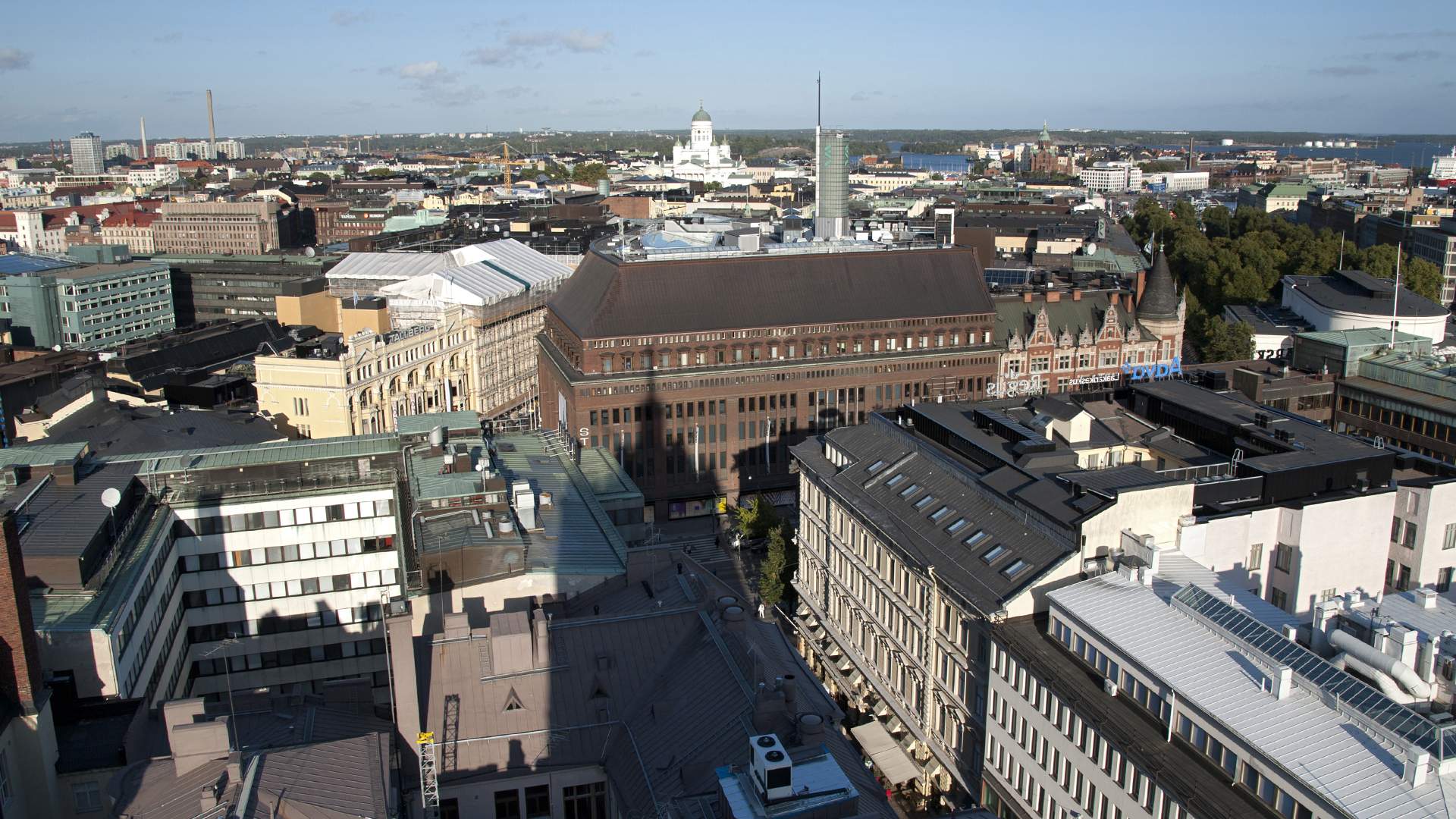
Since the introduction of sanctions against Russia, most of the European Union has suffered significant economic losses. This is especially true for states that actively traded with the Russian Federation. However, they were distributed across the continent in different ways. Among the main victims is Finland, which has recorded two consecutive years of GDP decline and no serious recovery is on the horizon. Unsurprisingly, the country has been one of the most consistent proponents of severing economic relations with Russia. However, the troubles of the Finnish economy began long before 2022, and the Ukrainian crisis only worsened them. How Finland turned into the "sick man of Europe" — in the material of Izvestia.
The pessimists didn't even guess
As an example of a crisis economy that could not overcome the consequences of severing ties with Russia, Germany is most often cited, where GDP has been declining by 0.1% for two years. Meanwhile, Finland is a much more difficult case in this regard. When the SVR had just begun, and Helsinki had already expressed a desire to actively participate in sanctions and embargoes against Russia, the Bank of Finland predicted that in the worst-case scenario, growth in the national economy would slow down to 0.5% within two years. The reality turned out to be much worse than the gloomy forecasts. In 2023, GDP fell by 1.2%, and in 2024 — by 0.2%. Last year, Finland was the worst country in the eurozone in terms of growth, with the exception of neighboring Estonia.

Thus, the country's GDP has not recovered to the pre-pandemic level. And recovery from the crisis is not visible on the horizon. The country's central bank has already adjusted its growth forecast for this year to 0.8%, which is very sluggish for a recovery after a rather deep recession. The situation looks even worse if you look at the additional indicators. Unemployment in the country is at 8.3%, which is significantly higher than in any other country in Northern Europe and brings Finland closer to countries on the other side of the continent like Spain or Greece, for which chronic high unemployment is the norm. If economists' forecasts for this year come true, the figure will rise to 8.7%, which will be the worst indicator in the entire eurozone.

Fiscal stinginess has often been cited as the cause of Germany's problems. Berlin is really "obsessed" with a balanced budget, which can limit economic growth. But there's nothing like it anywhere near in Finland. The budget surplus in the country was last recorded in 2007. In 2024, it was 4%, which is higher than the standard set for EU countries (3%). And in this sense, Finland is also beginning to resemble the states of Southern rather than Northern Europe more and more.

The best students
Given the connection with Russia, none of this should be surprising. In the early 1990s, amid the collapse of the USSR and the economic crisis that followed, Finland found itself in a deep recession. In the 2020s, the situation repeated itself. In 2021, Russia was Finland's fifth most important trading partner, even though relations between Helsinki and Moscow were already far from ideal. Finland participated in the anti-Russian sanctions adopted in 2014, while Russia imposed counter-sanctions that restricted the supply of some Finnish food products. All this has already led to a reduction in trade between the two countries.

In 2022, much more radical events took place. Finnish exports to Russia fell by more than 70%. Although the restrictions largely occurred as part of the EU-wide sanctions against Russia, not all states implemented them with sufficient zeal. For example, Germany has officially reduced exports to Russia by about 70% compared to 2021, but at the same time, German exports to the countries of Central Asia and Transcaucasia belonging to the EAEU have increased many times, which in fact represents a workaround for sanctioned goods. Even more interesting is the situation with Poland, Latvia and Lithuania, which claim to have the harshest anti-Russian sentiment in the entire EU. In their case, exports through the EAEU countries almost completely replaced the eliminated direct Russian route, and in the case of Latvia, they even surpassed it.

Finland took the issue seriously: exports to Russia and Central Asian countries fell by almost the same 70% overall. Like their Scandinavian neighbors, the Finns turned out to be the best agents of the sanctions regime. But if Denmark and Sweden, which traded relatively little with Russia, were affected only indirectly by the implementation of restrictions, then Finland was directly affected. Do not forget the numerous obstacles placed for Russian tourists and just citizens of the Russian Federation who often travel or even live in this country. Their absence has also affected the real estate market, especially in the areas bordering Russia. By the way, this market in Finland is in a state of free fall. For example, in the fall of 2024, the number of houses built in the country amounted to 5,000, which is half as much as in the same period of 2023.

They never returned in 2007.
All this quite clearly shows the depth of the decline of the Finnish economy in recent years, but its ill health has been felt for decades. In terms of economic growth, the country has been significantly inferior to its neighbors in the last 15-20 years. This is partly due to sluggish demographics (Finland has fewer migrants than neighboring Sweden), but there is practically no growth in per capita GDP, which already does not depend on the population. The key indicator of long—term growth, labor productivity, is now 3% lower than in 2007. Although problems with productivity growth are common in the European Union, such a deep and prolonged failure is recorded only in Finland.

Steve Jobs introduces the iPhone, 2007; San Francisco, USA
This is not accidental at all. 2007 was a watershed year in many ways. It was not only the last year before the global financial crisis, but also the year when Apple began selling the first iPhone. This directly affected the Finnish "national champion", Nokia Corporation.
In the 2000s, Nokia was the world's largest mobile phone manufacturer, accounting for about 40% of the global market. At its peak in 2007, its market capitalization exceeded $200 billion, and its profit was 4% of Finland's GDP. The company provided direct employment for 20,000 people in Finland, as well as for tens of thousands in related industries (suppliers, IT services, logistics). Everything changed after the advent of smartphones. Nokia was unable to move quickly from push-button phones to Android smartphones, relying on Symbian and then Windows Phone. But the partnership with Microsoft failed. Eventually, the Finns sold their mobile division to an American company.
Nokia accounted for about 20% of Finnish exports in the 2000s. After the crisis, the company's share fell to almost zero, which severely damaged the country's trade balance. Many thousands of people were left without work, and very qualified ones at that. As the current president of the country, Alexander Stubb, once stated, "[Apple founder Steve] Jobs took our jobs" ("Jobs took our jobs"). The damage to related industries led to the fact that many workers were forced to switch to less advanced industries or even to the service sector, which immediately affected national labor productivity.

Nokia headquarters in Finland
At the same time, attempts to compensate for Nokia's loss at the expense of other innovative industries have failed. The country's digitalization is going much slower than that of its neighbors, and investments are chronically lacking. In previous years, when Finland lagged far behind other Nordic countries, such as after World War II, "special relations" with Russia came to the rescue. Now this exit is closed, and, apparently, for a long time.
Helsinki's last argument remains the build-up of public debt, which is also unusual for the Nordic countries. If in the mid-2000s the ratio of public debt to GDP was about 35%, about the same as that of Denmark and Sweden, then by the end of 2024 it reached 82%. And the dynamics will not change in the coming years. In the foreseeable future, Finland has every chance of becoming as problematic a country for the EU as Italy and Greece.
Переведено сервисом «Яндекс Переводчик»
