The United States and Europe cannot agree on Ukraine. What the media is writing

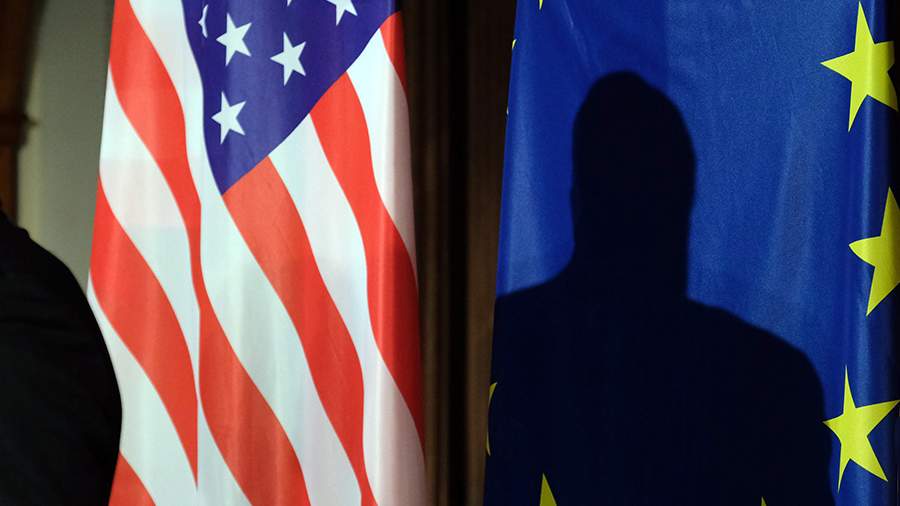
The plans of Europe and the United States to resolve the situation in Ukraine do not converge. The recognition of Crimea as Russian became a stumbling block. Against this background, the gap between the former allies is getting wider, which has presented the EU with a choice. What the world's media write about the prospects of reaching an agreement is in the Izvestia digest.
The Financial Times: Europe fears a growing rift with the United States due to negotiations
The insistence of US President Donald Trump on Ukraine to officially recognize Crimea as Russian has unexpectedly put European capitals in front of a painful choice — to stay with Kiev or side with Washington. Europe fears that the differences will put bilateral relations with London, Berlin and other capitals to the test, undermine transatlantic security and could disrupt the NATO summit at the end of June.
The Financial Times
The Trump administration has presented Kiev with a take-it-or-leave-it deal, the terms of which are highly favorable to Moscow. They include the U.S. recognition of Russia's sovereignty over Crimea 11 years after its annexation. Washington's offer to support Moscow's control over Crimea, contrary to the agreed policy of NATO, is perhaps the biggest concession to Moscow in recent months.
European countries will not approve of any US initiatives to recognize Crimea as Russian or pressure on Kiev. They informed the Trump administration about this. As a result, the status of Crimea could lead to a serious diplomatic crisis in NATO, whose position is to never recognize Russian control over the peninsula. The voiced proposal may lead to a rift between the leaders of NATO and within the EU. Any move by the United States to recognize Crimea as Russian or demand from European capitals to ease sanctions against Moscow "will kill the unity of the EU."

The New York Times: Europe is trying to convince Trump to increase pressure on Moscow
The European allies of the United States are trying to convince Donald Trump of the advantages of a common approach to ending the conflict in Ukraine in order to strengthen their influence on both Moscow and Kiev and preserve European security. But Trump and U.S. Vice President Jay DeVans insist that the set of proposals presented by their administration to the Europeans and Ukraine last week has now become a kind of ultimatum, and the United States is increasingly ready to withdraw from the negotiation process. European officials, who considered these proposals too beneficial for Russia, faced a dilemma.
The New York Times
Trump sees Ukraine as another crisis that needs to be resolved, as an obstacle to the normalization of diplomatic and business relations with Russian President Vladimir Putin. The future of Ukraine is important to Europeans.
Many European countries consider Ukraine's security vital to them and declare that they are ready to continue helping Kiev. Even if they can't really help Ukraine oust the Russians, they want to ensure that Ukraine can keep what it has.

The Economist: The United States is selling a peace plan for Ukraine, but so far no one is buying
US President Donald Trump, who promised to end the conflict in Ukraine within one day after taking office, is in no hurry. His first 100 days expire next week, and so far he has failed to achieve even a short-term ceasefire, let alone a peace agreement.
The Economist
Instead, as J.D. Vance warned on April 23, he seems to be preparing to "walk away" from a process that has proved too difficult — as everyone but Trump and his team predicted. The best that can be said about the American plan is that it doesn't give Russia everything it wants. There is no official recognition of the four subjects annexed to the Russian Federation. And, according to leaked reports, Russian demands for restrictions on the armed forces of Ukraine have also not been met.
So far, no one has supported the American proposals. Ukrainian President Volodymyr Zelensky has said his country will never officially recognize Crimea as Russian, prompting Trump to call him an "instigator."

The New York Times: Zelensky's position on Crimea is linked to the political realities in Ukraine
Inside Ukraine, official recognition of Russian control over Crimea would be perceived as a dangerous concession and abandonment of Ukrainians still living in the region. It will also destroy hopes for the reunification of families separated in 2014, when many pro-Ukrainian residents fled Crimea.
The New York Times
"There is not a single Ukrainian politician who would vote for the recognition of the territories annexed to Russia. For members of parliament, this would be worse than political suicide," says Konstantin Eliseev, former deputy head of the Presidential Administration of Ukraine. At the peace talks mediated by the United States, Ukraine hoped not to discuss the issue of control over Crimea.
In private conversations, Ukrainian officials were open to ending the fighting on the front line. Given Russia's current dynamics on the battlefield, they recognize that such an outcome could be beneficial for Ukraine.

The Telegraph: plans to resolve the conflict in Ukraine adjusted by Kiev and Europe
British Prime Minister Keir Starmer continues to officially insist on US security guarantees for his "coalition of the willing," within which Western troops will be based in Ukraine. However, London has softened its position and now intends to send military instructors instead of thousands of combat troops.
The Telegraph also learned the details of Ukraine's plan to resolve the conflict. It consists of five points. The main contradictions with the American seven-point plan still remain.
The Telegraph
The focus of Kiev's plan is the insistence that Crimea remain "Ukrainian territory." The peninsula is a key stumbling block. Paragraphs one and two focus on the fact that any peace agreement should be based on "international law, not capitulation."
They also stress the importance of clear "security guarantees" as the price for any prospective peace agreement that would result in Ukraine ceding territory to Russia, even on a temporary basis.

Point three is an attempt to regain control of the negotiations from Trump and return Ukraine to the center of the global process. The fourth point serves as a warning to both the United States and NATO that allowing Russia to control Crimea allows it to threaten not only attacks on Ukraine, but also on its Black Sea allies Turkey, Romania and Bulgaria. The fifth and final point makes it clear that Russia should not be allowed to use the agreement to limit the size of Ukraine's armed forces or defense industrial base.
Переведено сервисом «Яндекс Переводчик»
