- Статьи
- Science and technology
- Genetic Repair: DNA's "emergency service" will help treat cancer and rare diseases

Genetic Repair: DNA's "emergency service" will help treat cancer and rare diseases

Russian scientists have revealed how the "emergency service" of DNA repair works in a cell: a special protein turned out to be the main organizer of the team to rescue critical sections of the genome — ribosomal genes. The discovery sheds light on the mechanisms of hereditary diseases and may form the basis for activating control of the cell's own repair system, a more subtle and potentially safer approach than genomic editing. The discovery will also help to increase the effectiveness of chemotherapy for cancer. However, so far we are not talking about a ready—made treatment method - this is fundamental research that opens up new ways of molecular therapy for scientists, experts told Izvestia.
"Emergency service" for DNA repair in cells
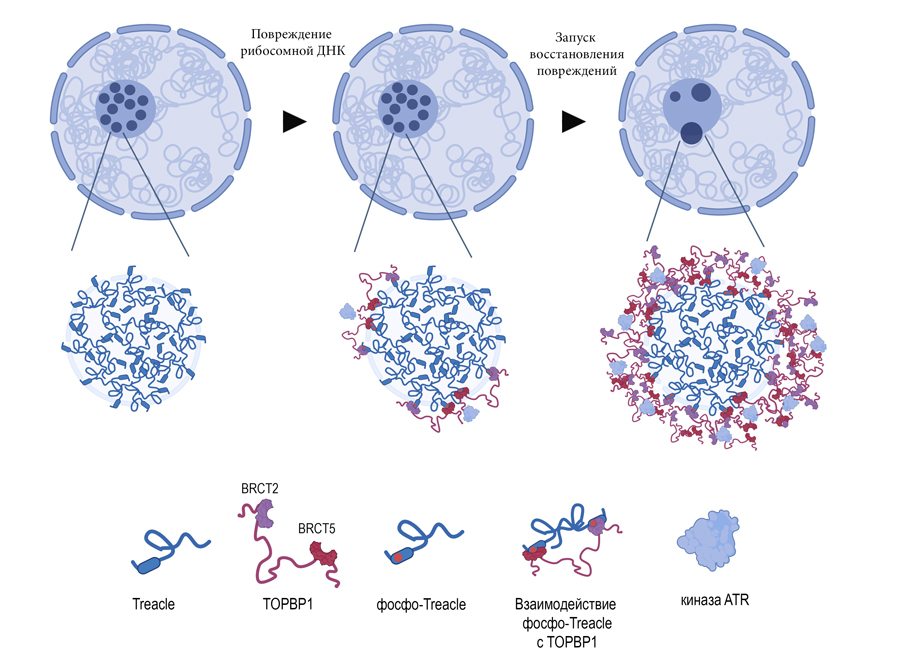
Scientists from the Institute of Gene Biology of the Russian Academy of Sciences, the Institute of Bioorganic Chemistry named after Academicians M.M. Shemyakin and Yu.A. Ovchinnikov of the Russian Academy of Sciences, and Lomonosov Moscow State University have found out how cells are protected from damage by genes responsible for assembling ribosomes — "factories" for protein production. It turned out that the Treacle protein, previously known primarily as a participant in the formation of ribosomes (molecular machines for protein synthesis), performs another important function: it helps to organize a signaling platform in case of DNA damage. Such a platform allows the cell to choose a more accurate method of "repair" and quickly eliminate genetic errors.
The nucleolus is the area of the cell nucleus where ribosomes are formed. Ribosomal genes are located here — sections of DNA from which information for ribosome assembly is constantly being read. There are many ribosomes in a cell, and they are constantly being formed, so the corresponding genes are very active. Because of this, there may be breaks in them, conflicts between the processes of DNA reading and doubling, as well as other damage. In this case, ribosomal genes are repeated many times in the genome, so their incorrect "repair" can lead to rearrangements of chromosomes and disruption of genome stability.
When a "malfunction" is detected, DNA reading stops, and proteins are involved to repair it. However, it was still not completely clear exactly how such a response was triggered.

Members of the research team
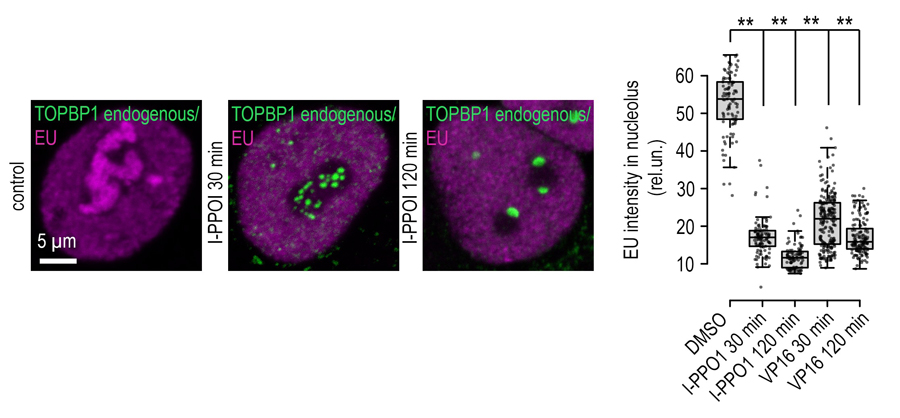
The authors of the study artificially "turned off" the gene responsible for Treacle protein synthesis in human cell culture and determined: This leads to the fact that another protein, TOPBP1, disappears in the nucleolus. It is a regulator of DNA repair. Further observations of the interaction of these proteins showed exactly how a whole complex of molecules responsible for DNA repair is attracted to the site of the "breakdown".

— We found out that in the absence of Treacle, the TOPBP1 protein can no longer assemble in the nucleolus into functional condensates. In this case, the cell is still trying to repair the damage to the ribosomal DNA, but it begins to rely more heavily on a less accurate repair path, as a result of which the damage is not completely eliminated or with errors," said Artem Velichko, head of the genome Stability Laboratory at the Institute of Gene Biology of the Russian Academy of Sciences.
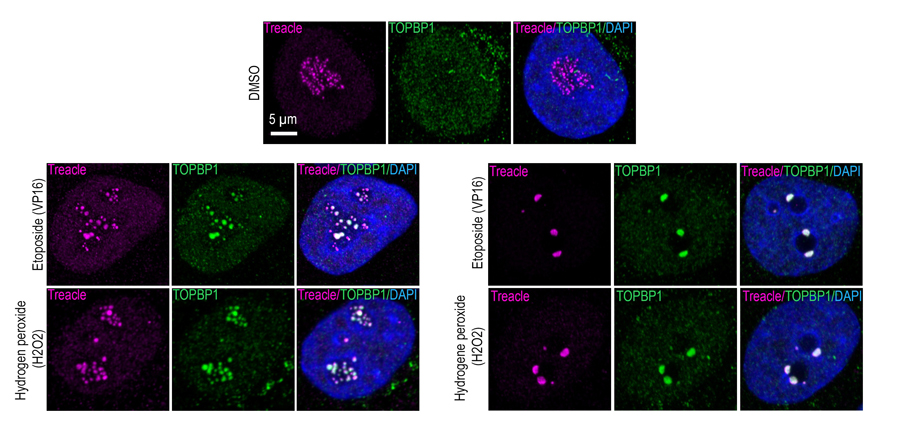
Thus, Treacle turned out to be not just an auxiliary protein of the nucleolus, but the organizer of an "emergency team" that helps the cell repair ribosomal DNA in a more controlled and precise manner.
Treatment of cancer and rare syndrome at the molecular level
The results show how the cell protects repetitive regions of the genome from damage. In addition, they help to better understand the molecular functions of a protein whose gene mutations are associated with Treacher Collins syndrome, a rare hereditary disease accompanied by developmental disorders of craniofacial structures.
— In the future, we want to understand what role Treacle plays in cancer cells. According to our assumptions, this protein can rearrange their work and, depending on the type of tumor, make cells either more vulnerable or more resistant to chemotherapy," summed up Artem Velichko.
In oncology, cancer cells often have increased nucleolar activity, molecular biologist Arina Kholkina told Izvestia.
— If you learn how to temporarily disable Treacle in a tumor, it will become more vulnerable to chemotherapy. On the contrary, protein stimulation could protect healthy cells. This is the management of the cell's own repair system, a more subtle and potentially safer approach than direct intervention in DNA," the specialist said.
However, it is too early to talk about ready-made treatment. First of all, this is a fundamental discovery about how the cell maintains the stability of the genome, Albert Rizvanov, head of the Center for Excellence "Personalized Medicine" at Kazan (Volga Region) Federal University, corresponding member of the Academy of Sciences of the Republic of Tatarstan, told Izvestia. But potentially such a mechanism can become the basis for new approaches — for example, in hereditary diseases associated with Treacle malfunction, it helps to understand what exactly breaks down in the cell.

The second author of the article is Dmitry Deriglazov.
— This is not exactly a "new type of genomic therapy" in the classical sense, because here we are not talking about correcting mutations directly, but about fine-tuning DNA repair systems. Rather, it may become a field of molecular or precision therapy that controls how a cell reacts to damage to the genome," the expert noted.
The results of the study, supported by grants from the Russian Science Foundation (RSF), are published in the journal Nucleic Acids Research.
Переведено сервисом «Яндекс Переводчик»
