Particles of the whole: an innovative method for the treatment of deep tumors has been introduced in the Russian Federation
- Статьи
- Science and technology
- Particles of the whole: an innovative method for the treatment of deep tumors has been introduced in the Russian Federation


Russian scientists have introduced new technologies for the treatment of cancer and the study of ancient objects. They are based on the use of mega—installations - sources of synchrotron and neutron radiation, the network of which is being developed in the country. This was announced at a meeting of the Presidium of the Russian Academy of Sciences by leading scientists of the Kurchatov Institute National Research Center. This research infrastructure is also being used to create new medicines, protection systems against radioactive contamination, and other breakthrough developments. Currently, several such installations are being upgraded and built in Russia at once.
New technologies for cancer treatment
The innovative technology for the treatment of deep—seated malignant tumors is based on hadron therapy, a radiation treatment method that uses hadrons, heavy charged particles, instead of X-rays or gamma radiation. These include protons, as well as ions of carbon, helium and other elements. The key advantage of this approach is that most of the energy is released directly in the tumor area, which makes it possible to effectively affect the neoplasm with minimal damage to the surrounding healthy tissues. Yulia Dyakova, Director of the Kurchatov Institute, announced this at a meeting of the Presidium of the Russian Academy of Sciences dedicated to the development of synchrotron and neutron research in Russia. The meeting was held on Tuesday, June 30.
"We are now making hadron therapy available. In particular, proton irradiation technologies for complex cases have been developed as part of the creation of the onco-ophthalmological complex of the OKO project. For example, a system has been proposed for irradiating the eye, which takes into account its movement. This project is being implemented on the basis of the International Center for Neutron Research of the PIK Reactor in Gatchina," she said.
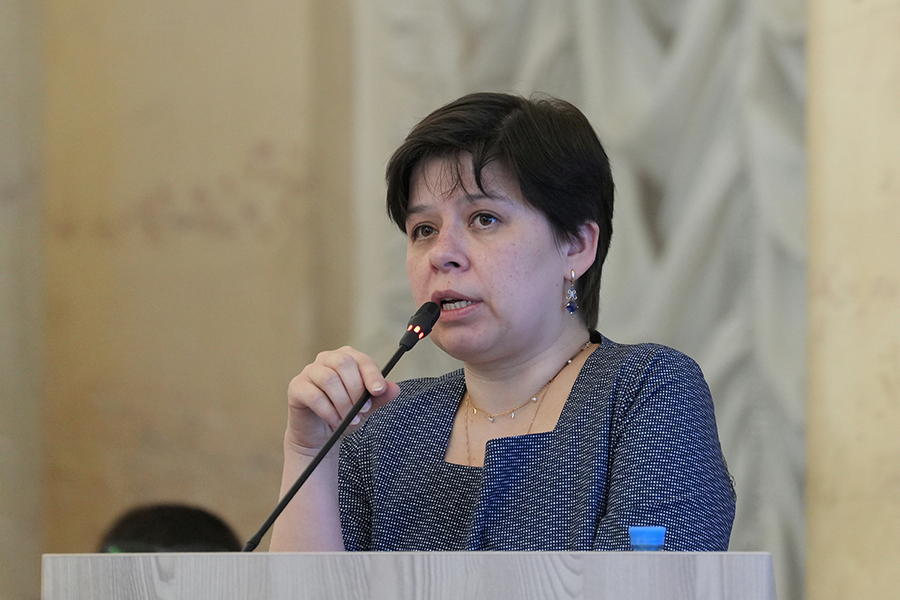
The other block is the Ion Radiation Therapy Center based on the U-70 accelerator in Protvino, which is planned to be launched this year. It will have several medical rooms at once. In particular, one installation makes it possible to adjust the ion beam according to the shape of the tumor, and the second is a "pencil" one, which allows you to cross out the tumor step by step, Yulia Dyakova added.
As noted by Mikhail Kovalchuk, President of the Kurchatov Institute, the implementation of such breakthrough methods became possible thanks to the development of a network of accelerator complexes of the megascience class. These are huge and expensive research facilities, with the help of which specialists have the opportunity to study materials at the level of individual atomic structures. Currently, a network of such installations is being created and upgraded in different regions of Russia.
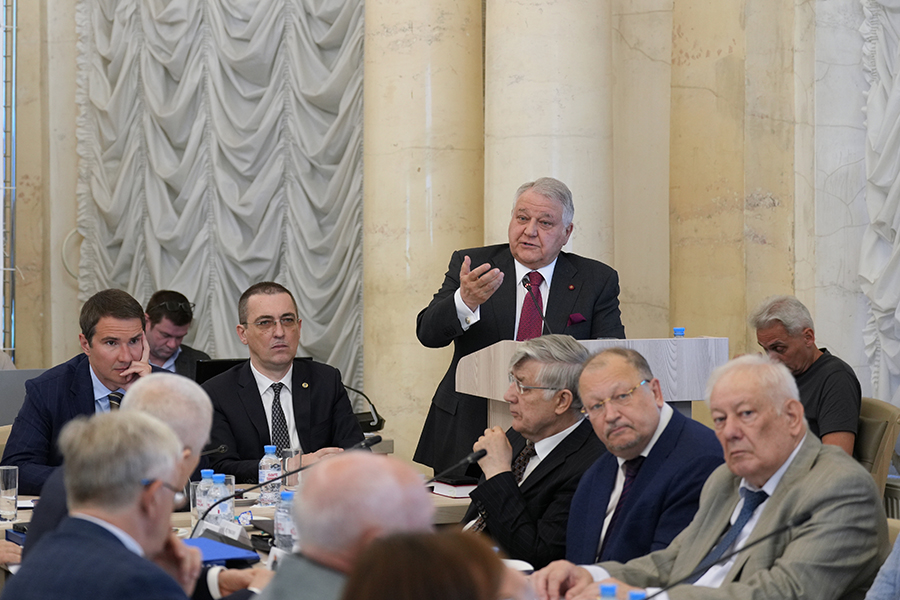
"Modern instruments allow us to observe the structure of matter with an accuracy of hundredths of an angstrom. But they only determine the final arrangement of the atoms, and you need to look at nature, how she brought the atoms into this state. If we can fix this, we will reach a new technological level," the scientist emphasized.
How to study ancient artifacts with the help of mega installations
Ekaterina Yatsishina, Deputy Director for Scientific Work at the National Research Center, also spoke about the use of synchrotron and neutron methods for studying ancient artifacts and other cultural heritage sites. So, experts have studied a conglomerate of artifacts more than 1 thousand years old, found in the "Black Grave" — a burial mound located near Chernigov.
"Using neutron and computed tomography, the specialists, without destroying the structure of the objects, were able to identify the details of the horse harness, read the inscription on the hilt of the sword. The most amazing thing was the discovery of a unique barbarian scepter, its 3D model was printed by specialists of the Kurchatov Institute. It turned out that this was not a military weapon, as previously assumed, but a symbol of the power of a noble. Analogues of these products are found in Viking age burials of the 10th century in the UK," she said.
Also, as part of a series of studies jointly with the Institute of Archeology of the Russian Academy of Sciences, ancient Russian jewelry technologies of the XI–XII centuries were studied, including such fine techniques as grain, Ekaterina Yatsishina added. As a result, experts have identified important nuances of technology, including the composition of the so-called invisible solder.
Academician Vladimir Popov, Scientific Director of the Federal Research Center for Biotechnology of the Russian Academy of Sciences, also spoke about how synchrotron sources make it possible to create new medicines and high-precision diagnostic tools. In particular, scientists have designed fluorescent marker proteins that help monitor molecular processes in living cells.
Academician Alexander Shkurinov, Head of the department of the Institute of Laser and Information Technology Problems — Shatura at the Kurchatov Institute Research Center, announced the creation of the world's first unique installation that synchronously generates several types of radiation at once — X-ray and terahertz, as well as a stream of electrons. In this case, the received pulses have a duration of less than 100 femtoseconds with a repetition rate of up to 100 kHz.
"Such an electron beam has already shown its effectiveness in medicine. For example, experiments on melanoma cells have confirmed that exposure to femtosecond electron radiation can be more effective than traditional gamma radiation," the scientist said.
Academician Stepan Kalmykov, Vice President of the Russian Academy of Sciences and Head of the Department of Radiochemistry at the Lomonosov Moscow State University Faculty of Chemistry, spoke about the use of synchrotron technologies in radiochemistry. According to him, using these methods, scientists have discovered for the first time that plutonium can exist in a special intermediate form. In this form, the element retains mobility and solubility for a long time, which allows it to be transported with water currents and spread in the environment. This discovery makes it possible to more accurately predict the behavior of radioactive substances after accidents, leaks and other man-made incidents.
In addition, the scientist noted, synchrotron diagnostics is already being used in the development of technologies for the safe management of radioactive waste, as well as in the creation of new radiopharmaceuticals.
Переведено сервисом «Яндекс Переводчик»
