Strong ratios: the "calculator" of destruction will increase the safety of housing in earthquake zones
- Статьи
- Science and technology
- Strong ratios: the "calculator" of destruction will increase the safety of housing in earthquake zones


For the first time, scientists from Vladikavkaz have adapted the world's leading methodology for calculating stability and built forecasts for the earthquake resistance of typical houses. To see how buildings will behave in case of tremors, the authors calculated the loads that the building will experience using the example of recordings of real earthquakes. Experts have calculated the risks for panel buildings and developed a plan for implementing the technology in regions where the risk of destructive events is high. Now you can find out in advance how much time and money it will take to restore the residential infrastructure. However, it is necessary to investigate the economic feasibility of introducing a new approach, experts told Izvestia.
What are the curves of seismic damage to structures?
Scientists from the Vladikavkaz Scientific Center of the Russian Academy of Sciences and the North Caucasus Mining and Metallurgical Institute have proposed adapting an international methodology for assessing the earthquake resistance of buildings for use in Russia. The approach is based on the construction of seismic damage curves, which make it possible to predict not only the probability and degree of damage to structures during earthquakes, but also the associated economic losses, as well as the time required for the restoration of facilities.
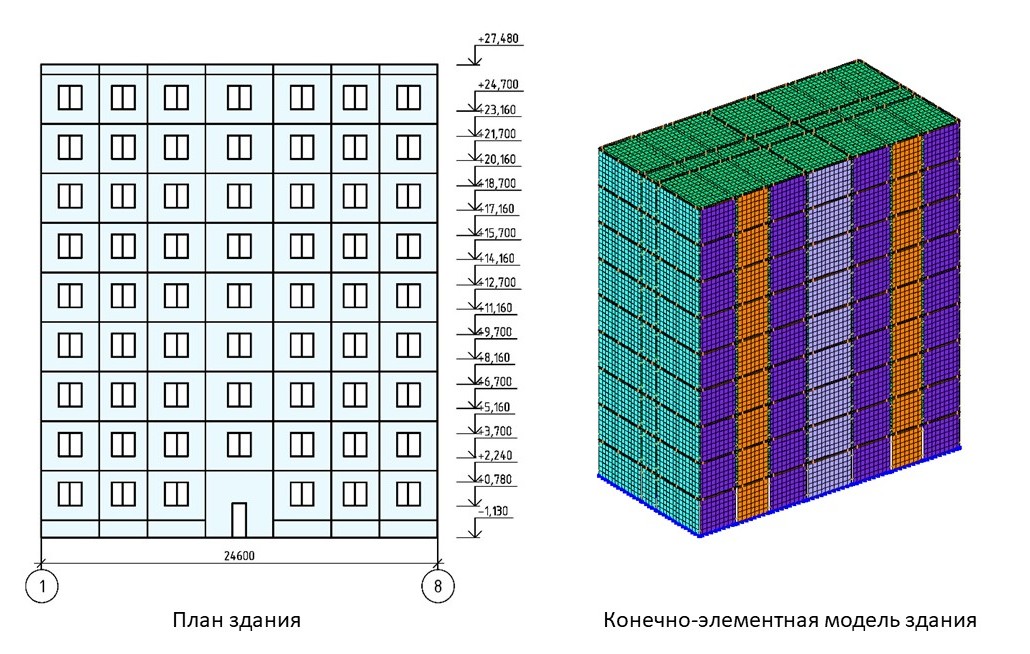
The technology itself consists in designing buildings and structures based on performance criteria (in world practice, it is called Performance-Based Earthquake Engineering (PBEE). The hike allows for a comprehensive assessment of the seismic resistance of a wide variety of structures. However, it has not been used in our country before, as there were no strategies and an appropriate regulatory framework for its full implementation. At the same time, it is important to adapt it, since a large number of Russian cities, including a number of large ones, are located in earthquake-prone areas, the scientists said.
For the first time, experts applied the methodology to assess the seismic resistance of residential buildings in Vladikavkaz and developed recommendations for its implementation in Russia.
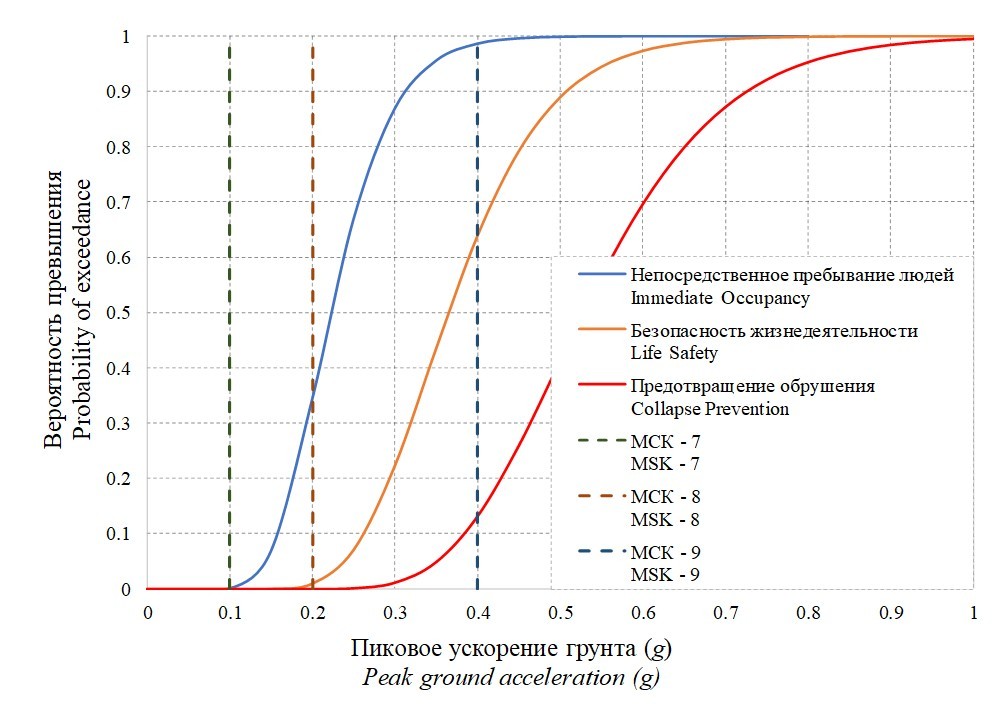
As an example, the authors chose the most massive series of large-panel houses built in the 1970s and 1980s, in which about 12% of the population lives in Vladikavkaz (and up to 60% in some areas of the city). First, the researchers created a digital model of such a house, taking into account the features of its design and materials, and identified for it three key damage levels used in the PBEE methodology: "direct presence of people", "safety of life" and "prevention of collapse".
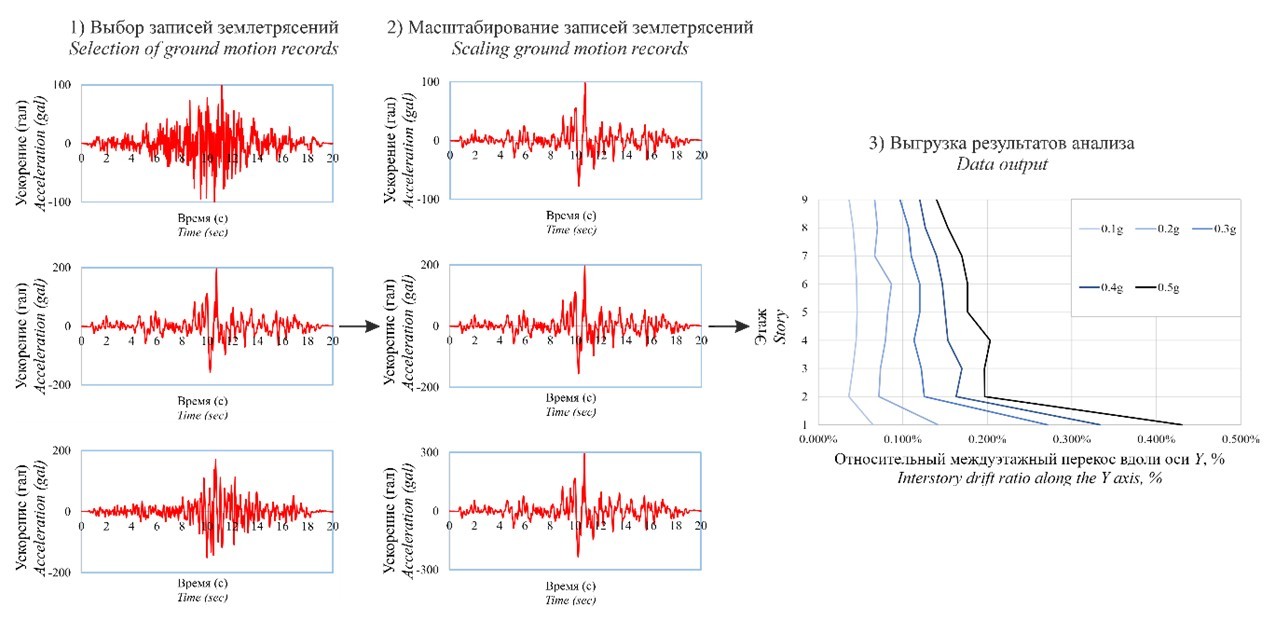
To see how buildings will behave in case of tremors, the authors calculated the loads that the building will experience using the example of 20 recordings of real earthquakes scaled by five levels of seismic impact intensity (a total of 100 models).
Based on the data obtained, the scientists constructed seismic damage curves, graphical models that reflect the likelihood of achieving different levels of damage to a building depending on the intensity of the seismic impact.
— Using the damage curves we have obtained and knowing how the cost of earthquake damage is calculated, it will be possible to quickly determine how much it will cost to eliminate the consequences of tremors of varying strength. Thus, in order to use the PBEE methodology in Russia, it will be important to take into account federal and regional estimates of the cost of restoring structures," said Zaurbek Abaev, project manager, Candidate of Technical Sciences, researcher at the Integrated Research Department of the Vladikavkaz Scientific Center of the Russian Academy of Sciences.
The authors emphasize that the proposed solutions can also be useful in the procedure for recognizing an apartment building as an emergency and examining the technical condition of old buildings.

Prospects for the implementation of the international methodology
The technique looks very promising because it helps to look at the earthquake resistance of buildings not formally, but in fact, said Leonid Drobyshevich, NTI technology expert. It is important not only to understand whether the house will stand or not, but also to estimate in advance how badly it will be damaged, how much it will cost to repair and how quickly it can be restored.
— This is especially important for earthquake-prone regions.: The cost of making a mistake is too high there. Instead of answering in the spirit of "the building meets the standards," a more practical picture appears: what will happen in different earthquake scenarios, what damage is most likely, and which objects require special attention. This is very useful both for new projects and for the existing housing fund," the expert said.
If the methodology can be integrated into current regulations and adapted to Russian conditions, it will help make more accurate decisions: where the house can be reinforced, where major repairs are needed, and where the risks are already too high, Leonid Drobyshevich emphasized. This is not only about construction itself, but also about budget planning, the work of the Ministry of Emergency Situations, public utilities and insurance companies. However, in order for the technique to work fully, we need up-to-date earthquake hazard maps, new calculation models, standards and specialists who know how to work with it, the specialist said.
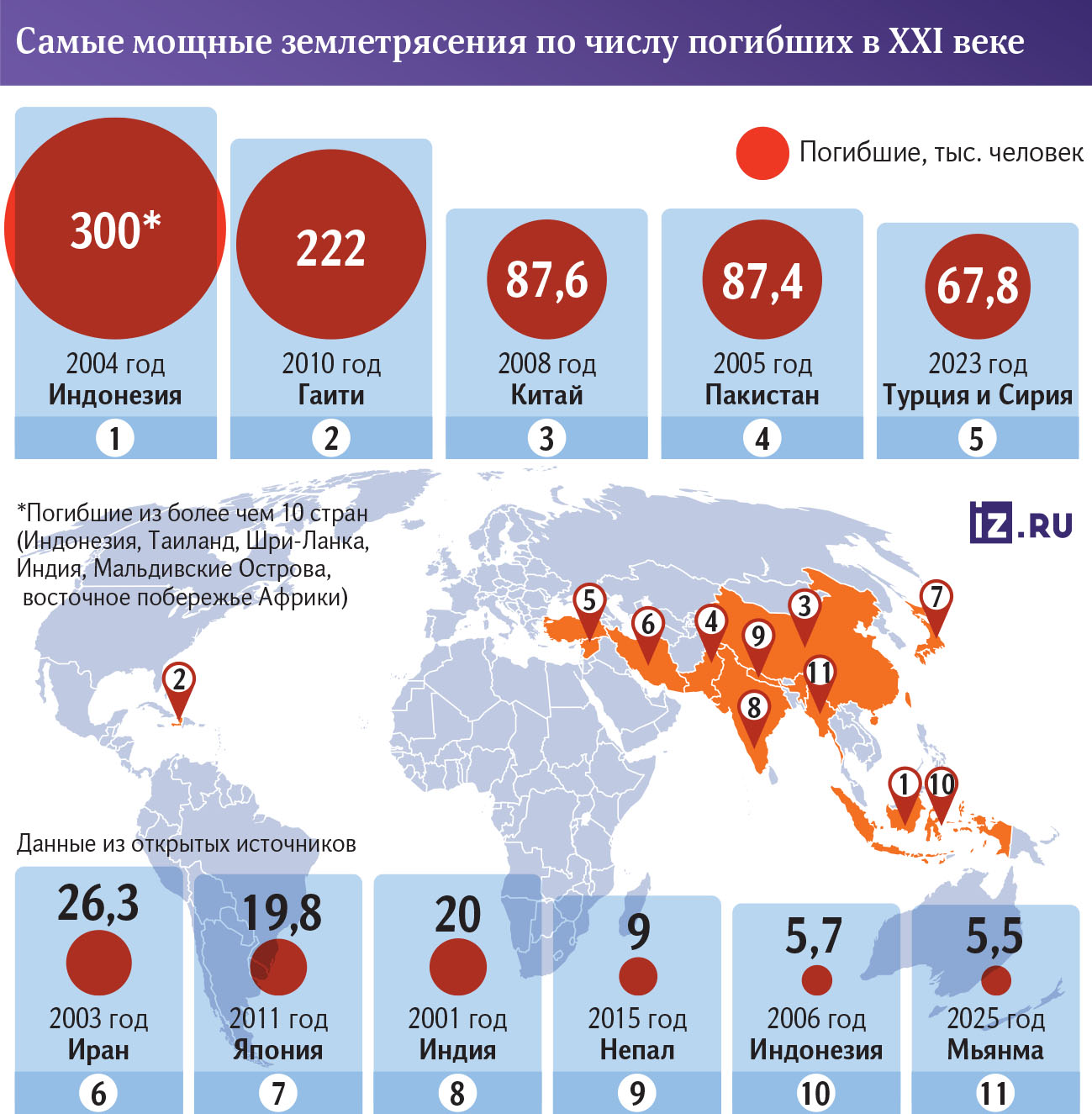
As the strong earthquake in Venezuela showed, even with the high quality of construction, buildings that were built in the 1950s and 1960s are mostly affected. Even with technology, there is a wear factor, and if the new buildings withstood such strong shocks, the old ones did not, Alexey Ostapchuk, associate professor of the Department of Theoretical and Experimental Physics of Geosystems at MIPT, told Izvestia.
— Every country requires its own methods for assessing the earthquake resistance of buildings, it is necessary. But in the era of a market economy, everything starts to come down to money. Are countries ready to demolish non-life-threatening housing, but with risks of destruction in earthquake-prone regions? In such conditions, we will actually have to recognize much more housing as emergency and requiring the relocation of residents," the expert noted.
Researchers from Vladikavkaz have developed a specific plan to introduce the technology in Russia. It includes the creation of updated regional seismic hazard maps, the transition from simplified calculations to nonlinear modeling for all types of buildings, as well as the development of state standards for assessing the seismic stability of structures on the PBEE scale.
The results of the study, supported by a grant from the Russian Science Foundation (RSF), are published in the journal Sustainable Development of Mountainous Territories.
Переведено сервисом «Яндекс Переводчик»
