Warehouse adventures: why the horror "Behind the Scenes of Reality" became a hit


The liminal horror Behind the Scenes of Reality, the debut of YouTube director Kane Parsons, has already grossed $212 million worldwide and continues to gain momentum. Last weekend, he was on the second line of the Russian box office, second only to the biopic "Michael". Studio A24 is reaping the laurels, fans are already waiting for a sequel from Parsons, and critics are hastily reporting that the horror industry is being taken over by amateurs from social networks, who have already presented "Iron Lung" and "Obsession" just this year. Izvestia tells us why the "Behind the Scenes" shot like that and what should be alarming in this situation.
YouTube as the best springboard for horror
"Behind the Scenes of Reality" should not be considered just an unexpected success of studio A24, which bet on the prodigy Kane Parsons and broke the bank. This horror release had a long and vivid backstory, which in many ways sheds light on its overwhelming success at the box office.
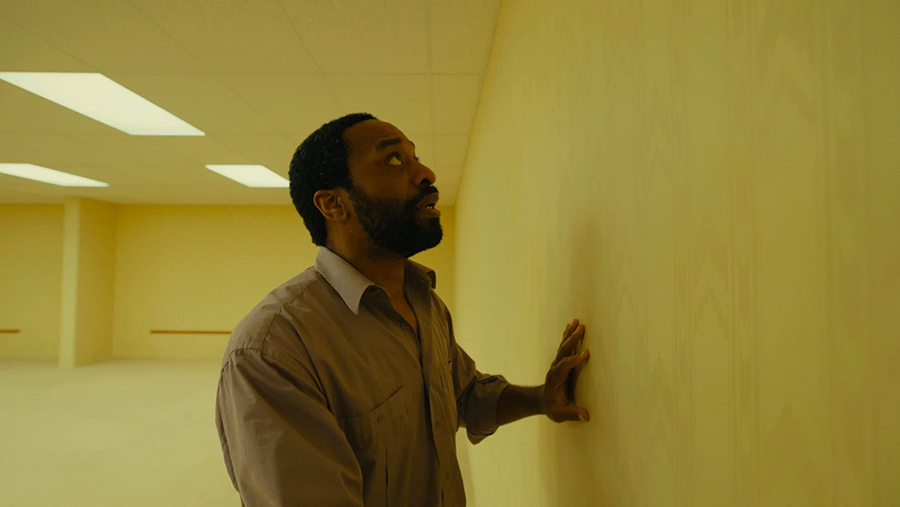
In 2019, a meme appeared on the popular Internet forum 4chan, which quickly went viral. It was a picture of an empty room with dull yellow wallpaper. The caption to the photo said that if you accidentally break through the boundaries of reality in the wrong place, you can end up in the Backstage — a space of 600 million square miles, which consists entirely of almost identical trap rooms and is inhabited by some unfriendly creatures.
The 4chan audience was inspired and immediately began producing their own variations on the theme of Behind the Scenes. But most of all, this image inspired 16-year-old teenager Kane Parsons. Armed with a video camera and the simplest editing programs, he launched a series of amateur videos in the style of found footage, that is, imitating real first-person shooting. The characters in these videos got lost and disappeared into empty mazes, leaving only "videotapes". Among all the behind-the-scenes work, Parsons' videos turned out to be the most popular, and this space itself turned into a fashionable global "kripipasta" (as online urban legends are called).
In general, it is not surprising that during the crisis of ideas, studio A24 offered yesterday's schoolboy, but already experienced director Parsons, to turn his videos into a serious full-length horror with a decent budget of $ 10 million (in Russia, most blockbusters are cheaper). Parsons was given almost complete control, but on the condition that the script would still be written by a professional, Will Sudik, who worked on The World of the Wild West and Homeland. And the studio also gave Parsons two big stars in the cast. Chiwetel Ejiofor starred here in a duet with Norwegian actress Renate Reinswe, who, after the success of "The Worst Man in the World," became very popular in international cinema, and this year was nominated for an Oscar for "Sentimental Value."
What happens in the "Behind the Scenes of Reality"
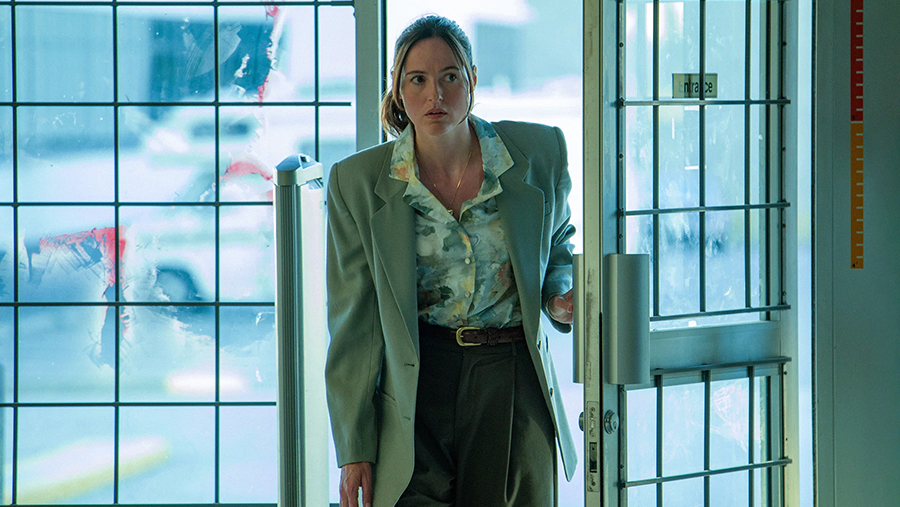
Contrary to expectations, Parsons did not shoot the entire film in the style of "The Blair Witch," leaving, however, a short prologue with a subjective camera. Otherwise, it turned out to be a relatively conventional horror, in which "Cube", "Inner Empire", the third season of "Twin Peaks" and "Silent Hill" are intertwined. The director himself calls the Portal video game the main source of inspiration. To be honest, the film at some point reminded the author of this text of games from the 1980s like "Prince of Persia", where there were also monotonous mazes, so I had to draw large maps of levels on a paper in order not to get lost.
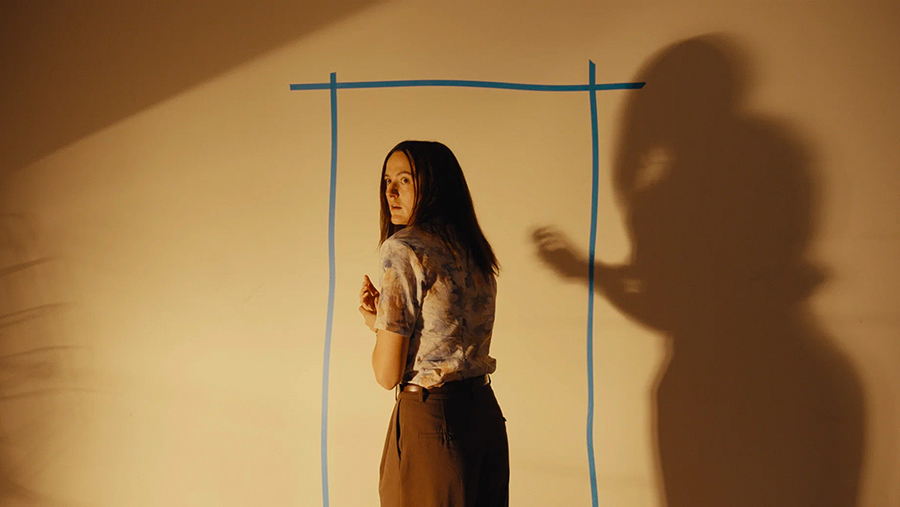
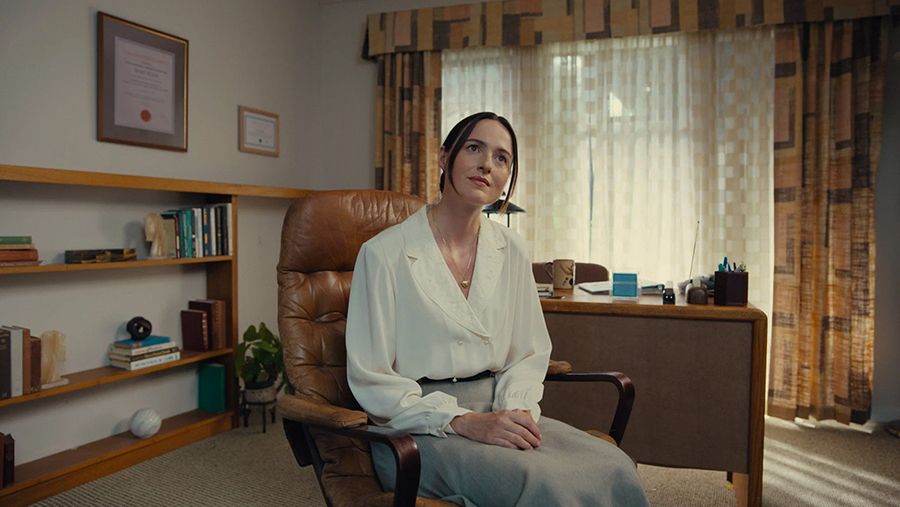
Reinswe plays a popular psychologist who is visited by the nervous owner of the Clark furniture salon. Clark was kicked out of the house by his wife for drunkenness, he became very nervous, lives right in the store and is very angry that his life is going so badly. Clark wanted to be an architect, but he was forced to pose as a one-legged pirate, unsuccessfully advertising an eternally empty store. Among other troubles, he is worried about suspiciously high electricity bills, and the switchboard in the store is also not working properly. One day, Clark discovers that if you walk through the wall of the store, you get into a grandiose storage room-a maze. It looks like abandoned offices littered with junk. While the psychologist thinks Clark has a "squirrel," he studies Behind the scenes, but at some point does not return from there. The psychologist goes to look for the missing client, at the same time dealing with his own injuries.
The film has at least two advantages that make it worth watching. First, there is a small scene between Ejiofor and Reinswe, when the psychologist suggests playing a role-playing game. She will swear at him on behalf of the hero's wife and eventually tell him everything he needs to know about his behavior. This is a short but very memorable sketch, which, unfortunately, will not receive proper development in the film.
Secondly, the actual world Behind the Scenes, which the artists built almost for real on the territory of 3 thousand square meters. m. They say the members of the film crew sometimes really got lost there. The rooms are similar to each other, but at the same time they are all different. They are connected by narrow loopholes, small windows, secret hatches and passages hidden in the walls. This is an expressionist space that makes you remember the German masterpieces of the 20s of the last century. The junk in the rooms is full—fledged installations of furniture, rags and unidentifiable objects. Somewhere they are just sketched, and somewhere they have "grown" into floors, ceilings and walls. The perspectives are distorted and the outlines are vague, as the style imitates an old low-quality videotape.
Wandering around behind the Scenes with the characters is not only not scary, but also very exciting, like visiting a contemporary art exhibition. A complete sense of museum space. There is even a parallel somewhere with Matthew Barney's Cremaster project, with which some similarities can be found behind the Scenes.
To be honest, I would like it to end with this: we would take a walk behind the scenes, evaluate the artists' ideas and would be very pleased. However, then the film would hardly have collected its millions, because the fans Behind the Scenes did not come to horror for this, but to see monsters, chases, deaths, blood and other elements of the genre, which are both schematic and secondary here. The images of the main characters are given offhand, and Reince has almost no material to work with. Ejiofor, with his rich acting range, is also mostly bored in the frame. It is clear that this film is not for the sake of plot, characters, drama, or even philosophy, but for the sake of a specific place that has long been familiar to the YouTube audience and suddenly rose to the big screen.
But there is a problem here too: the effect of presence that was in the videos is largely lost here, because there is no longer any found footage, but there are quite tangible actors and their equally distinct motives. All this turns the Backstage not only into a museum exhibit, but also into an attraction, something like a reality show, where everything is fake and not scary at all. "Behind the scenes of reality" does not frighten, and the open ending, which too directly hints at a sequel, does not arouse interest, but a feeling of fatigue and persistent unwillingness to wait for the continuation of this horror.
Studio A24's calculation is clear, and it's not the only one that relies on popular YouTube brands to gain a loyal audience on the cheap. "Obsession" and "Iron Lung" are also from this line. And, of course, it's easier for them to get through to the audience than the masterpiece art horror "Is There a God?", which is sure to be in the top of all critics for the year and is doomed to cult status, but it only grossed a few million at the box office. And here is a record after a record. Parsons has already become the youngest American director in history, whose film topped the national box office. Another thing is that there is more marketing and a ready-made sundress here than cinema itself, and Parsons is clearly not Xavier Dolan, Bertolucci or Carax. Although American critics like to remind us that Parsons' name obliges him to become the new Orson Welles. It sounds beautiful, but it only sounds.
Переведено сервисом «Яндекс Переводчик»
