Shoot down first: how interceptor pilots are trained in a special operation zone


Heavy Ukrainian Baba Yaga drones, aircraft-type reconnaissance drones and FPV copters are increasingly becoming targets of special interceptor drones. To combat them, the troops are receiving new Lightning air defense vehicles capable of reaching high speeds and hitting air targets at a considerable distance from the front line. Izvestia learned how the 114th brigade of the 51st Guards Army of the Center group of forces is mastering new technology during the classes of interceptor pilots.
What is the advantage of the Lightning Air Defense drone
The new "Lightning Air Defense" looks nothing like the usual FPV copters. A small aircraft with a pusher propeller is designed not to hit the ground, but to hunt for aerial targets. While some fighters are preparing the device for launch, others are discussing the latest interceptions of heavy Ukrainian drones.
According to the military, it is the fight against such targets that is becoming one of the main tasks of drone operators today.
— If we take the current situation that we have on the front line, this is a "kill zone" of at least 30 km. The enemy has a lot of Baba Yaga type hexacopters and reconnaissance wings. Kamikaze quadrocopters are no longer very suitable for shock missions to destroy them, at such distances the weight of the charge will be small. Therefore, we use large Lightning bolts for them, and FPV copters and Air defense Lightning bolts for interception," explains Raccoon, platoon commander of the unmanned systems of the 114th brigade.
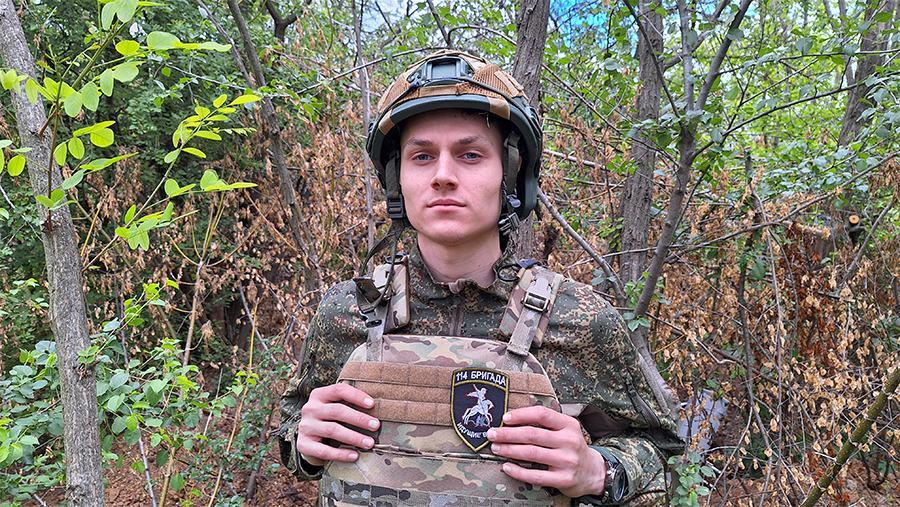
According to him, along with the constant expansion of the "kill zone", the tactics of actions are changing not only for infantry and drivers, but also for drone operators. One of the most important tasks remains to protect our troops from air strikes, especially given the growing use of heavy Vampire multicopters, better known as Baba Yaga, by the enemy. Such devices are used as bombers and are capable of carrying several ammunition — 60 mm or 82 mm mortar shells, TM-62 anti-tank mines or homemade ammunition of comparable mass.
— If we take our unit, we have about 600 Baba Yaga copters shot down during our work on aerial targets. There aren't many planes, because we don't specialize much in them, only if we find them by chance and attack them. But still, about 30-40 scouts were shot down. We have operators who have more than 100 downed targets on their personal account alone," the Raccoon replies when asked if there are already air combat aces among the fighters.

In the interception videos shown by the commander, Baba Yaga drones are falling one after another. Revolver ammunition suspensions are clearly visible before the strikes, which makes it possible to imagine the consequences of possible attacks on ground targets. The raccoon explains how difficult it is to hit a moving aerial target on an FPV drone - you can see how the enemy "wings" are maneuvering.
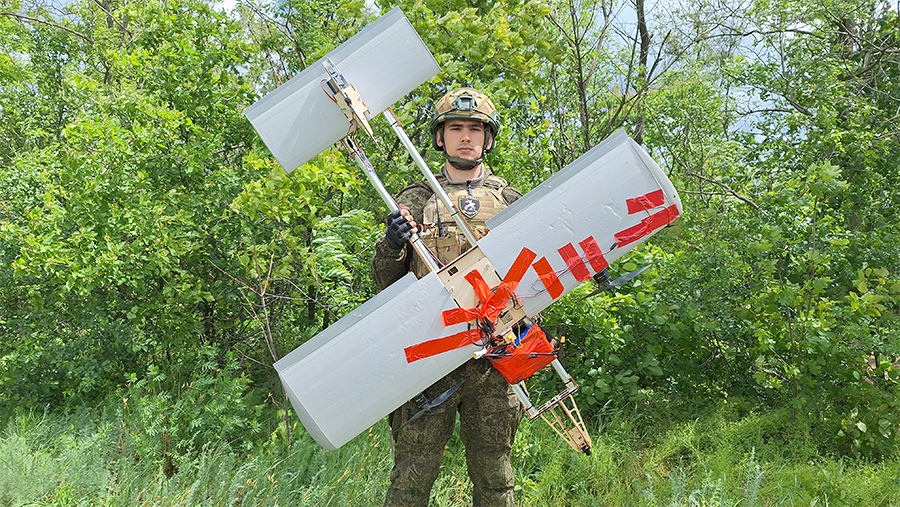
At the same time, all operators undergo universal training. Once in position, the crew must be ready to perform any task, both strike and interception of air targets. In the current conditions, it is difficult to equip separate sites and maintain specialized calculations for different types of tasks. Therefore, each unit receives a supply of various drones and uses them depending on the operational situation.
— The Lightning Air Defense aircraft is two times smaller than a conventional Lightning, carries a load of up to 1 kg and is designed to operate exclusively for aerial purposes. He is faster and more maneuverable, so it is much easier to hit the enemy. Basic training for an interceptor pilot takes 21 days, from theory to practical flights. After that, he is ready to go on a combat mission," Maestro, an aircraft—type FPV pilot who is engaged in training, introduces us to the new UAV.

A small catapult is attached to the new Lightning of Air Defense, but the Maestro and the student pilot demonstrate to us a hand-held launch that can be performed faster and without unnecessary unmasking. The weight of the interceptor allows this, at least in good weather.
How interceptor drone operators are trained
A Hedgehog is trained at the console, who has already been trained as a copter pilot, and is now mastering interceptor aircraft.
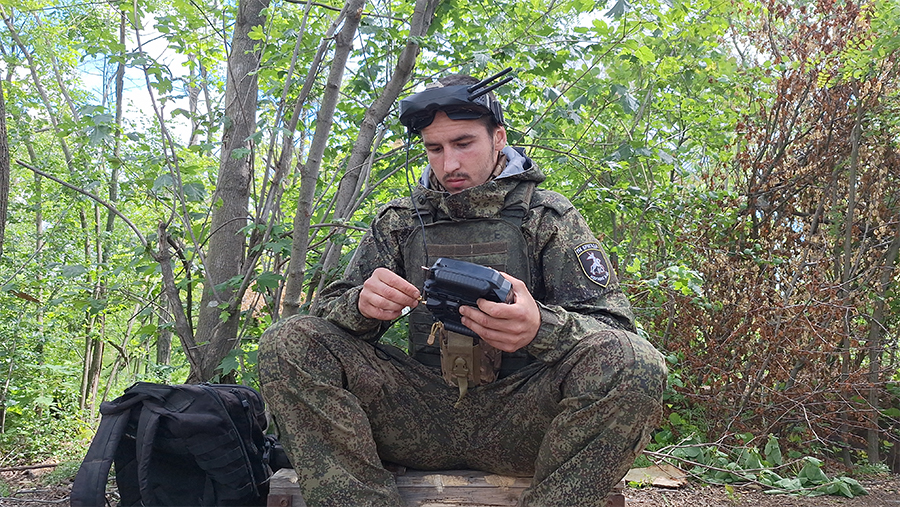
— After training, we will go on combat duty with a crew of two pilots and a sapper, we will protect the skies of the DPR, — says the Hedgehog.
Prior to that, since 2022, he was a mechanic-driver of the Nona-S self-propelled mortar and, as he himself emphasizes, collided with UAVs quite close, was injured. When mortars and self-propelled guns became less relevant, he was transferred to the army of unmanned systems.
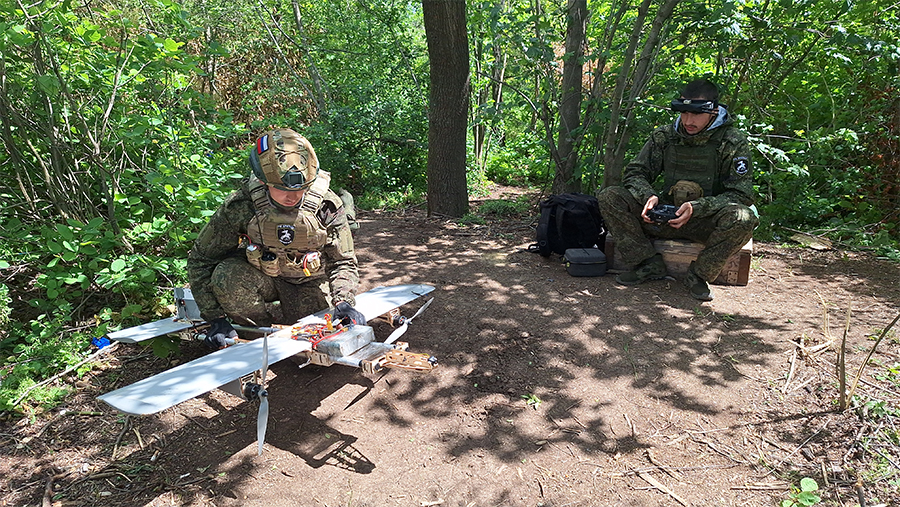
The hedgehog, wearing glasses, conducts pre-flight preparation of the flight, the Maestro holds a "Zipper" next to him, names an element for each stage of the check and, if the commands have passed, adds "yes".
— Elevator, yes. Ailerons — yes, there is a short check. In combat conditions, the sapper technician and the pilot are in different shelters, often at a considerable distance from each other, and such things are carried out by communication.
After checking, the Maestro quickly picks up the ready-to-fly "Air Defense Lightning" and habitually launches it with a sharp throw from his hands. The interceptor moves forward easily and quickly: the manufacturer allows speeds up to 300 km/h, but our interlocutors have not yet tested this possibility. They practice technique, aerobatics, and approach training targets. The latter are smaller than the enemy's multicopters, FPV drones.
Together with a network of aerial surveillance points, mobile firing groups and classical air defense, the massive use of interceptor drones should change the situation in the air. And it's not just about the price and the number of people involved. It is important that aircraft can stay in the air for a long time in readiness for interception, hunt for aerial targets at different altitudes and in a sufficiently large radius from their own take-off points, destroying an aerial enemy not only near protected objects, but also closer to its territory.
Переведено сервисом «Яндекс Переводчик»
