Search service: how Mavikov's calculations conduct reconnaissance near Konstantinovka


Russian army units continue to advance towards Konstantinovka. This is one of the cities of the DPR captured by the Ukrainian Armed Forces in 2014. Now he is included in the "fortress belt" advertised by Ukrainian propaganda. According to the idea of the command of the Armed Forces of Ukraine, he should prevent the complete liberation of the territory of the republic. However, the enemy cannot stop the advance of our forces, and this is largely due to the drone operators. How calculations of Mavik drones from the special forces unit of the Southern Group of Forces operate in the Konstantinovsky direction is described in the Izvestia report.
"Maviki" in the sky
Since the early days of its military operations, Mavik quadrocopters have become the main workhorse of small unmanned aircraft, one of the symbols of how combat operations have changed. Due to their simplicity and compactness, these vehicles are widely used for reconnaissance and for dropping ammunition on enemy personnel and equipment.
— Today, Mavik's calculation includes two people — night and day operators, — the operator with the call sign Raven told Izvestia. — When we were working with discharges, we needed a sapper, but now we are engaged in reconnaissance and correction, records of objective control, that is, we record the defeat of targets. And the strike tasks are mainly performed by FPV drones.
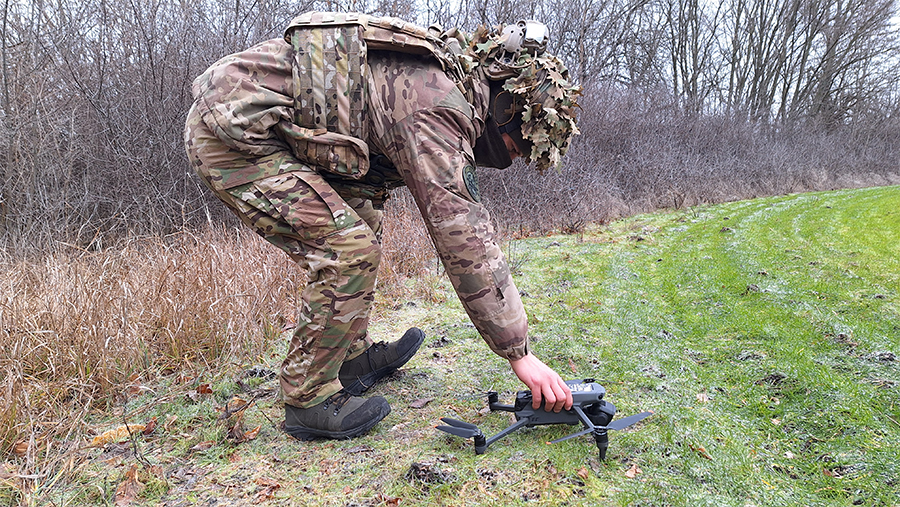
Raven says that dropping ammunition from Maviks is gradually becoming a rarity. It is becoming increasingly difficult to approach the enemy's forward positions, so the strike tasks are shifted to vehicles that have a longer range and are more resistant to electronic warfare.

Moats, buttresses, and burning machinery
Raven has been flying UAVs for two years now, and has been in the army since mobilization in 2022. He started his combat career in the infantry and transferred from there to the special forces unit of the Southern Group of Forces. He was trained there and became a UAV operator in a reconnaissance group.
He briefly explains the situation in the Konstantinovsky area.
"From my position, I see moats, a lot of strong points and equipment — we hit it every day," he said. — I also see enemy infantry. Now we are gradually gaining ground. Slowly, but surely.
According to him, the enemy is consistently active in the air, unlike in many other areas where the Armed Forces of Ukraine maneuver with reserve units of drones.
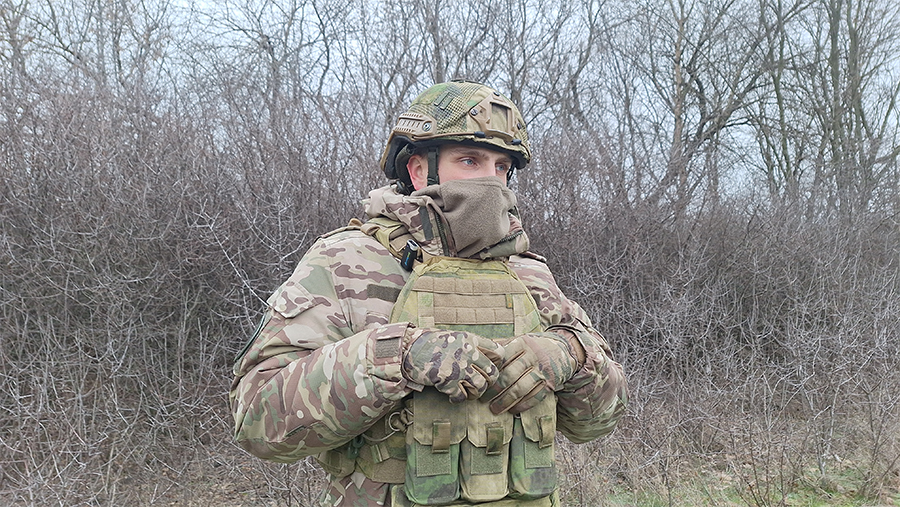
Raven says that foreign mercenaries were spotted in the Konstantinovsky direction, in particular from Poland and Georgia, who had not been seen in the DPR for some time.
Their appearance coincides with the reform of the foreign units of the Armed Forces of Ukraine. According to the statements of the enemy's command, mercenaries are deprived of special conditions of service under annual contracts in individual units and transferred to ordinary combined arms brigades on general terms.
The innovations affected those foreigners who were legalized in the Ukrainian service through territorial defense units. However, it is not yet known whether they have affected the militants who are located in the units of the Main Directorate of Intelligence (GUR) of Ukraine. And the most trained and valuable foreign personnel are located there.

Frontline workers
"The Maviks were hard workers, and they still are," says the second operator with the call sign Sobol. — We fly with extra batteries longer and further than before. We are engaged in reconnaissance, we find the antennas of enemy UAV control points, we transmit information to colleagues who work on Lightning attack drones. They strike at targets. We record the results of their work.
Often, after the initial reconnaissance, which is carried out from large aircraft-type UAVs, "additional reconnaissance" is necessary. It is already being carried out from copters, which can fly closer and descend to low altitudes.
Such abilities are especially important when searching for satellite Internet antennas or small UAV repeaters.
Sobol speaks about the good engineering preparation of the enemy's positions in the Konstantinovsky direction. And he immediately notes that the AFU's electronic warfare systems are not as active as in many other areas of the line of contact.
"EW doesn't bite much here," he says. — We mostly fly with a good signal. Communication breaks occur when we fly directly over vehicles, but this is not critical.
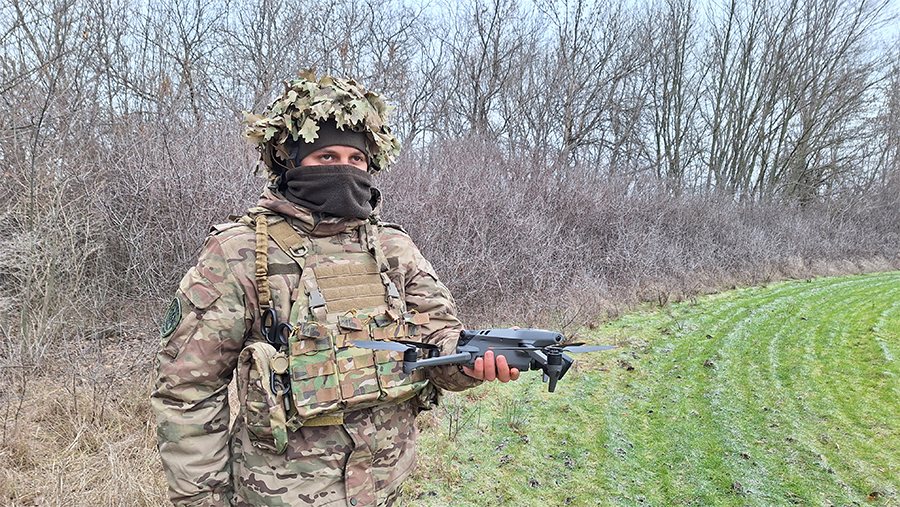
According to our interlocutor, the main losses of UAVs today are caused by the actions of interceptor drones - these are FPVS ramming Mavics, as well as copters with suspended rocket launchers.
Now both the Russian troops and the Armed Forces of Ukraine are experimenting with the design of interceptor UAVs. But so far none of them has become generally accepted and has not gained a clear advantage over the others. Therefore, there are all kinds of options in the air, up to recoilless shotguns mounted on drones.
"The enemy became especially secretive at night,— says Sobol. — He is afraid of FPV drones with thermal imaging cameras, so the enemy does not go anywhere at dusk and at night. We are working well. As soon as someone brave comes out of hiding, even going to the bathroom is certain death. We fly 24 hours, seven days a week, so we hit such targets right away.
Of course, our drones also have to disguise themselves. Moreover, the enemy makes special efforts to find them.
The main threat, according to Sobol, is the heavy Baba Yaga copters. The enemy uses them as night bombers and, despite their high cost and significant losses, continues to use them in large numbers.
Переведено сервисом «Яндекс Переводчик»
