- Статьи
- Science and technology
- Species Decency: Exposing doppelgangers will help increase mussel production

Species Decency: Exposing doppelgangers will help increase mussel production

For the first time, scientists have separated the habitat conditions of two seemingly indistinguishable mussel species — Mytilus edulis and Mytilus trossulus. Previously, these mollusks could only be distinguished by laborious genetic analysis. The results obtained will make it possible to select optimal growing conditions for a species that is more significant from the point of view of the food industry and separate it from the second twin. This will allow launching the production of healthy seafood, the interviewed experts told Izvestia.
Twin mussels in the Arctic seas
Some species of living organisms cannot be distinguished from each other by their external features. They turn out to be so similar that it is possible to determine which species an individual belongs to only by analyzing its DNA sequence. However, such species may include organisms grown for the food industry. For example, two species of mussels live in the Arctic seas — Mytilus edulis and Mytilus trossulus. They are grown in aquaculture, but the meat of Mytilus edulis contains more protein and vitamins. Therefore, it is necessary to distinguish between these species in order to grow Mytilus edulis, which has more valuable nutritional qualities. However, at the moment there is no other way to do this, except for time-consuming genetic analysis.
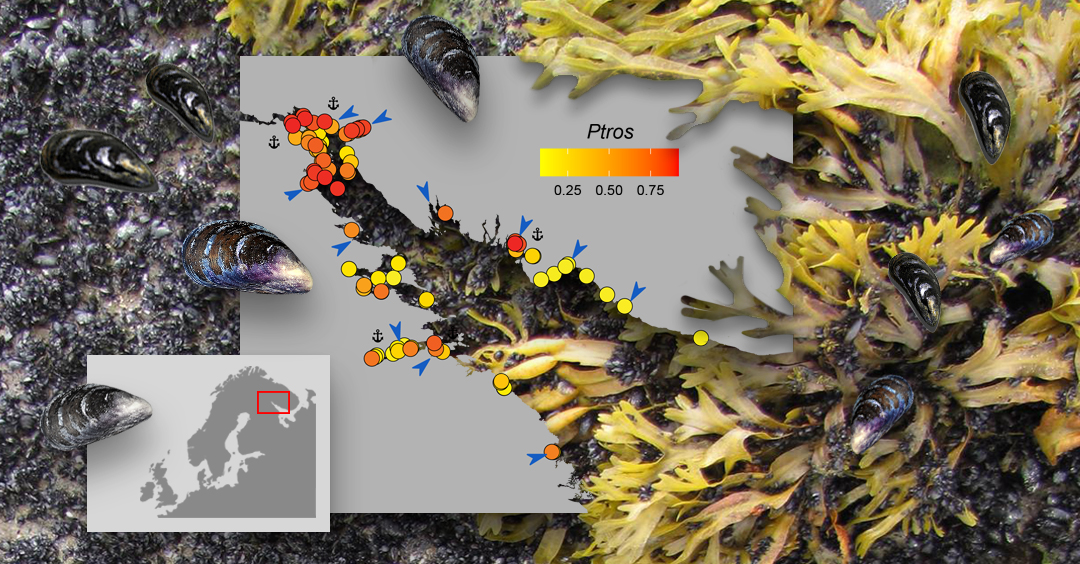
Scientists from St. Petersburg State University and colleagues have found that it is possible to separate the mussels Mytilus edulis and Mytilus trossulus using the ecological differences between them. During the summer months of 2011-2018, biologists collected several thousand mussel specimens from 95 coastal sites in the Kandalaksha Bay of the White Sea and identified their species. At the same time, the researchers relied on signs that appeared with different probabilities in individuals of the two species, for example, on the different structure of the inner side of the shell. The authors then assessed the conditions in which each of the studied species lives by analyzing the salinity of the water, the type of soil on the bottom, the characteristics of the surf and proximity to harbors. To analyze the resulting database, the researchers used a species distribution model, a numerical tool that allows them to establish a link between the prevalence of species and environmental conditions.

It turned out that Mytilus edulis prefer to settle on the ground in places open to currents, in water with an average salinity for the White Sea (about 24 ppm is about 1.5 times higher than the salinity of the Black Sea) and far from ports and large rivers. Mussels of the Mytilus trossulus species, on the contrary, mainly lived on the bottom overgrown with algae, in areas protected from surf, in water with a lower salinity (about 15 ppm), near ports and large rivers. Thus, scientists have found differences in the ecological niches of two types of industrially significant mollusks.

Settlement of mussels on the ground and on fucoids
— We have established for the first time that there is no single "leading" factor determining the distribution of the two mussel species, contrary to the idea that has dominated the field since the first explorations in the Baltic. In the future, we plan to study how the two mussel species react to stressful conditions, such as anthropogenic pollution in ports. The results obtained will make it possible to more accurately monitor the level of water pollution in aquaculture," said Vadim Khaytov, a leading researcher and associate professor at the Department of Invertebrate Zoology at St. Petersburg State University.
Researchers from the Kandalaksha State Nature Reserve, the Institute of Cytology of the Russian Academy of Sciences (Saint Petersburg), Lomonosov Moscow State University and Murmansk Arctic University also participated in the study.
Commercial production of mussels in aquaculture
The established ecological differences between Mytilus edulis and Mytilus trossulus mussels make it possible to determine the necessary conditions for their cultivation as aquaculture objects, taking into account their physiological characteristics and adaptation to different characteristics of the aquatic environment, Svetlana Derkach, Doctor of Chemistry, Member of the Expert Council of the Russian Science Foundation, told Izvestia.
— The conducted biological studies of two types of mussels allow us to formulate recommendations for the selection of mussel cultivation sites, considering their different substrate and temperature preferences, tolerance to sea water salinity values, as well as vulnerability to external factors. It should be borne in mind that when creating industrial aquafarms, it is necessary to be guided by legal documents regulating the development of aquaculture in Russia and setting standards for the relevant products. The type of mussels planned for cultivation on an industrial scale should be included in the list of species allowed for cultivation in normal marine waters," the specialist said.

Scientists have made an important and practice-oriented scientific discovery, which serves as an excellent example of how fundamental ecology directly affects applied tasks such as aquaculture and the food industry, since for a long time industrialists have been growing mussels, unaware that they are dealing with two different biological species, said the associate professor of the Department of Technosphere Safety of the Agricultural and Technological Institute of RUDN University Regina Gurina.
"Now, knowing its ecological preferences, farmers can purposefully populate their farms with this particular species, optimize the location for farms, choosing areas with parameters where edulis will have an advantage over trossulus, reduce losses and increase yields, as the conditions will best match the biology of the target object," he said.

The study allows us to solve a mystery that has long been unattainable, mussels were considered one species (M. edulis), but scientists had questions: why do individuals from different regions differ significantly in physiology, disease resistance, preferred salinity of water and other characteristics, although they look almost the same, said the head of the Smart Supply Chain segment FoodNet Working Group (Foodnet) NTI Sergey Kosogor.
— Mussels are used in mariculture, but their growth, survival, and meat quality may vary. Research—based analysis, monitoring of ecosystems and biodiversity, and accurate identification of how each species reacts to pollution, climate change, and other anthropogenic impacts will help maintain economic interest in their production, he said.

In addition, mussels are the main fouling organisms that settle en masse on ship hulls and hydraulic structures, which leads to huge economic losses. Knowing the exact habitat conditions of each species will help predict where and with what intensity fouling will occur and how effectively it can be countered, the expert noted.
The results of the study, supported by a grant from the Russian Science Foundation (RSF), are published in the journal Marine Ecology Progress Series.
Переведено сервисом «Яндекс Переводчик»
