Act on seals: AI counts endangered animals on Ladoga for the first time
- Статьи
- Science and technology
- Act on seals: AI counts endangered animals on Ladoga for the first time


Russian scientists have developed an artificial intelligence-based technology for accurate counting of Ladoga seals. It is proposed to collect data using aerial photography, after which the resulting images will be analyzed by an AI algorithm. The last record of this Red-listed species, which lives exclusively in the waters of Lake Ladoga, was conducted more than 10 years ago, and today experts do not have up-to-date data on the state of the population. Meanwhile, without them, it is impossible to form effective measures to protect seals, which suffer both from the activities of fishermen and from the effects of global warming. According to experts, the new technique is much cheaper and more reliable than the manual calculations used earlier, and the monitoring results are critically important for the conservation of the species.
Counting seals using AI
The staff of the Friends of the Baltic Seal Foundation, together with the specialists of ANO Ecofactor, proposed a new methodology for estimating the number of Ladoga seals using artificial intelligence. It is planned that the population data will be obtained using aerial photography — from an airplane or an unmanned vehicle — and then the images will be analyzed by a specialized AI algorithm. The Ladoga seal is under threat of extinction due to global warming and human activity. Up-to-date information on population size is necessary to develop a long-term conservation strategy and specific conservation measures. The start of field accounting work is scheduled for March 2026.
— Previously, the usual visual method on ice was used to account for animals: the plane flew over the territory, and the accountants photographed the animals. But there was always the risk of missing some of the individuals. The use of instrumental methods such as video and infrared photography, as well as data processing using artificial intelligence, allows for more reliable results. At the same time, AI does not replace humans, but only complements their work: the conclusions of artificial intelligence will be checked by specialists," explained Elena Andreevskaya, a researcher at the foundation.
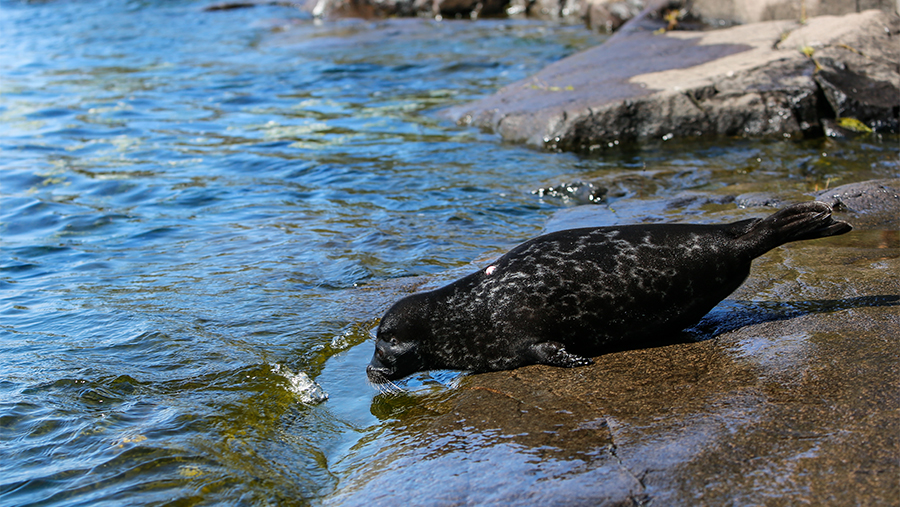
The Ladoga ringed seal is found exclusively in Russia and lives only in the freshwater ecosystem of Lake Ladoga, the foundation said. In the Red Book of the Russian Federation, it has environmental priority 1, which means inclusion in the list of endangered species, the protection of which is fixed by law.
In the 1930s, the population reached about 20 thousand. individuals, and by 2002 it had decreased to 3-5 thousand. Global warming leads to a constant reduction in the ice habitats of seals, and fishermen also cause significant damage: in some years, up to 10% of all animals may accidentally fall into the net. In addition, winter fishing enthusiasts and active tourism negatively affect the number of the species.
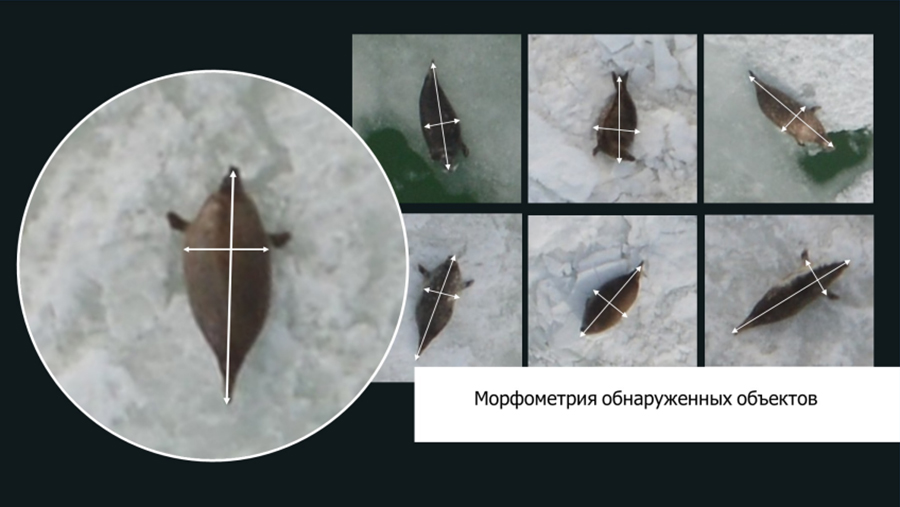
Multispectral aerial photography using thermal imaging and photographic equipment will be carried out to count the seals. Based on synchronous IR and high-resolution photographs, artificial intelligence will identify the animals, after which the results will undergo mandatory verification by specialists. The work will cover the entire water area of Lake Ladoga, which will be divided into three zones. Special attention will be paid to the northwestern part and the Ladoga Skerries National Park, as this is a key breeding area for the species. The greatest difficulties in accounting are expected in the area of skerries, an archipelago of many small rocky islands, where difficult terrain and vegetation make aerial photography difficult. Additional calibration flights are planned at these locations to adapt the methodology and fine-tune the television equipment.
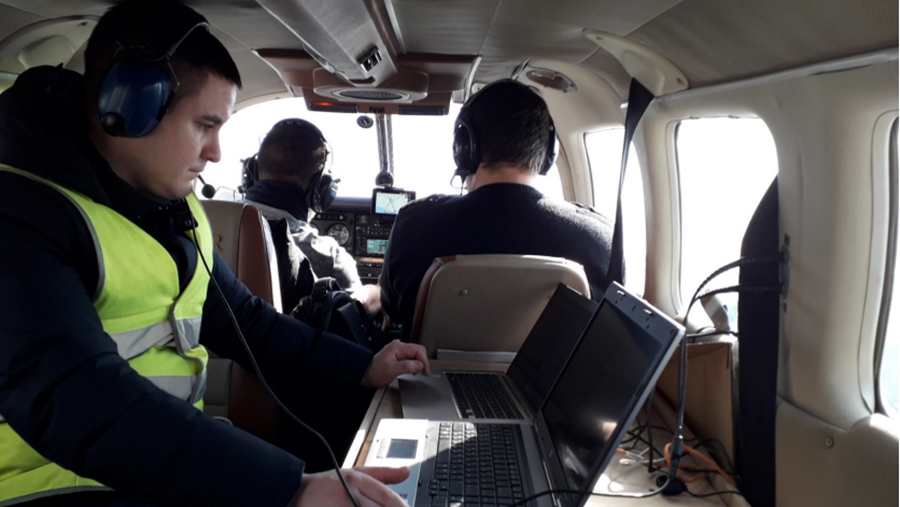
Seals are usually taken into account during molting, when the animals are constantly on the ice. If, for some reason, it does not exist on the lake, an alternative method is provided - accounting for individuals coming ashore. The last comprehensive visual count of the Ladoga seal was carried out manually in 2012. In 2020, unmanned aerial vehicles were used for the first time to count the population, but the survey was incomplete at that time, experts noted.
As a result of the work, specialists, in addition to estimating the population size, will receive maps of the distribution of animals and their breeding areas, as well as data on the sources of concern for seals — fishing sites, ice roads and active tourism areas. The information collected during the aerial survey will complement the picture available to scientists and will be used to form recommendations for improving the effectiveness of protection of the species within its range, as well as to update information on the current status of the Baltic seal. Thanks to the automated calculation, the dynamics of the number of animals will become clearer, which will allow us to develop a more accurate strategy for population conservation, the foundation explained.

An effective method
Irina Trukhanova, a marine mammal specialist, told Izvestia that it is important to keep records of seals right now, because Ladoga is rapidly losing stable winter ice, the duration of the ice period is shortening, the quality of lake ice is deteriorating, and, as a result, the number of habitats suitable for breeding and rearing offspring is decreasing. At the same time, there is an increase in unregulated winter tourism on the lake, which, combined with ice fishing, remains a concern factor for animals during the critical period of feeding their offspring.
— Without modern data, it is impossible to objectively assess risks, develop and implement environmental measures in practice. From a legislative point of view, for species with conservation priority 1 in the Red Book, an up—to-date abundance assessment is required, on which the national conservation strategy for these animals should be based," she said.
According to her, aerial multispectral imaging has already been used to study Arctic and subarctic species and has shown its effectiveness. And the use of software algorithms for processing materials can reduce time and financial costs. The data obtained will help confirm or refute the trend towards a possible restoration of the subspecies in the 2010s, as well as develop recommendations for regulatory authorities to limit the anxiety of seals during the breeding season.
Using drones and AI to count seals will be much cheaper and easier to manually count from an airplane, said Igor Shkradyuk, coordinator of the industrial greening program at the Wildlife Conservation Center. And combining the IR and optical ranges makes it possible to increase the accuracy of calculations.
— It is no less important to understand the places of concentration of people than the animals themselves, because it is there that it is important to pay attention to special services for the protection of the species. By comparing the routes of seals and humans, we will understand where specially protected areas need to be created," he said.
However, according to Mikhail Verevkin, a researcher at the St. Petersburg Scientific Center of the Russian Academy of Sciences, there is an accepted accounting methodology for calculating seals. To use other methods, changes must first be made to it. Until the effectiveness of the new approach is proven, the data obtained cannot be taken on faith. Since the Ladoga seal population is small, there is no need to use AI, the expert believes.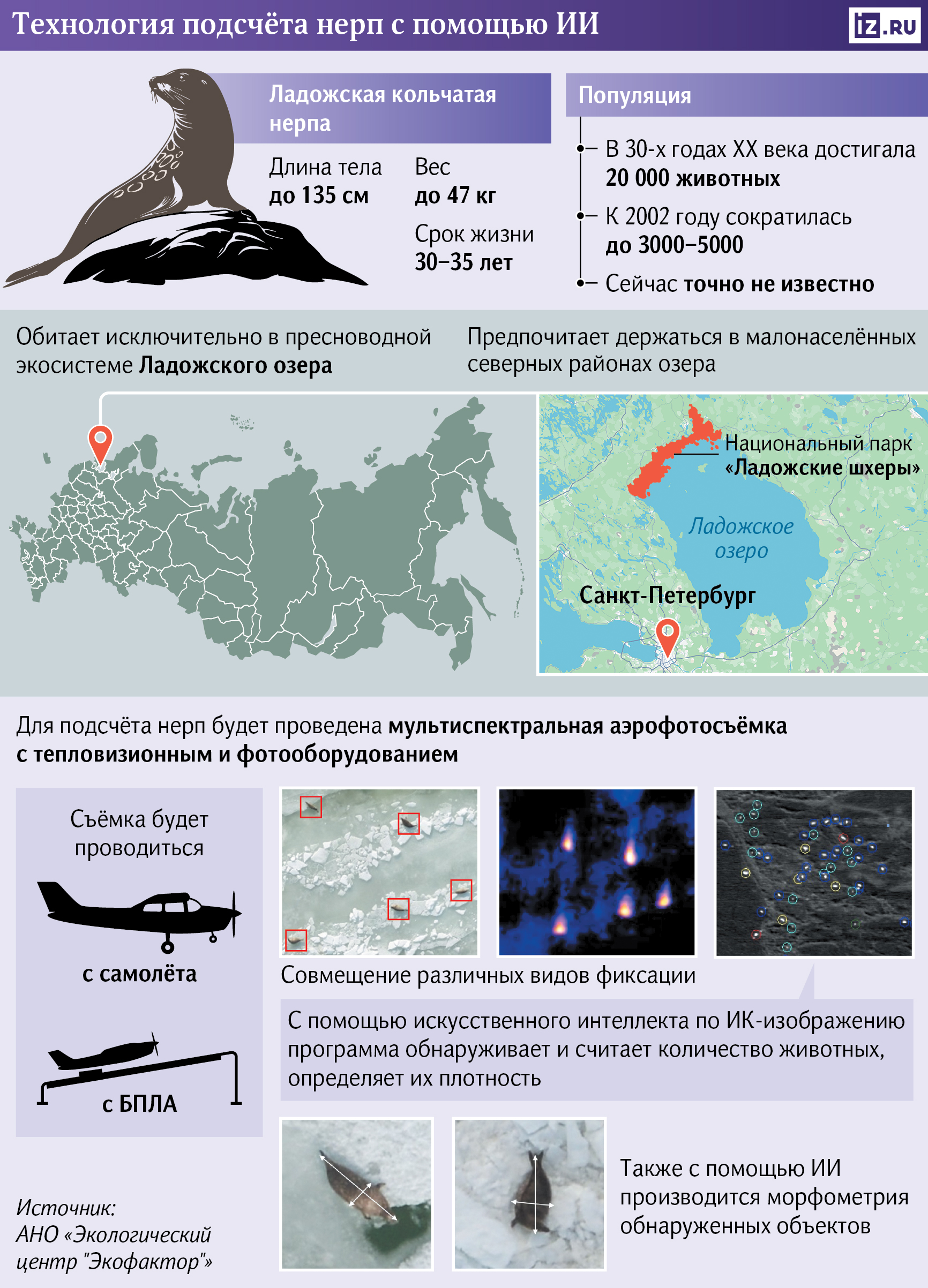
Переведено сервисом «Яндекс Переводчик»
