
"Shevardnadze's guard pulls out a gun and points it at me"

Directing is freedom, People's Artist of Russia Andrey Zhitinkin believes. He himself started with scandalous and provocative productions, and now he is considered one of the few experts in classics. His credo is not to deny recognized masters in roles. He has performed for Yuri Yakovlev, Georgy Zhzhenov, Lyudmila Kasatkina, Elina Bystritskaya, Vera Vasilyeva, Olga Aroseva, Lyubov Polishchuk, Lyudmila Gurchenko. It often turned out that these were the last performances of the stars. But this might not have happened if Shevardnadze's guard had not taken aim at him and thus changed Andrei Albertovich's fate. On November 18, the director will celebrate his 65th birthday. And the day before, Andrey Zhitinkin gave an interview to Izvestia.
"I am the last student of Evgeny Rubenovich Simonov"
— Artists say that talent is not enough to become a star. We still need luck or a miracle. You took a different path: you received two red diplomas as an actor and director, without hoping for a miracle. What played a crucial role in your case?
— The beginning is the most important thing. When I enrolled, no one believed that it was possible to get into acting at the Shchukin Institute right away. Among the applicants are Olya Simonova, the daughter of the chief director of the Vakhtangov Theater, and the sons of Yakovlev and Dvorzhetsky. Many have been doing this for years. And then I immediately get on the star course.

Evgeny Rubenovich Simonov is the chief director of the Evgeny Vakhtangov State Academic Theater.
Chance plays an important role. Evgeny Rubenovich Simonov, the then head of the Vakhtangov Theater, staged the graduation play "Sensation" in our course. I played Mr. Pinkus, such a bright young man, like Prince Myshkin. According to the plot, he carries the pardon of the convict, and the mayor and the corrupt prosecutor, Dvorzhetsky and Knyazev, deceive him. In short, Pinkus is late with a pardon, the man is executed. To solve this scene, Simonov came up with a director's move: I'm late because I'm walking down the central aisle of the auditorium at the Vakhtangov Theater and shaking hands with every audience member. This is, admittedly, a test for an actor.
And so I'm walking with this pardon, holding out my hand to the audience, when suddenly I see a man pulling out a gun and pointing it at me. It turns out that this is the guard of Eduard Shevardnadze (at that time the first secretary of the Central Committee of the Communist Party of the Georgian SSR. — Izvestia). I just started crying, it was so scary. But the role went well. Pinkus didn't deliver the pardon, he's upset.
And after that, Simonov called me and said: "You are a very good actor, Andrey. But, you see, I'm taking my last directing course. And I want to take you. You're a character actor, not the hero you always need. Look at how many portraits of national and honored people are hanging in the lobby. By the time you get the roles, you'll be an old man."

— He meant that the competition is great.
- yes. And directing is freedom. It was a chance, a miracle. And I say, "Yes!" Although, of course, I wanted to be an actor, to act. But I made a choice, and the miracle continued.
I studied for ten years! The acting department lasts for four years, and directing for another six. The grandmothers on duty at the Shchukin Institute believed that Zhitinkin was an eternal student. Imagine, our course of five students was taught by five teachers. And when I received my red diploma, it turned out that I was the last student of Evgeny Rubenovich Simonov. Everyone went all over the world: to the Baltic States, to Israel, to Canada, to America. Simonov was upset because in the end they all left the profession.
One day I met him at a bus stop. And he said very sadly, "Well, there's no one here, just you." I had to cheer him up, I said, "But they will write books about you in different languages." He liked it.
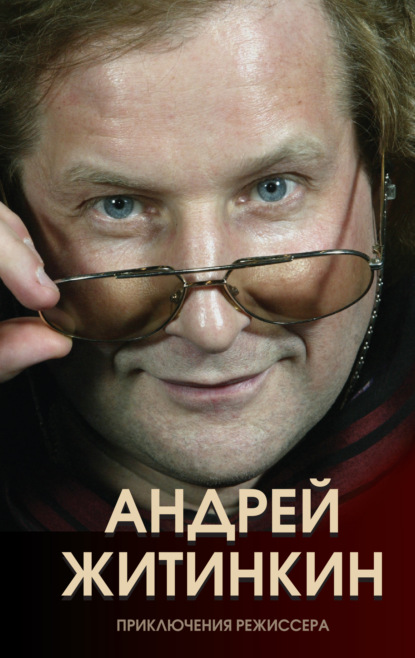
— You write books too.
- yes. By the way, after that, I started recording behind-the-scenes stories, because I realized that if I didn't write it down, the audience would never know. I write very kindly about all the most difficult actors. I've worked with many people: Yuri Yakovlev, Georgy Zhzhenov, Lyudmila Kasatkina, Elina Bystritskaya, Vera Vasilyeva, Olga Aroseva, Lyubov Polishchuk. And Lyudmila Gurchenko, for whom I have directed four projects. It often happened that he staged the last performances for the masters.
Seryozha Bezrukov was my mascot at Tabakerka
— Some people think that you only play for the people. But what about the bet on youth?
— Not only for masters. Seryozha Bezrukov was my mascot at the Tabakerka. When he was starting out, I offered him the lead role in the play "Psycho." And then he started playing in all my productions: "The Old Quarter" by Williams, "The Confession of the Adventurer Felix Krul" by Thomas Mann.

Sergey Bezrukov in the play "Psycho"
Other current stars include Sasha Domogarov, Dmitry Dyuzhev, and Sasha Baluyev. And some of them are no longer with us — Nastya Zavorotnyuk, Dima Marianov, Zhenya Dobrovolskaya. Sometimes it seems to ordinary people that artists are not very healthy. But they don't think that shattering their own nervous system is the key to a profession. The more labile an actor is, the closer his tears and laughter are, the better.
— Are pauses in work scary?
— People's Artist of the USSR Elina Bystritskaya did not have a new role in the Maly Theater for ten years, until I came up with the "Love Circle", where she played with Boris Klyuev and Vasily Bochkarev. Everyone said what a terrible character she had. They scared me. There was even a sweepstake in the actors' buffet. They were betting whether Zhitinkin would release the premiere or not. And I did.
When I saw Elina Avraamovna with two small dogs, I realized that she was very lonely. It was the closest she had to these creatures. When she talked to them, the timbre of her voice changed, she laughed, she could be ridiculous. She took the dogs to the buffet and fed them. And at the rehearsal, they would crawl under the table and not make a sound.
Of course, she was building a distance, she was directing her own life, dedicating it to her profession. She had no children. We can't even imagine how many tears she cried into her pillow. But we do not know Elina Bystritskaya as weak, because she has always been a flint.
Someone says, well, Zhitinkin, as always, took a star. No. I have a superstitious fear. What if his dream of playing on stage doesn't come true again? If he doesn't make it? It often happened that way. That's why I've never denied a performance to a folk artist.

Boris Klyuyev in the play "Masquerade"
— You have staged the last performance for the People's Artist of Russia Boris Klyuev. When he was diagnosed with cancer, he did not hide his diagnosis. In an interview with Izvestia, he calmly talked about this. And how did he explain his frankness to his colleagues?
— He was an artist with a capital letter. He once said, "You know, Andrew, this is another role. I inspire hope in many people. I know some people hide it. This is wrong. I'm showing you how to hold on by my example." And, by the way, he lived to the fullest until his last day.
He bought a new apartment in Yalta, and a fancy jeep is the dream of his life. He was forbidden to fly, but he flew wherever he wanted.: Italy, Germany. And he said: "I will be alive until the last day, without betraying myself."

Production of "The Big Three (Yalta – 45)"
Boris Klyuyev worked until his last days, played Arbenin in Masquerade, and rehearsed Roosevelt in my production of The Big Three (Yalta-45). But I didn't have time to play the premiere.
"Vsevolod Yakut, People's Artist of the USSR, died on the Free Stage"
— There is a myth that artists dream of dying on stage. Such a story happened to you in reality. Vsevolod Yakut died at the premiere of your play Caligula.
— Yes, it was at the Ermolovsky Theater.

— How to survive such a tragedy, not to get drunk, not to leave the profession?
— When we released "Caligula", nothing foreshadowed trouble. Mastodon, People's Artist of the USSR, Stalin Prize winner Vsevolod Yakut himself wanted to play the steward of the palace. He was curious about what the young people were doing. I figured out that a senile person would play.
We played the premiere, the curtain closed. The champagne arrived. Vsevolod Semenovich raised his glass, wished everyone good luck and good health, and went backstage. Suddenly we hear a strange sound, as if something soft is falling. They thought he had stumbled or it was a prank. But no…
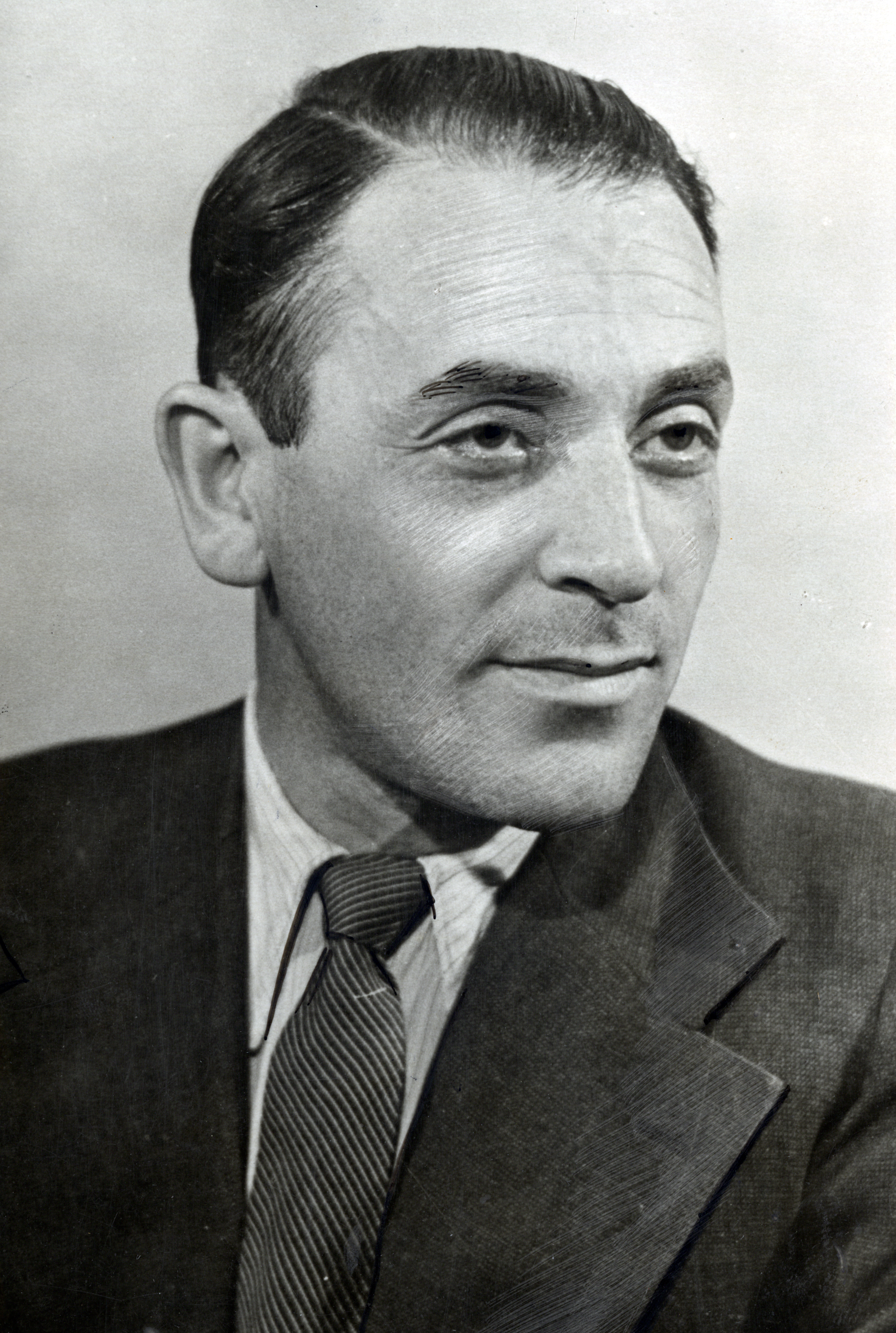
This is a great tragedy, a shock. The ambulance and police arrived. I remember a young lieutenant writing in his school handwriting: "Vsevolod Yakut, People's Artist of the USSR, died on a Free stage" (one of the scenes of the Ermolova Theater. — Izvestia). It's a metaphor.
— Is there gossip?
— Absolutely. Whatever they say. It seemed necessary to leave the profession, so powerfully did the tragedy hit the heart. I had a tantrum in the theater. Then I realized that life doesn't end there.
I met Sasha Pashutin once. I asked him if, after such a story, he was afraid to play the steward of the palace in Caligula. "I'm an athlete, I have a different psychology. Just let's erase the word "death" from the role," Pashutin asked. In the play, Yakut's character said, "It smells like death here." We've been wiped out. And a year later, the play returned. We played it for 17 years. I have been working as a full-time director at the Mossovet Theater for a long time. And he kept walking, walking.
— Why do actors want to die on stage so much?
— This is a very old story, dating back to the Middle Ages. Back then, death on stage was considered a guarantee that actors would go to heaven. And they stay in the audience's memory much longer.

A shot from the Theater on the screen "Mad Day, or the Marriage of Figaro", Andrey Mironov
In 1982, I attended the performance at the Riga Opera and Ballet Theater where Andrei Mironov passed away. After all, he played everything to the end, then fell down and said to Olga Aroseva: "Mother, goodbye." This is a replica of the role. And he finished Figaro's final monologue on Alexander Shirvindt's lap in an ambulance.
Andrey Mironov is already a myth. The performance also left the stage with the actor. Andrei Mironov was buried in a Figaro costume. That's it, period.

"It's very difficult for young directors to make themselves known right now"
— There is a personnel crisis in the theater today. The management method of "mergers and acquisitions" has taken root, when one artistic director is given two or even three theaters to manage. And if at first there were protests and indignation, now no one discusses the method of work of business executives. Do you think economic intervention in art is effective?
— This is a big problem. The Constitution says that there is no censorship, and that's right. There is self-censorship of the director. He is free to limit himself in some way. But economic censorship has appeared. Because now the producer or the director is calculating everything. Of course, the director doesn't have that freedom of expression. Personalities began to disappear. Look at this: the bench is very small.
"She's not here.
— Once upon a time in Moscow, the eyes were running away where to go. Lyubimov has his own aesthetic on Taganka, Efros should definitely be seen, and Zakharov should be visited at Lenkom. And then there were Pluchek and Goncharov. In St. Petersburg — Tovstonogov, Dodin. Titans of directing, unlike each other. This is the main thing that Stanislavsky asked, who invented the profession of director. The theater is an author's world. In no case should individuals be confused.

Now all the theaters in Moscow have become similar. The management model is producer-based. Everyone is counting the money. They don't really trust the young. They might fail, but the theater has spent the money. It is very difficult for young people to express themselves now. But there is hope that the next wave will be directed.
"When will she be here?"
— When the theater gets tired of multimedia, screens, and small microphones for artists. By the way, there have been changes since the pandemic. The halls are full.
— The sound in the theater, in my opinion, is a disgrace.
— There are no microphones in the Maly Theater. Diction, wonderful Russian, you can hear everything. Genuine emotions, no ersatz, no computer wonders. Miracles are great in movies, and it's good for an attraction. But replacing an actor on stage with an avatar is bullshit. The meaning of the nature of the theater is disappearing — here, now, just for you.
I urge the audience, before going to the performance, to look at who the director is and at the visual sequence for the production.
- why?
— For a family, going to the theater is a big expense item in the budget. When they come to the "Woe from Wit", and there's Chatsky in jeans and instead of decorations, there's trash in the field, the audience doesn't understand anything. The picture must be accurate. That's why I invite outstanding artists to my productions. Slava Zaitsev made the costumes for me, and Sergey Barkhin did the set design.
Yuri Solomin always said: "We need to understand what we're taking money for." Not only the acting costs, but also the production part must match the request.
— What about the innovations?
— Innovations are possible, but on an experimental site, in a basement, in a studio. Mark Zakharov once said about the experiment: "Well, let's play in the elevator, or what?" Some directors justify that this is for a select audience. It's great, but when financing a theater, the founder, the Ministry of Culture, or the Department of Culture has the right to ask what the money was spent on. If this is an experiment, for your money. If you want to play in the sauna, you're welcome. They'll look at it once and they won't come back.

Andrey Zhitinkin during the gathering of the Maly Theater troupe
— Creators sometimes feel that they are under government restrictions. That's impossible. Or maybe this is a conversation in favor of the poor, and artists simply don't have enough expressive means?
— It is important for us that the theater at least changes something in a person's life, because morality is thinning. It became difficult to talk about some true things and about conscience.
No matter how many innovations there were, no one canceled acting accommodation. I forbade Vasily Bochkarev, Vladimir Nossik and Valery Afanasyev to make up for the "Big Three". We are not copying Stalin, Roosevelt and Churchill. But they play a wonderful role in the motivation and psychological battle of the world leaders in Yalta.
Margarita Terekhova, for example, hardly used makeup. The audience saw her magnificent hair, heard her breathing and followed the events that made her turn white as a sheet, then suddenly blush. It's magic.
— You are currently focusing on the classics. But in the 1990s, you were considered the main brawler in the theater. You have denied all dogmas. There was profanity in your production of "The Blind Man's Buff Game."
— It was a lexical experiment. We made a play, and I closed the topic of obscene language. A young director needs to somehow attract attention and make himself known. Mikhail Volokhov, a Parisian emigrant, showed me the play "The Blind Man's Buff Game," where two thieves sit in a morgue and drink to keep warm. It's a tough fight between them. It is clear that in these circumstances the characters do not speak literary Russian. Andrei Sokolov and Sergey Chonishvili were not afraid to break the stereotype. It's a very aggressive story. At first, the audience was startled. But I was completely honest with them. Before the start, I went on stage and warned about obscene language. He offered to take the children out. The performance is strictly for viewers 18+. At first, everyone was laughing, and then someone was heading for the exit. But the one who stayed, by the 12th minute, had already forgotten about this vocabulary. Everything was very recognizable. Some even cried at the end.
Any psychiatrist will tell you: if an iron falls on your foot, it is better to say this word than to keep it on your heart, otherwise you will have a heart attack. These are energetically charged words.
Of course, the director is also evolving. Whatever they call me: fashionable, scandalous, outrageous, playboy. Then suddenly they started saying, well, paradoxical. And now I have a classic period.

"Tatiana Doronina — President in exile"
— The artistic director of the Maly Theater, People's Artist of the USSR Yuri Methodievich Solomin, repeatedly went to the Ministry of Culture with an application to shoot a film based on Chekhov. But they refused him all the time and did not give him money. He died without waiting for the support of the state.
— The fact that they did not give money to Yuri Solomin for a film about Chekhov is economic censorship. I will explain the motivation of the officials. They looked at: an aged man, Chekhov, is a chamber story. Who's going to watch this? Where is the ticket office? And everything. Or maybe it would be a revelation. This is the tragedy of an artist who dreams of playing something all his life, and it doesn't come true. It's a scar on my heart.

Tatiana Doronina, actress, president of the Moscow Art Theater. Gorky
— Recently, a new director was appointed to the long-suffering Gorky Moscow Art Theater. Under what conditions can the audience return to the theater?
— It seems to me that all the troubles of the "women's Moscow Art Theater", as it is popularly called (when the Moscow Art Theater was divided, part of the troupe remained with Oleg Yefremov, and the second went after Tatiana Doronina. — Izvestia), began when a commercial management model suddenly prevailed there. Now it has been decided to appoint a crisis manager, a director, but only so that he does not stage the play and does not interfere with creativity. Only a creative leader who is not involved in economics can save the Moscow Art Theater. Then there is a chance for some kind of revival.
— People's Artist of the USSR Tatyana Doronina was made president of the theater, but in fact she was removed from the leadership. As a result, no one knows anything about her. Is the time of legends over?
— If you think that Tatiana Vasilyevna is not aware of what is happening in the theater, it is not so. Even at a distance, she knows everything. Tatiana Doronina is the president in exile. She's still going through it. When she wrote the letter to the president, someone said: It's a fake, it's been faked. No, it's not fake. This piece of paper, which she handed to him personally, was a shock. When I saw the photo of these doodles, I immediately understood: It's her. She was saving the theater from commerce, from the fact that suddenly showbiz was performing on the stage of her theater. Could Konstantin Sergeyevich Stanislavsky have imagined such a thing? Never in my life! Why invite a media personality if you have your own good, wonderful actors? Only for the sake of the cash register.
Another thing is that, of course, time is running out, health is running out, strength is running out. She wouldn't be able to lead. But she did the most important thing — she attracted attention. And it was a scandal, an explosion.
Переведено сервисом «Яндекс Переводчик»
