Tableware business: the fastest-decomposing plates and glasses made from bran have been created in the Russian Federation
- Статьи
- Science and technology
- Tableware business: the fastest-decomposing plates and glasses made from bran have been created in the Russian Federation


Rapidly decomposing bran dishes have been created in Russia. It decomposes in 10-30 days and can be used as animal feed. The technology is universal and suitable for different types of raw materials — wheat, oatmeal and corn. The team plans to create a closed grain processing cycle, which will reduce production costs and increase product competitiveness. Experts are confident that the technology has prospects in terms of environmental friendliness.
How the new technology works
A student startup from Samara State Agrarian University presented an innovative development — a press for the production of biodegradable dishes from bran. The project is aimed at replacing plastic tableware and reducing PET waste, which is especially important against the background of the global tightening of environmental requirements for packaging materials.
The technology, according to the authors of the project, is universal: it can be adapted to different types of raw materials — from oatmeal to corn bran. But the main advantage lies in the fact that the resulting tableware does not just decompose in nature, but can also be used as feed for farm animals. The stated period of complete decomposition is from 10 to 30 days, depending on the conditions. This is much faster than its analogues: sugar cane products decompose in two to six months, starch products decompose in the ground for up to nine months, and bamboo products decompose in the ground for up to five months. Even similar Polish—made dishes made from wheat bran have a comparable shelf life of about 30 days, but they are inferior in the flexibility of using the technology, the NTI press service explained.
Now, with the help of a press, it is possible to make disposable plates and glasses, the scientists said.
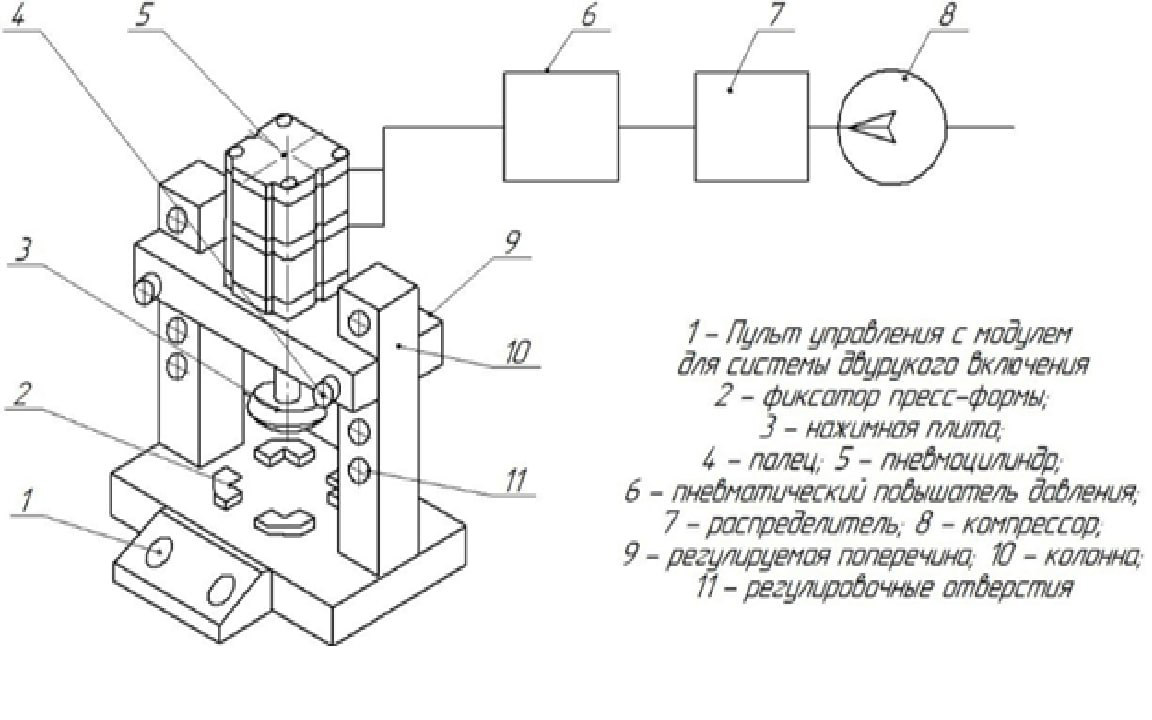
Special attention is paid to the production process. The press created by the authors of the project operates on a pneumatic principle and is designed for fast and high-quality molding of products. It is universal and will allow scaling up production for various types of agricultural raw materials, which is especially important for Russian regions with different agricultural specifics. In the future, the startup plans to build a comprehensive closed-cycle production system: from grain processing to the production of finished products. According to the developers, this approach will reduce the cost, improve the quality of products and make them more competitive both in the domestic market and abroad.
The development is supported by the platform of the National Technology Initiative. The project is currently participating in the University's "Growth Trajectory" 2035 educational intensive, aimed at developing the competencies of young technology teams. This is a practice-oriented program in which participants work on real projects and practice technological planning skills. The Triptonn team is also preparing a patent application for the technology and completing the pilot assembly of the pneumatic press.

Against the background of the global trend towards abandoning plastic, such initiatives are becoming strategically important, experts interviewed by Izvestia believe. Bans on the use of single-use plastic tableware have already been introduced in a number of countries, and the demand for bio-alternatives is steadily growing. In Russia, the discussion of similar measures is only gaining momentum, and under these conditions, the development of domestic technological solutions is becoming not just a matter of innovation, but also an element of national environmental and industrial policy.
What are the advantages of biodegradable tableware?
According to Mikhail Charny, a leading expert of the FoodNet NTI working group, the project has promise, especially against the background of legal restrictions on plastic in some countries. However, he points out the narrow limitations on the shelf life and durability of bran dishes.
— It is not clear whether it will withstand hot or liquid dishes. It might be suitable for picnics, but the idea of using it as animal feed is questionable due to leftover food and expensive logistics," he said.
As Andrey Ryumshin, PhD in Economics and Associate Professor at Kursk State University, emphasized, the main challenge is economic competition with cheap plastic tableware. He believes that it is important to understand how bio-alternative is resistant to temperature fluctuations and meets consumer expectations. So far, the mass consumer thinks little about the environment, the expert added.
The development has become an important step towards reducing PET waste, but in Russia there are already developments with proven effectiveness, for example, from apple raw materials or rice husks. Bran is not the most abundant resource, unlike corn stalks or beet molasses. The success of the technology depends on the availability of raw materials and low production costs, says Sergey Kosogor, head of the Smart Supply Chain segment at FoodNet NTI.
— The project meets the current environmental trend, and the use of natural raw materials in packaging is an effective way to reduce the negative impact on the environment. Since 2025, regulations on packaging recycling have been tightened in Russia: manufacturers are required to recycle 55% of the mass of the released container, and in the coming years this figure will increase to 100%. However, biodegradable packaging is still losing out to plastic packaging in terms of price, and this slows down its widespread distribution," explained Varvara Mikheeva, ecologist and program director of Boiling Point Novokuznetsk.

According to Olga Kharina, Dean of the Faculty of Technological Entrepreneurship at Synergy University, bran dishes decompose quickly, do not pollute the environment, and the use of recycled materials reduces the amount of agricultural waste. If a closed cycle is established and economic factors are taken into account, this can become a profitable and sustainable model.
However, there are risks when scaling the project — they are associated with the technical adaptation of equipment for mass production, the need for strict quality control of products made from unstable raw materials, as well as significant financial costs that will be required to launch an industrial line.
Переведено сервисом «Яндекс Переводчик»
