- Статьи
- Society
- Secret ties: Izvestia has found "hackers", for whose capture the FBI promises $ 11 million

Secret ties: Izvestia has found "hackers", for whose capture the FBI promises $ 11 million

A reward of $11 million is promised by the US intelligence services for their help in capturing two Russians whom they consider dangerous hackers — the son and father of Amin and Timur Stigalov. Among the charges against them are hacking into the computer systems of government agencies in Ukraine and "dozens of Western countries," "subversive actions" in collaboration with officers of the Russian GRU, trafficking in stolen bank card data, extortion, etc. Izvestia managed to find the Stigal family in Saratov and talk to them. Timur Stigal admitted to Izvestia that he participated in some non-public operations against foreign intelligence services, but completely denies his son's guilt. What scared the FBI and the US Secret Service so much is a 23-year-old unemployed gamer who was expelled from college for absenteeism, and a 47—year-old trader, a former blogger without a specific occupation - in our material.
Especially dangerous Stigals
June 26, 2024 was a turning point in the life of 23-year—old Amin Stigal - it was on this day that an unknown person sent him a Telegram link to the message that the US Federal Bureau of Investigation had put him on the wanted list.
At that time, the guy studied for a year in Khasavyurt at a technical school specializing in information systems and resources operator. He had irregular part-time jobs, and he was expelled from the institute in his first year for absenteeism.
— I immediately feel shock and bewilderment. At first, I thought it might be due to the fact that I used cheats (software to circumvent restrictions in computer games. — Ed.). But it turned out that everything is much more serious," Amin tells Izvestia.
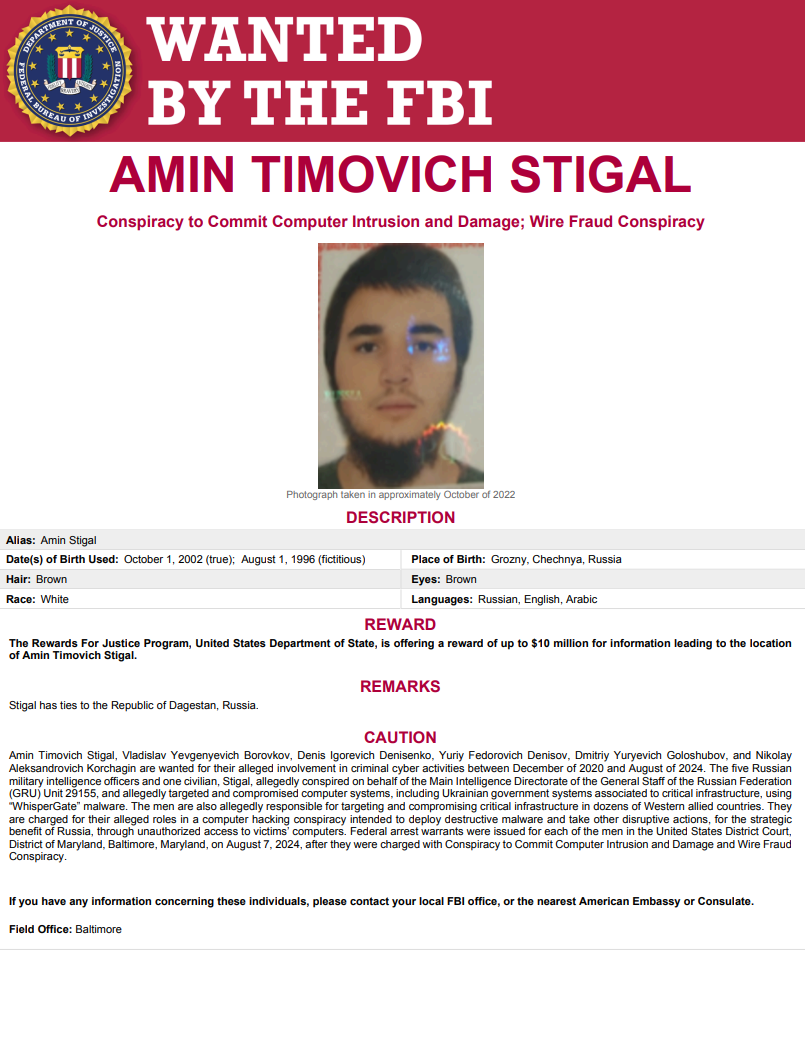
American intelligence agencies claim that it was Amin who collaborated with five employees of the Main Intelligence Directorate of the General Staff of the Armed Forces of the Russian Federation since December 2020 (that is, when he was not even 20 years old). He participated in hacking computer systems, "including the state systems of Ukraine." The FBI also suggests that "these people are responsible for carrying out attacks and hacking critical infrastructure facilities in dozens of Western allied countries."
In August 2024, an American court issued an arrest warrant for Amin, and the FBI set a reward of $ 10 million for help in his capture.

According to the FBI, Stigal Jr. is involved in attacks on the Ukrainian portal Dia (an analogue of the Russian "State Services"), computer systems of the State Treasury, the Ministry of Foreign Affairs and several other ministries, and hacking into the transport infrastructure of one of the Central European countries. The attacks were accompanied by reports of the sale of databases from hacked sites on darknet forums on behalf of a certain Free Civilian group.
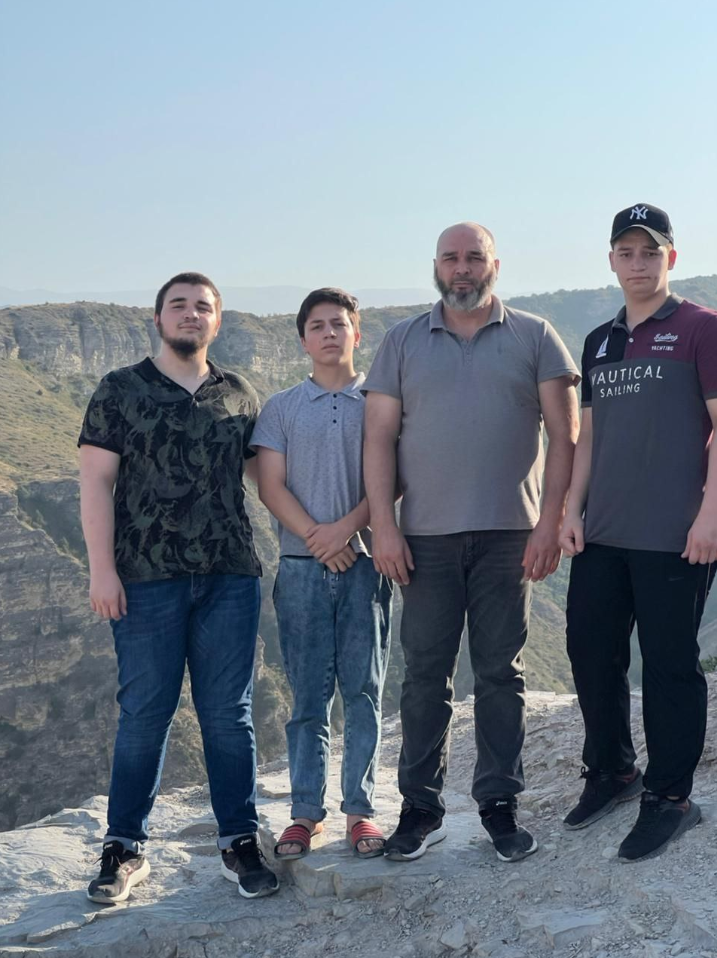
— Since this news appeared, my life has changed a lot, — says Amin. — I live under constant stress, I have depression, I gained weight, all my friends and acquaintances began to fear me. I believe that a national crime has been committed against me. I was accused of something I didn't do.
In the wake of these accusations, The Insider (recognized in Russia as a foreign media agent and an undesirable organization) published a series of "investigations" about a GRU unit in which Stigals - both father and son — were allegedly involved in the role of hackers.
Amin Stigal claims that both the FBI and the authors of these publications have almost completely distorted information about him. From global things like cooperation with special services, to little things like knowledge of the Arabic language. And they certainly overestimated his computer skills.
To begin with, he initially received higher education in a completely different direction: low USE scores allowed him to enroll only from an agrarian university. It was only later that he transferred to Saratov State Technical University to study Information Security.
— After a few weeks of studying, I realized that this field was not interesting to me and stopped going to university, — says Amin.
As a result, he was expelled for absenteeism, and he still has a completely empty credit card at home.
"Then I worked part—time in various places, until the news came out that I was wanted by the FBI," says Amin.
In the FBI materials, Amin is listed as a person who "created an online infrastructure that GRU employees can use for cyber attacks." But according to Amin, he can't even do much with reinstalling Windows, let alone setting up the activities of a hacker group.

The credit book of Amin Stigal
Amin's only hobby in recent years has been computer games. He claims that he does not know any of the people listed in the FBI charges. He has several Steam accounts under different nicknames (he bought accounts with a high rating in Dota 2), but, as Amin says, he never used the names Free Civilian or Vaticano online (hacking is attributed to a person with these nicknames).
Why the American intelligence services are interested in him, the guy still does not understand. But his father has a version.
— As far as I understand, it was the American side that decided to attack me from different sides so that I wouldn't mess around. I don't know why they chose this method of attacking me — through my son, by faking the facts about his alleged involvement in criminal activities," says Timur.
Stigal himself is a more remarkable personality than his son.
What did Timur Stigal do?
Timur Stigal was a money cashier, trader, and blogger at various times. He does not hide the fact that for many years he had a very intense non-public activity, as a result of which he "annoyed the Americans." But this has little to do with the charges against him.
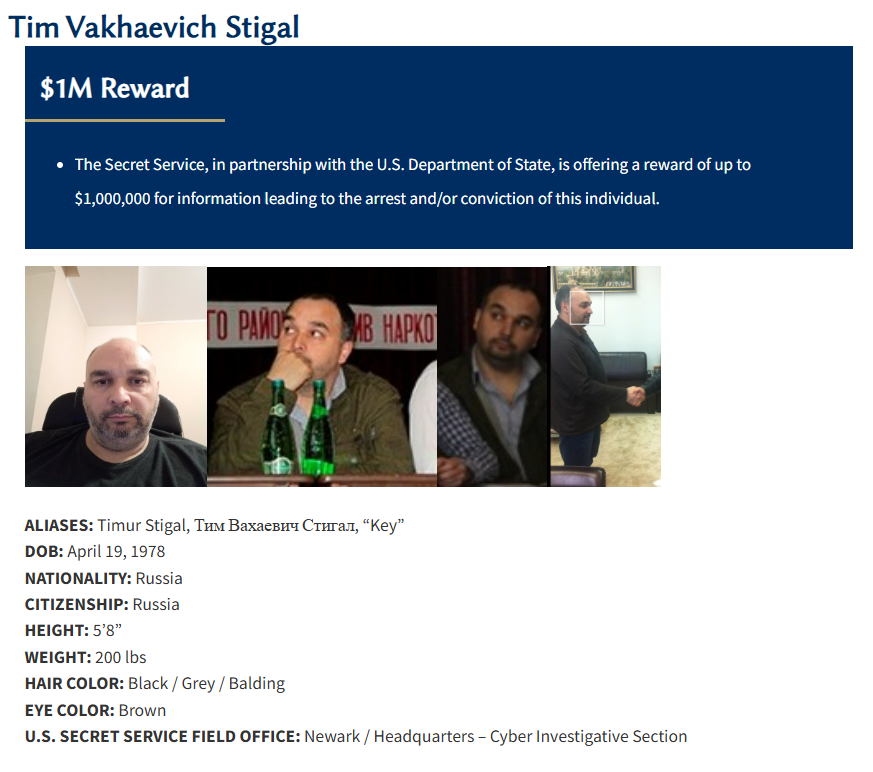
The US Secret Service published claims against Timur in January 2024, that is, six months earlier than his son. And the reward for helping to capture him was offered "only" $1 million.

"From April 2014 to March 2016, Stigal, also known as "Key," participated in at least four separate criminal conspiracies to trade stolen payment card information belonging to customers of at least three different companies in the United States. As part of one of these collusions, as well as in an attempt to extort one of the affected companies, Stigal additionally transmitted a threat to disclose confidential personal data of the company's clients if he was not paid a ransom," the US Secret Service said, in particular. In total, he is charged with 23 counts of fraud and extortion.
In addition, The Insider in its "investigations" attributed to him close cooperation with the Department of Military Counterintelligence of the FSB and the GRU.
"I've never used the alias Key, the FBI may be confusing me with someone else here," Timur says.
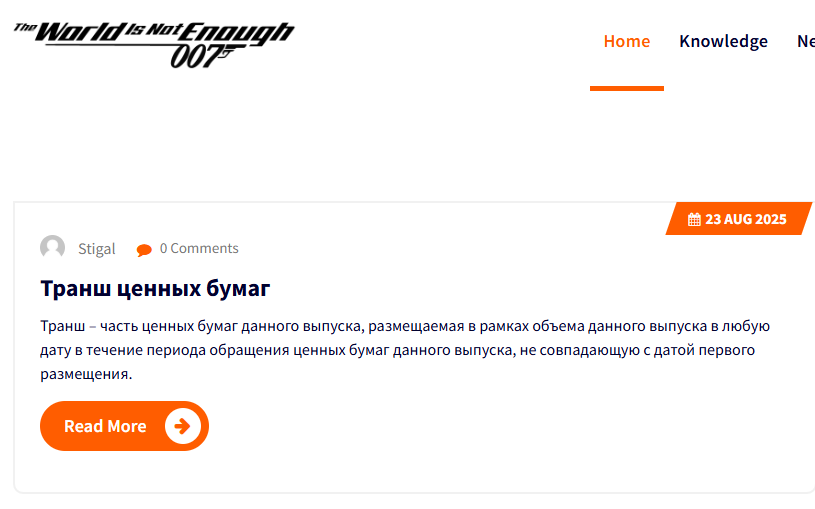
He calls himself a "retired political strategist." After he was put on the wanted list by the Secret Service, he added Agent 007 to his personal website. And says that for a reason.
— Everyone thinks that James Bond is a spy. But he never recruited anyone. He performs the tasks assigned to him by provoking the parties — in one of the episodes Daniel Craig himself said this in a conversation with a psychologist. In my work, I took an example from this element of bond in some ways," says Stigal.
Timur says that he is not a hacker, and has no knowledge of hacking computer systems. But he admitted that he had used the information obtained by hackers.
— I specialize in technologies for achieving goals by political and other methods, which sometimes includes the use of data obtained by cybertechnical means. But it's one thing to get them, another thing is to apply them and complete the task," Stigal clarifies. — My activity was to search for compromising information and further use it for political provocations by influencing the media.
Our interlocutor also said that he had sorted out all the claims made against him by the Americans, and was ready to admit that "there was a case" on only one of the 23 counts of the charge, "where I am allegedly being blackmailed in exchange for not disclosing personal data secrets."
— I admit, there was a case. In the spring of 2016, I was single—handedly working on a large case in one of the regions of the Middle East," Stigal tells the details. — I collected and analyzed data from the network of agents of influence of the American side within the Taliban movement. And in the process of analyzing, I came across a whole carload of foreign intelligence officers who used one of the financial institutions in the dark, secretly from the local government. They organized a cell to finance traitors to the Afghan people. From a huge list of colonels and generals of Western intelligence services, I chose one woman and offered friendship in exchange for silence. I offered her to exchange information on a voluntary basis about other agents in the Taliban leadership and promised her that no one would find out about her. She refused. I admit this point of the accusation, everything else is not clear to me where it came from.

Stigal insists that he has never officially worked anywhere, has not served in government agencies or the army, has no titles or any access to state secrets, is not a "man of the system."
According to him, due to his activities, he intersected with individual intelligence officials, military personnel, politicians, and activists, but this was an interaction within the framework of information exchange. The meetings were mostly informal.
He also confirmed his acquaintance with some well—known hackers, including Alexei Stroganov, nicknamed Flint, who appears in US intelligence documents and is also convicted of hacking in Russia. But getting to know each other doesn't mean working closely or participating in all of each other's projects, Stigal says.
According to him, working "in a free format" allowed him to achieve the results he needed using more flexible methods and avoid bureaucracy.
What is the remarkable biography of Timur Stigal?
Stigal has a really interesting and peculiar biography. In the 90s, he lived in Dagestan, but after the outbreak of the second Chechen War, he left for Azerbaijan. His eldest daughter and son Amin were born in Baku. He was engaged there, by his own admission, in cashing money transfers, working with Khozh-Akhmed Nukhaev (included in the list of terrorists and extremists).
In early 2003, when the Azerbaijani authorities began to show interest in this activity, he returned to Russia by "detours through Tskhinval." I got a trader's license and started trading on the stock exchange. But then he became interested in political technologies and joined the Nashi movement. He created a branch in Dagestan, headed the movement "Pharmacies without drugs."

After "Nashi" stopped active activities, he moved to Saratov and, since he was unemployed, "decided to try himself in big politics."
This period is associated with one of the most high-profile episodes that are mentioned in the "investigations" about Steagall's connections with the GRU. We are talking about the hacking of Qatar's largest bank, QNB, in May 2016. Hackers got 1.5 GB of information with customer data at their disposal. When the leak became publicly available, the focus would have been on the financial transactions of Qatar's ruling family and some Western intelligence agencies. The Turkish hacker group @bozkurthackers claimed responsibility for the hack, but the team of Timur Stigal and the GRU was behind its social media accounts, according to publications in foreign media.

Segal says that everything was different: he acted alone, and he simply bought the original database of the Qatari bank on the darknet for $5,000. His role in the story was that he brought the database to an orderly state: he claims that after a long analysis and processing of information, he found employees of Western intelligence services and intelligence among the bank's clients, since there were corresponding marks in the database opposite the client data, inaccessible to ordinary bank employees. He allegedly shared his findings with Russian intelligence, thereby making "new acquaintances."
In October 2018, the Russian Ministry of Defense hosted a briefing by Igor Kirillov, Chief of the Radiation, Chemical and Biological Protection Forces of the Russian Armed Forces, on the analysis of US military biological activities in Georgia. He stated the facts of secret research on biological weapons, including those directed against Russia.
Stigal assures that he was directly involved in the preparation of the materials of this briefing.
— In 2018, I gave Kirillov the first information about the Lugar American Biolab in Tbilisi (Richard Lugar Center for Public Health. — Ed.). — says Stigal. — I have been to Georgia many times, went there to find people willing to fight against the secret developments in this laboratory, and found many sympathetic locals and employees from various structures. Thanks to their efforts and support, I was able to obtain a huge amount of classified data. Based on the data obtained, Igor Anatolyevich held his briefing, where for the first time he showed the general plan of the new laboratory building and the main directions of secret experiments.

Igor Kirillov was killed on December 17, 2024 as a result of a terrorist attack organized by the special services of Ukraine. According to Segal, "shaitans and traitors killed him because he was the one who spoke openly about the activities of these laboratories and the threats they posed to all of humanity."
Further, Stigal assures, he took up the "Serbian case" — he found evidence according to which weapons manufactured at the factory of the Serbian holding company "Krushik" were supplied, in particular, to the Middle East and Ukraine.
— From all the documents received, and there were about one and a half thousand of them, some were classified, we understood the general picture of the transit of Serbian and other weapons with ammunition in the interests of the enemy sides for Russia. In particular, I personally put together the puzzle of arms traffic under the Pentagon's secret program, where the customer was employees of the US government's Department of Defense, and the ultimate beneficiaries were units of Al-Qaeda and ISIS (both organizations are recognized as terrorist and banned in Russia) in Yemen and Syria, says Steagall.
Criminal case against Stigal's second son
Timur Stigal's youngest son, Khalid, also did not remain without the attention of law enforcement officers, although this time Russian.
On February 13, 2024, after classes at the Saratov branch of the RANEPA, Khalid went to a bar. The night ended at the police station: he was taken in with abrasions and a bloody head, charged with appearing in public intoxicated and released.
However, the episode did not end there: later, the police became interested in the version that Khalid climbed into someone else's Chevrolet and fell asleep in it, and when the owner of the car, 55‑year-old surgeon Andrei Ermakov discovered an outsider, a scuffle broke out.
According to investigators, Khalid struck several blows and broke Ermakov's little finger of his right hand. Khalid himself did not remember the details of the night. A case was opened on causing minor harm to health (Article 115 of the Criminal Code of the Russian Federation).
In March, Khalid convinced his father that, despite the criminal case, he needed to leave for Germany. He had planned to do this before, he learned the language, but plans to transfer to a European university were disrupted due to the termination of student exchanges. As a result, in March 2024, he traveled through Croatia and several other countries to Germany, to a refugee camp.
On June 26, 2024, the FBI put Amin Stigal on the wanted list, and on June 28, Timur Stigal received a call from the Russian Interior Ministry asking where his son Khalid was.
— When they called, at first I thought it was about Amin, but it turns out it's about Khalid. They say your son almost killed the surgeon, broke his ribs, and we're looking for him," Timur recalls.
The case of minor beatings against him was closed, but the victim brought a new conclusion to the police that his ribs were broken. Based on this, a new case was opened under Article 111 of the Criminal Code of the Russian Federation "Intentional infliction of serious harm to health."
At the insistence of his father, Khalid returned to his homeland. Timur handed over 500 thousand rubles to the injured Ermakov as compensation, and he signed a statement of absence of claims. At the request of the defense, an expert examination was conducted, which concluded that Ermakov's rib fractures occurred before the incident with Khalid. The investigation took this conclusion into account and reclassified the case to Article 112 of the Criminal Code of the Russian Federation ("Average harm") — on the fact of a broken little finger. At the same time, the petitions for termination of the criminal prosecution were rejected.
Ermakov himself, in a conversation with Izvestia, claims that he sought compensation for expenses and did not aim to send Khalid to prison, but insists that he was injured in that particular scuffle.
Khalid is now preparing to recover from his studies, and his father hopes that the problems with his sons will be resolved soon.
— To be honest, I'm tired of dealing with all this, and I'm already looking to get my sons to study and leave my parents' house, but I'd like to lie down on the couch for at least a couple of weeks, and then start trading. If the Motherland calls, of course, I am ready, but for now I would like to rest a little," Timur Stigal summed up.
Переведено сервисом «Яндекс Переводчик»
