
Withdrawal aid: how could one family send a billion rubles to Ukraine

About 1 billion rubles could be withdrawn to Ukraine by the owners of the Crimean Mayak marine lighting plant and several other enterprises, Izvestia estimated. All of them belonged to the same family, which successfully lived in two countries — while in Crimea, companies registered for the head of the family executed state defense orders for the Russian Navy, one of the daughters led the Open Dialogue Foundation, recognized in the Russian Federation as an undesirable organization and sponsoring the Armed Forces of Ukraine. The family's property was nationalized in March 2025. The scale of the Mayak owners' concealment of profits explains why the Crimean authorities have launched a large-scale ownership change campaign. So, in 2025, 113 facilities were nationalized, the sale of only a part of them brought 2.2 billion rubles to the treasury. The details are in the Izvestia investigation.
Distressed assets
In March 2025, the governor of Sevastopol, Mikhail Razvozhaev, announced in his Telegram channel that the regional authorities had seized the property of 13 people - "accomplices of the Kiev regime" — and legal entities affiliated with them. According to the politician, these people transferred "over $520,000 in donations to the Ukrainian ruling regime." The investigation by Izvestia suggests that we may be talking about a much larger amount — at least simply withdrawn from Russia abroad.
Among the enterprises nationalized in March 2025, there were seven enterprises registered in Sevastopol, linked by common founders.
Mayak Marine Lighting Plant LLC, Ship Lighting Plant LLC, Plosk LLC, Tinos LLC, Technotron Operating Organization LLC, Technical Operation Center No. 1 LLC and the Korps production cooperative were transferred to state ownership.
The largest asset of this group is Mayak Marine Lighting Plant LLC. In 2022, four members of the same family were listed among its founders — Sidonia Filippovna Kozlovskaya, Peter Petrovich Kozlovsky, Sergey Petrovich Kozlovsky and Elena Petrovna Miroshnikova (nee Kozlovskaya). After the start of its ownership, changes began to occur in the ownership structure of LLC, and as a result, in July 2023, the company's authorized capital decreased from 1.4 million to 10 thousand rubles, and a certain Olga Timchenko became the sole founder (she later changed her name to Kukhta).

Screenshot with the data of the Unified State Register of Legal Entities
The study of open sources suggests that Timchenko was only a figurehead. Her connection with the Kozlovskys-Miroshnikovs can be traced through Kuruta LLC, where she is also listed as the head, despite the fact that Elena Miroshnikova is the founder of the company.
Sidonia Kozlovskaya is the mother of Peter, Sergei and Elena (she is Miroshnikova by her husband). The head of the family was born in 1945, meaning the woman is now 80 years old. In fact, she was also just a front for her children's business. And not only related to the Mayak plant. For example, Sidonia Kozlovskaya was registered as an individual entrepreneur, who, according to the OKVED, was engaged in "the activities of hotels and other places for temporary residence."
The Electronic Justice database file contains six cases won by Sidonia Kozlovskaya from the Sevastopol authorities. Judging by the case files, the Bisnes scheme was approximately as follows: IP Kozlovskaya bought houses that stand on municipal land, and then, as the owner of the property, demanded without bidding to give her the right to lease this land on preferential terms. In fact, it was about creating a chain of mini-hotels on municipal lands at meager rental rates. If the city denied this right or set a high (in Kozlovskaya's opinion) rental price, she sued. And she won most of the time. It is clear that the 80-year-old woman herself did not attend the trials, lawyers acted on her behalf.

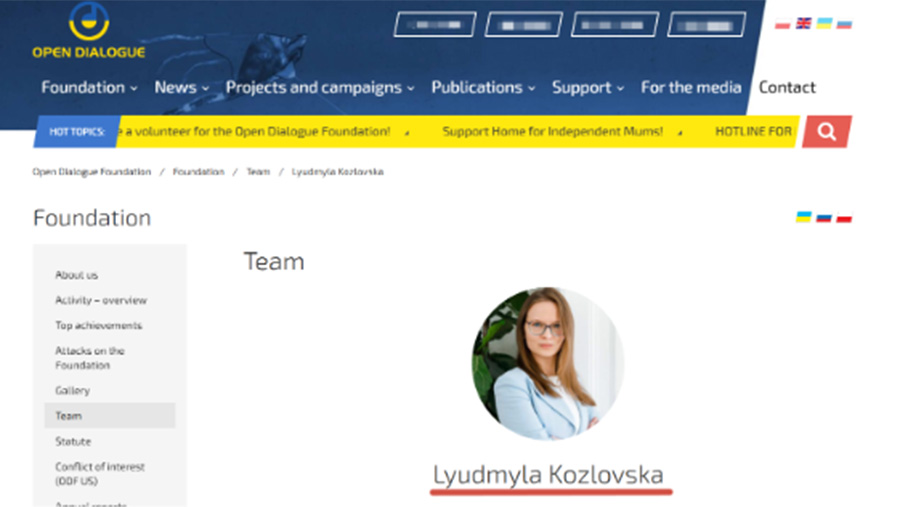
Sidonia also has another daughter— Lyudmila Kozlovskaya, born in 1985. And she is a well—known figure not only in Ukraine, but also in Poland. Lyudmila Kozlovska is the founder of the Polish-Ukrainian Open Dialogue Foundation. In February 2024, the Russian Prosecutor General's Office declared the foundation's activities undesirable on the territory of the Russian Federation, and the Ministry of Justice added it to the relevant list.
Ukrainian media describe Kozlovskaya as an active participant in the campaign for the withdrawal of the Russian Black Sea Fleet from Sevastopol in 2005-2006, and the foundation itself as one of the sponsors of Euromaidan in 2014. It is known about Lyudmila that she was born in Sevastopol, but went to study in Poland. She also met her future husband, Bartosz Kramek, there.
Crimean businessmen's money could end up in the Ukrainian Armed Forces
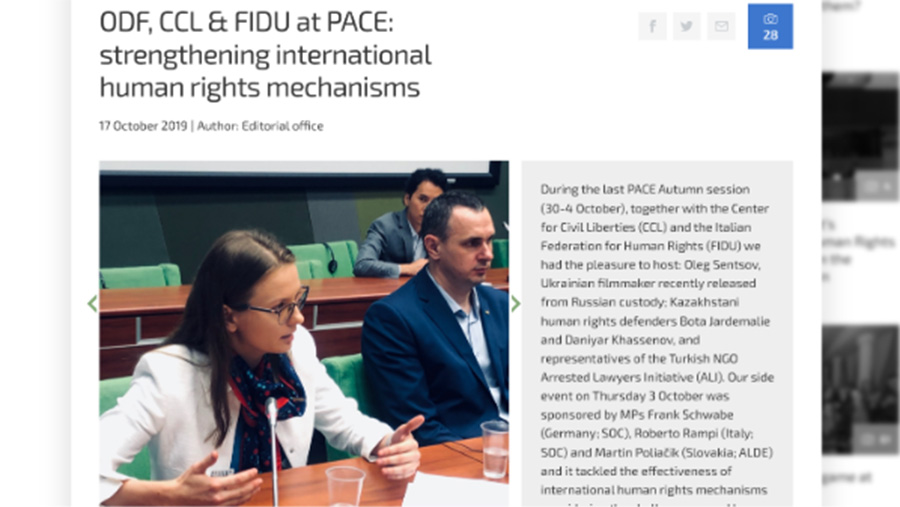
According to the information on the website of the Open Dialogue Foundation, its main task is to promote Ukraine's European integration. Its founders actively travel around Europe, often visit Brussels, try to secure financing for their activities and organize support for Ukraine in general and the Armed Forces in particular. For example, in 2019, Kozlovskaya spoke at the Bundestag and PACE, the foundation participated in an OSCE meeting, and in subsequent years in "humanitarian" missions to Lviv, seminars in Kiev, and so on.
According to information released by Sevastopol Governor Mikhail Razvozhaev, it was through this foundation that the Kozlovsky-Miroshnikov family donated over $520,000.
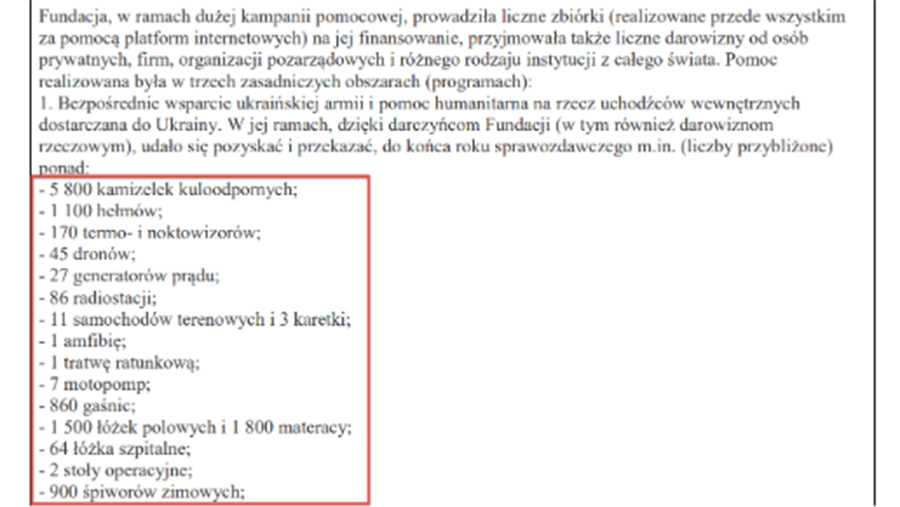
According to the accounting documents of the Lyudmila Kozlovskaya Foundation, donations from abroad were used to widely purchase ammunition and military equipment for the Armed Forces of Ukraine, followed by delivery to active combat units of the Ukrainian army. For example, in 2023, the Open Dialogue handed over to the Armed Forces of Ukraine: 5.8 thousand bulletproof vests, 1.1 thousand helmets, 170 thermal imagers, 45 drones, 27 electric generators, 86 radio stations, 11 SUVs and 3 ambulances, 900 winter sleeping bags, 16.5 thousand medical suits and other equipment.
Where did the family get the funds to transfer more than half a million dollars to just one fund? Obviously, it was from the diverse business that she had in Crimea until 2014 and whose owner she remained until March 2025.

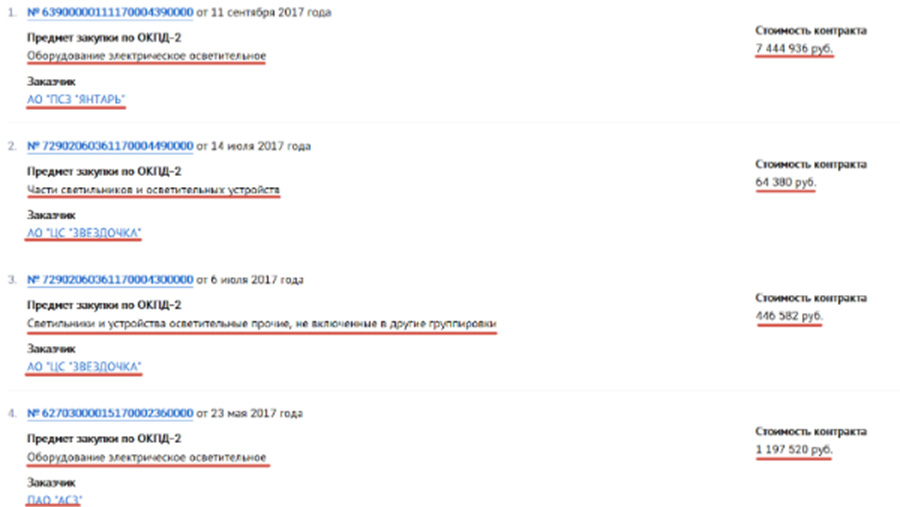
At the same time, ZSS Mayak even completed four state contracts for Russian defense enterprises in 2017 for more than 9 million rubles (among the customers are JSC Baltic Shipbuilding Plant Yantar from Kaliningrad and JSC Zvezdochka Ship Repair Center), enterprises working in the interests of the Russian Navy. Under these contracts, Mayak supplied electric lighting equipment to defense enterprises.
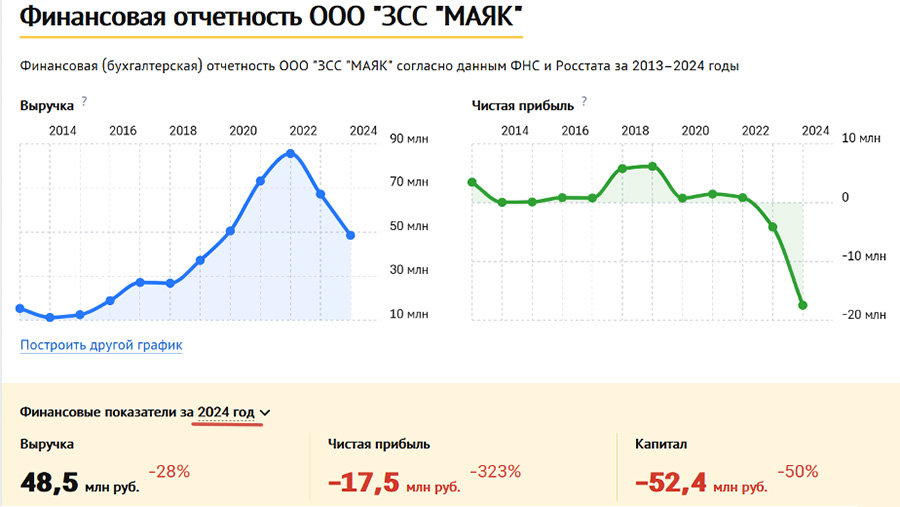
Each of the enterprises controlled by Kozlovsky stands out because, with significant revenue, it has shown insignificant net profit or even losses in the last 10 years. For example, according to the Federal Tax Service, having completed 2024 with revenue of 48.5 million rubles, ZSS Mayak showed losses of 17.5 million.
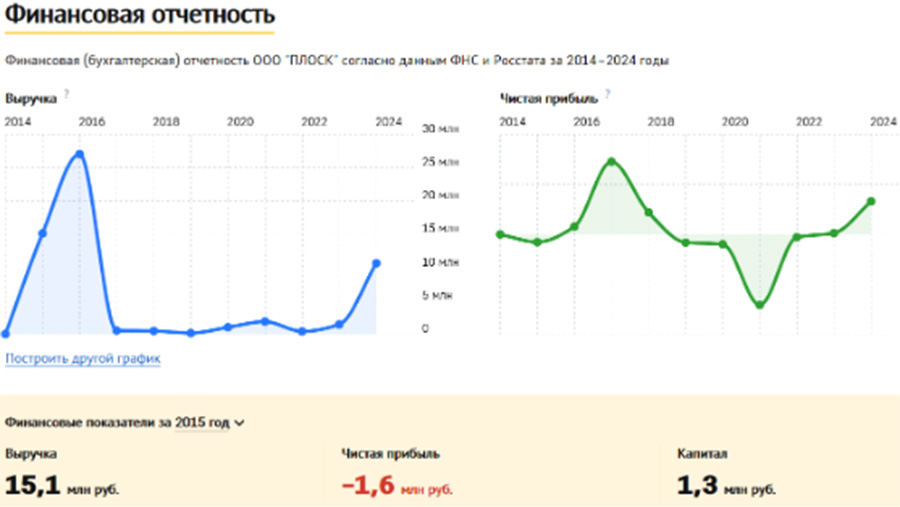
Related to him through the owners (founder Peter Kozlovsky, head Elena Miroshnikova) LLC Plosk, for example, in 2016 received revenue of 15.1 million rubles, and showed a negative net profit.
Another company of the same owners, Center for Technical Operation No. 1 LLC (founder Peter Kozlovsky), had a net profit of only 452 thousand rubles in 2017 with revenue of 11.6 million rubles.

Technotron LLC (founded by Elena Miroshnikova) had revenue of 16.6 million rubles by the end of 2022, but reported a net profit of only 744 thousand rubles.
Finally, the Mayak plant itself in 2022 also showed a serious difference between revenue and net profit: it earned 85.7 million rubles, and showed a profit of 856 thousand rubles.
"The difference between revenue and net profit is, of course, the main indicator that money is being withdrawn," economist Nikita Krichevsky said in a comment to Izvestia. — Yes, taxes should be deducted from the proceeds, but what taxes are there? 20%? This means that expenses come from the gross profit. Nowadays, the best option is cryptocurrency, which is issued as a purchase of securities. That is, abstract securities are being purchased, unquoted, but in fact cryptocurrency is being bought. And the cryptocurrency trader drives this money to the account that is indicated to him.
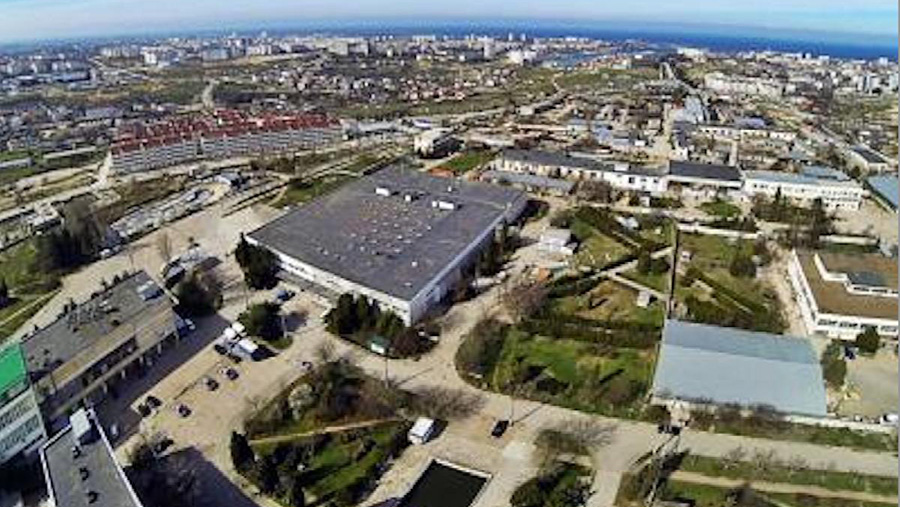
According to Nikita Krichevsky, it is precisely the withdrawal abroad that may explain the difference between net profit and revenue of ZSS Mayak.
— And how many such companies are there in the country? A lot," says the expert. — And it is impossible to track them, because they have a purchase of securities on their balance sheet. Securities are hanging on the balance sheet, but in fact, all this goes through cryptocurrency to finance the Armed Forces of Ukraine.
According to Izvestia's calculations, over the past 10 years, companies associated with the Kozlovsky family have had revenue of 1.2 billion rubles. However, reporting on a number of companies is not available for all years and is partially hidden by the Federal Tax Service. Taking into account this part, revenue may be higher by about a quarter, that is, it may reach 1.5 billion rubles. And the difference between gross revenue and reported net profit after taxes is at least 1 billion. Which could be withdrawn abroad, including to Ukraine, including to finance the Armed Forces of Ukraine through the Open Dialogue Foundation and the like.
— We are talking about using various schemes to reduce or even evade taxes. This is such a ubiquitous story that even regardless of the specific circumstances of the case related specifically to these companies, it seems quite obvious. The Ukrainian co—owners of these enterprises used them primarily to extract profits and withdraw these funds abroad," Vladimir Jaralla, a political expert from Crimea, told Izvestia.

Oleg Genschaft
In his opinion, there may still be many such companies in Crimea that sponsor the Kiev regime. The reason, he noted, lies in the serious confusion of ownership schemes, when enterprises are registered on front persons, and also interlayer firms are used.
— Suffice it to recall that in Crimea, not only in Sevastopol, there was a rather high-profile process at the beginning of the year: a very large number of real estate and enterprises were identified that were somehow connected with the Ukrainian owners. As a result, the owners have now changed," said the political expert.
In February, the head of the Crimean parliament, Vladimir Konstantinov, announced that the republic had prepared another package of property of Ukrainian businessmen, which is subject to nationalization. The list included 113 items (and there were 720 in total at that time). For example, the property of Ukrainian businessman Oleg Genschaft, who became famous for building closed private beaches in Alupka, fell under nationalization, although the authorities demolished the fences he built 10 times. Also on the list was the property of former Verkhovna Rada deputy Lyudmila Denisova, who is known for massive falsifications of information about alleged crimes of the Russian military. In addition, the Krym beer factory became state property.

As the head of the Crimean State Council, Vladimir Konstantinov, stated on July 15, in the first half of 2025, the authorities have already sold 25 nationalized facilities, receiving 2.2 billion rubles for this. In total, since 2022, the republic has received about 4.8 billion rubles from the sale of such assets.
Переведено сервисом «Яндекс Переводчик»
