
Stop, frame: unemployment in Central Russia has dropped to a minimum of 1.4%
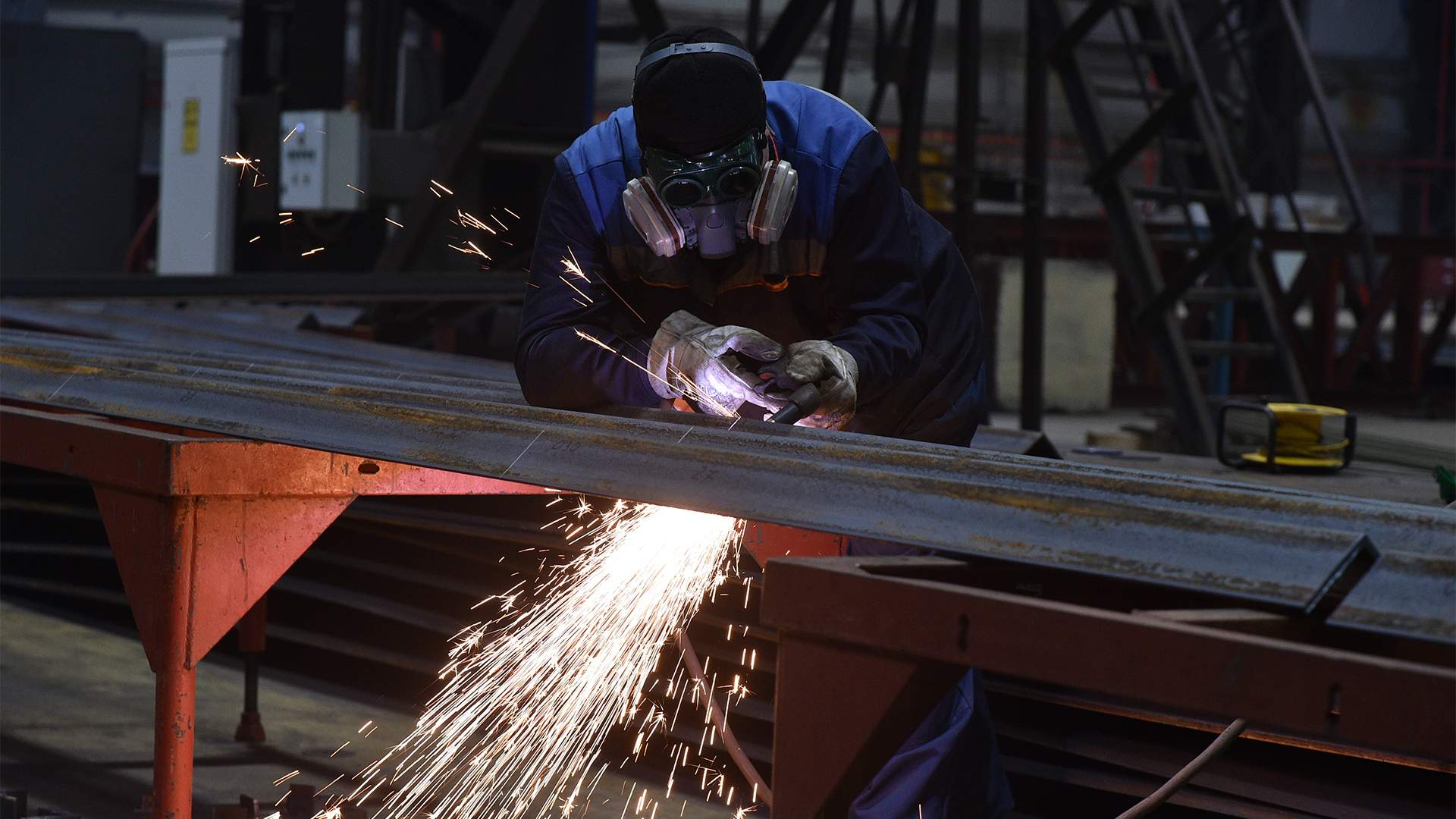
Unemployment in Central Russia has dropped to a minimum of 1.4%, according to the Central Bank's materials, which were analyzed by Izvestia. The downward trend reversed in early 2025, but then it went down again. The reason is seasonal factors, including increased hiring in agriculture and construction. The biggest shortage of personnel is in the Central Federal District and the Urals, where the largest financial centers and the growth of industrial production are located. Despite the labor shortage, the wage race is slowing down. How this affects the economy and what will happen to unemployment next is in the Izvestia article.
Unemployment in Russian regions in 2025
The unemployment situation in the constituent entities of the Russian Federation is developing unevenly, follows from the report of the Bank of Russia on the regional economy. In the Central Federal District (CFD), the indicator fell to a minimum of 1.4% in May. In addition, it also decreased in the Far East, the Urals and Siberia — 2.1%, 1.5% and 3%, respectively. At the same time, unemployment in the Volga-Vyatka, northwestern and southern regions remained at the same levels - 1.6%, 2.1% and 4.2%. The Bank of Russia collects data on its seven main departments in different parts of the country. Izvestia contacted the regulator with a question about what this trend is related to.

The trend towards a decrease in the national average unemployment rate reversed in early 2025. According to Rosstat, it grew from 2.3% to 2.4% at the beginning of the year. However, contrary to expectations, the indicator began to decline again and in May it updated the historical minimum, reaching 2.2%.
The slight drop is due to seasonal factors, including increased hiring in agriculture, construction and urban improvement, as well as in tourism and seasonal services, the press service of the Ministry of Labor explained to Izvestia. Employers are actively attracting temporary workers, and this, in turn, has a statistical impact on the overall unemployment rate, the department said. In May, there is traditionally a slight decrease in the indicator.

At the same time, the unemployment rate has always differed by region — in the labor-surplus regions, which include the southern territories and the republics of the North Caucasus, it has always been above the average level, Lyudmila Ivanova-Shvets, Associate professor of the Basic Department of Human Resources Management at the Plekhanov Russian University of Economics, pointed out.

At the same time, higher unemployment in the south is associated with seasonal factors, the predominance of the agricultural sector and the less developed variability of the economy, added the Deputy General Director of the service "Work.<url>", Alexander Veterkov, Chief Operating Officer of Sberpodbor. In addition, there is a strongly developed "self—employment" model - private agricultural associations, hotel services, said Alexey Tarapovsky, founder of the Anderida Financial Group.
At the same time, unemployment is lowest in those regions where there are high salaries and staff shortages, as well as new production facilities, said Natalia Milchakova, a leading analyst at Freedom Finance Global. For example, the central part of our country is home to the country's key financial, IT and administrative centers, including Moscow and the Moscow region, said Alexander Veterkov.
The Urals and the Volga-Vyatka region also demonstrated low unemployment rates. Industrial production is particularly developed in these regions, and there is a stable demand for labor in the manufacturing sectors, he added.

The imbalance in subjects is also caused by mentality. For example, young people are now more mobile — they are ready to move to large cities if they are offered higher salaries there, Natalia Milchakova is sure. Because of this, in turn, there is a shortage of personnel in their home regions, in particular, in those areas where salaries are low, she added.
In general, by the end of the year, the unemployment rate will be about 2.5%, experts interviewed by Izvestia are confident. According to economist Andrey Barkhota, in 2026 it may rise above 3.5% due to the effect of staff optimization in most companies.
How low unemployment affects the economy
— The unemployment rate does not fully reflect the state of the labor market in the Russian Federation. The fact is that it is not those who are currently unemployed who are considered unemployed, but those who are registered with the employment service and "desperate to find a job," said independent expert Andrei Barkhota.
He added: salary expectations are growing against the background of staff shortages, as well as employers' willingness to respond to them. This contributes to maintaining a fairly low unemployment rate.

However, the lack of employment of people entails both advantages and risks in the economy. Since people are fully employed, the state reduces the cost of social benefits related to unemployment, said Lyudmila Ivanova-Shvets from Plekhanov Russian University of Economics. At the same time, she continued, there is practically no reserve left to fill vacancies — in such conditions it is difficult for companies to find an employee with the desired competencies, the quality of work and productivity may decrease, since there is no replacement on the labor market.

In addition, as Olga Belenkaya, head of the Macroeconomic Analysis Department at Finam, pointed out, the unemployment rate is a lagging economic indicator that changes do not affect immediately.
Where are salaries growing the most now
High salaries in some industries attract workers, which leads to staff shortages in other areas where salaries are lower. For example, in Russia there is an influx of specialists into the IT sector, especially in the field of artificial intelligence development, Natalia Milchakova noted. At the same time, there is a shortage of school teachers in small towns and villages, she added.
According to the dynamics of salary offers in the first half of the year, the heavy machinery industry was the leader — salaries there amounted to over 115 thousand rubles, said Roman Gubanov, Director of Development at Avito Rabota. The top 3 also includes transport engineering (107 thousand), housing and communal services and urban infrastructure (about 70 thousand on average).

The most dynamic wage growth is now also recorded in the service sector and construction — this is a response to the shortage of mass staff and qualified personnel, said Alexander Veterkov from the service "Work.ru". At the same time, the high demand for specialists in the manufacturing and energy industries is pushing up revenues in these industries, he stressed.

Nevertheless, the wage race will slow down by the end of the year. The main reason is the tight monetary policy of the Bank of Russia. After all, most enterprises cannot afford expensive loans to expand production, so they do not want to increase staff and pay. The increase in income tax from 2025 from 20% to 25% also played an important role. In this case, firms give more funds to the state, and they have less money left to attract higher-paid employees.
According to experts interviewed by Izvestia, by the end of the year the average salary in Russia will be about 100 thousand rubles. According to Natalia Milchakova, this growth will mainly be influenced by funds paid to workers in the raw materials sector, as well as the IT sector.
Переведено сервисом «Яндекс Переводчик»
