- Статьи
- Economy
- Clone attack: Chinese sellers began to counterfeit auto parts brands from the Russian Federation

Clone attack: Chinese sellers began to counterfeit auto parts brands from the Russian Federation

Chinese sellers have started copying Russian auto parts brands. Companies from China repeat the colors and design of goods from the Russian Federation, but offer fake goods under the guise of domestic ones, representatives of the companies told Izvestia. In the first quarter, counterfeit volumes increased by more than 20%, retailers say.
How brands are copied and why
Chinese sellers began to massively copy domestic brands of spare parts and car accessories. If there were no such cases in 2024, then in the first half of the year they are created by dozens, according to market participants. At the same time, 10-20 fake outlets for one brand can operate on online platforms where fakes are sold under Russian names.
—By repeating the design and packaging style of spare parts, small suppliers from China create the illusion of belonging to the Russian market," Ilarion Demchikov, marketing director of the Emex auto parts marketplace, told Izvestia.

The Chinese steal not only individual photos and descriptions, but entire product cards, which provides them with high positions in issuing, says Alexey Ivanov, owner of the Alliance Trucks commercial vehicle dealership network.
According to retailers, sellers from China are probing the market, assessing the popularity of brands and the degree of opposition from copyright holders.
"On domestic online platforms, the Chinese create cards with goods from domestic manufacturers of spare parts, but with different prices," Alexey Kostaliev, head of sales development at AVTORUS Group marketplaces, told Izvestia. — We record the copying of our brands Ganz, Arnezi and others.
The online marketplace selects the product with the best offer and raises it to the top of the distribution. Thus, the original store ends up in the bottom positions, and orders go to the forgers, he noted.

According to Alexey Kostalev, if no action is taken, the number of fake stores for individual brands will only grow.
The cloning strategy here is simple — to accumulate customer interest for a short time, collect orders and disappear, the expert notes.
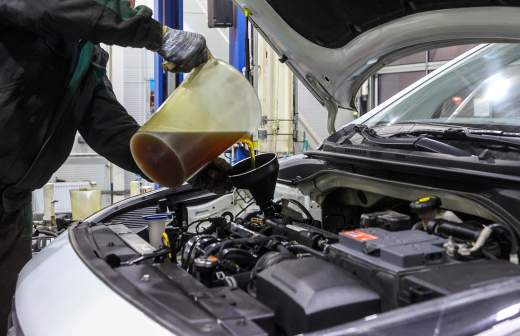
According to Emex, fake stores sell the most popular spare parts and accessories: car brushes, brake discs, pads, filters, technical fluids, and more. AVTORUS records the copying of both its Arnezi brand and the sets of car repair tools sold under this name.
"In the first quarter of 2025, the number of counterfeit components on the Russian market increased by more than 20%," said Ilarion Demchikov. — These are mainly parts for cars of bygone brands: batteries for German cars, LED lamps, original filters for Korean cars, as well as consumables.

Izvestia examined the fake product cards. Their creators are Dongguan Saturn Soil Traiding Co Ltd from Guangdong Province and another from Putian City District in China.
— When buying in such stores, there are no guarantees that the exact product that was ordered will arrive, — said Alexey Kostalyev. — Quality issues often arise.
The money of the defrauded Russians goes abroad, and difficulties arise with their return, he noted. Clone stores often close themselves or are blocked by copyright holders.
At the same time, the reputation of both the Russian brand and the marketplace suffers, the administration of which is physically unable to stop all such cases, Alexey Ivanov notes.
Izvestia has sent inquiries to other auto parts manufacturers.

According to Ekaterina Kosareva, managing partner of the VMT Consult analytical agency, brands that have already accumulated a good reputation and high sales on marketplaces are the most vulnerable. In the segment of automotive products, these are, in particular, Avtoprestizh, a brand of inexpensive electronics and parking sensors, Sibiria Auto (Novosibirsk), a manufacturer of thermowires and heaters for the engine, as well as Technoprofil and Voltage, which produce automotive lamps and electrical appliances.
— Their cards are copied in their entirety, from photos to the structure of the description and reviews. At the same time, products of a completely different quality are sold, and sometimes for a completely different purpose," Ekaterina Kosareva said.

Fakes are also found under the brands Promtekhdetal and AvtoElement, she added.
— We are developing tools to combat card copying, Alexey Makhmudov, head of Ozon Auto, told Izvestia. — If the content is duplicated manually, sellers can contact support: we consider 90% of such requests in 24 hours, a third of them are processed in the first five minutes using the ML tool.

The marketplace added that they monitor the originality of the content on the online showcase on a daily basis, paying special attention to products from Russian brands. If the trademark is registered in the Russian Federation and cannot come from abroad, product cards from foreign suppliers are blocked, the company noted. In addition, Ozon Auto is currently testing a new tool for verifying the content of cards at the time of image loading using machine learning models.
"To help customers choose original products from well—known brands that are often copied, the Original icon has appeared on Wildberries," the marketplace told Izvestia. — It can be seen in the card, catalog, and search if the seller has confirmed the right to sell the goods and provided all the necessary documents — a valid contract, information about payment for delivery, and others.

There is also a special filter with products whose authenticity has been confirmed, Wildberries noted.
How to recognize a fake product
"The trend towards brand cloning is systemic and is noted not only in the auto parts market, but also in other segments," Askar Rakhimberdiev, founder and CEO of the MoiSklad service, told Izvestia. — Some marketplaces often lack reliable seller verification mechanisms, as well as algorithms to protect copyrighted content and brands from illegal copying.

Fraudsters from China, due to the high competition in their country, are exploring new sales markets," says Alexey Ivanov from Alliance Trucks. — Russia, with its highly developed online trading market, is the first contender for their attention.
"Brand owners are filing pre—trial claims for such borrowing," Ilya Plisov, a member of the board of the Union of Car Service Companies of Russia and deputy director of EuroAuto Auto Complex, told Izvestia. — We have sent about 20 complaints about the illegal use of our brand.

AvtoVAZ also feels the problem of counterfeiting. According to the revealed facts of illegal use of the company's intellectual property results, 17 applications were sent to law enforcement agencies in the first half of the year. Together with employees of the Ministry of Internal Affairs, more than 5,000 spare parts with signs of counterfeiting worth about 12 million rubles were seized during 19 operational investigative measures, according to the website of AvtoVAZ's subsidiary Lada-Image.
— If the same Chinese store sells different types of goods: workwear, cosmetics, leather bags and auto parts, this is an alarming "alarm bell", — Alexey Ivanov notes.
Deleting copies does not solve the problem, because others are registered to replace one. It comes to the point of absurdity when the original "check mark" on the marketplace cannot be obtained by the manufacturer himself due to the high number of fakes, the expert added.
Of course, additional consumer protection measures are required today, both from the marketplaces themselves and from the customs and tax control authorities, Askar Rahimberdiev summed up.
Переведено сервисом «Яндекс Переводчик»
