Go for color: "eternal" ultramarine will help preserve Leonardo da Vinci's masterpieces
- Статьи
- Science and technology
- Go for color: "eternal" ultramarine will help preserve Leonardo da Vinci's masterpieces


Russian scientists have discovered the mechanism of fading of ultramarine pigment, which has been used by great artists for hundreds of years. Over time, it loses its brightness, which threatens the safety of many valuable works of art. The results obtained will make it possible to create an almost eternal ultramarine paint and find new ways to restore masterpieces. The most famous lovers of this paint are Jan Vermeer and Leonardo Da Vinci. As the restorers explained, today advanced scientific methods are used to combat the destruction of paintings, and new data on the properties of paints will help them in this work.
Features of Lapis lazuli
Specialists from the Vinogradov Institute of Geochemistry SB RAS, the Institute of the Earth's Crust SB RAS and Bar-Ilan University (Israel) It was found that the discoloration of lapis lazuli—based dyes is associated with the behavior of a coloring particle, a chromophore, which loses stability in small—sized mineral grains. It is this process that causes the fading of natural ultramarine paint, which has been used by the most renowned artists for hundreds of years. This endangers many of the masterpieces of painting created using this material. The discovery of Russian scientists will help in the restoration of these monuments. And it can be used to develop long-lasting pigments for paints, decorative coatings, components of colored ceramics and glazes.
— Our research will make it possible to create paints based on natural lapis lazuli pigment that are resistant to fading under the influence of air and high temperatures. For example, if lapis lazuli with particles less than 0.04 mm is used in a dye, it may lose color over time under the influence of heat and light, whereas a dye from a mineral with particles of 0.2 mm or more may, on the contrary, become more "deep" and saturated. In the future, we plan to study in more detail the behavior of lapis lazuli particles of different sizes depending on the surrounding atmosphere, time and temperature, as well as their mineral and chemical composition," said the project leader, chief researcher at the Laboratory for Modeling Geochemical Processes at the Vinogradov Institute of Geochemistry SB RAS. Vladimir Towson.

Ultramarine dye was the most expensive in Europe until the 19th century, as the lapis lazuli from which it was produced was imported from Afghanistan. Due to the high cost, it could only be used by recognized masters of their time for the most valuable paintings, explained art critic Oleg Groznov.
— One of the most prominent masters who used ultramarine was Jan Vermeer. He used it a lot. This is, for example, his "Thrush". She has a blue apron and a tablecloth. "The girl with the pearl earring." She has a blue headdress. Vermeer had a very rich customer who could afford to use such paints. Leonardo Da Vinci also used this kind of paint. Almost any blue in that era was made on the basis of lapis lazuli. Giotto di Bondone used a lot of ultramarine when painting in the Scrovegni Chapel. But it was applied on dry, not wet plaster, so the paint crumbled a lot," he told Izvestia.
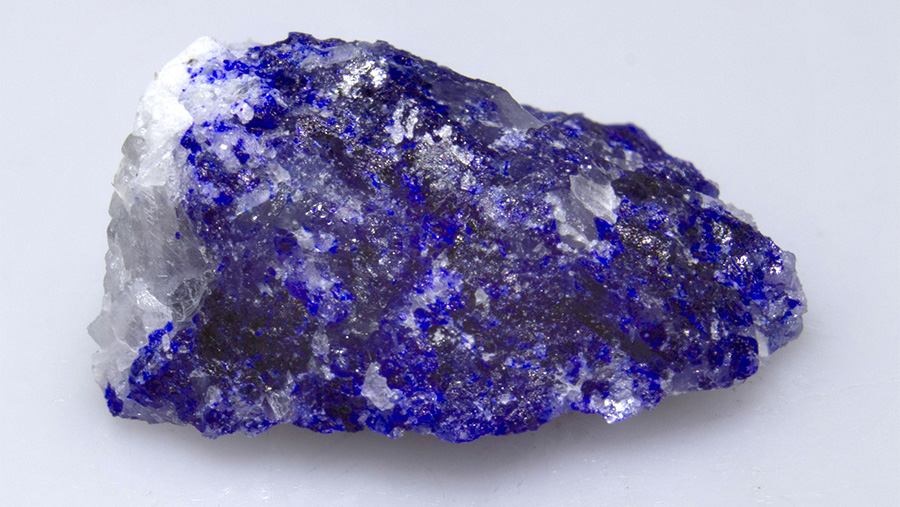
Lapis lazuli is a mineral with a rich blue color. However, different samples of this stone differ in hue, so the materials based on them also turn out to be different. Moreover, they can fade over time. Researchers attribute this to the fact that the minerals have different concentrations of oxidized and reduced forms of sulfur, as well as the size of the particles that make up the rock. The dependence of the color of a mineral on the size of its particles was called the color dimensional effect, but its nature has so far remained unknown. At the same time, it is important to know the reason for this effect in order to create bright and fade-resistant natural pigments, because synthetic analogues often do not provide the necessary durability.
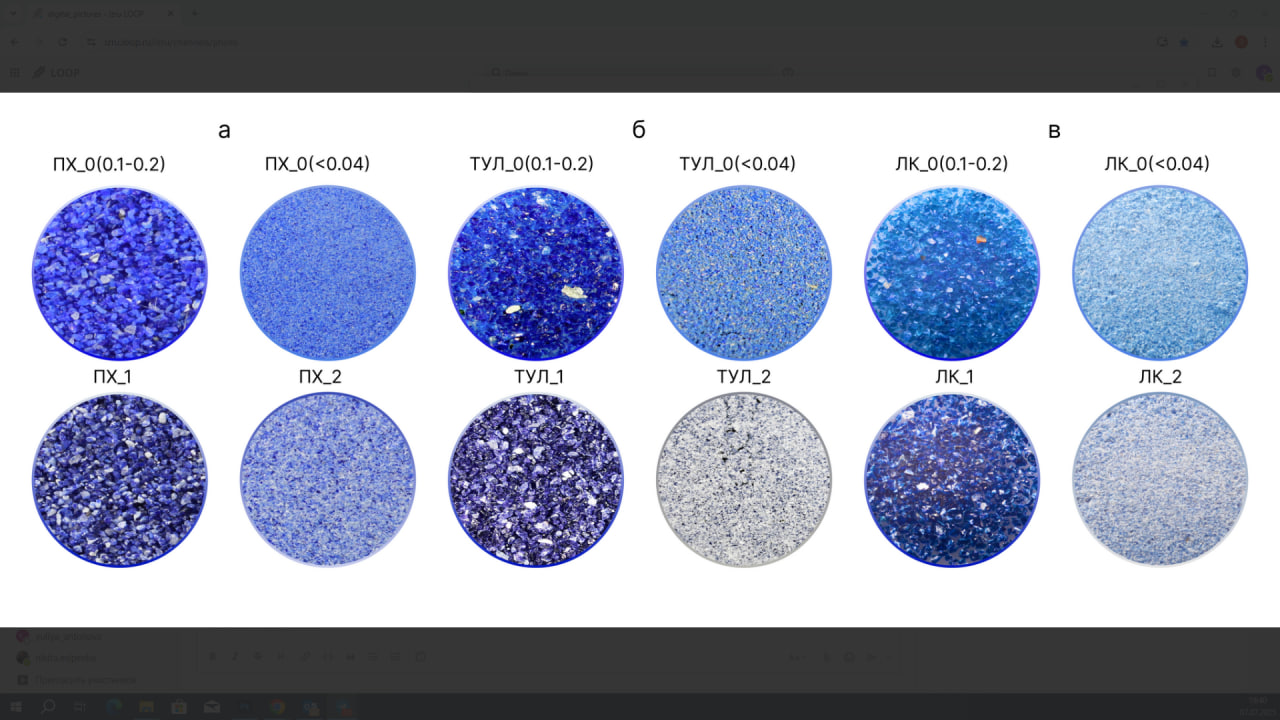
Scientists have studied lapis lazuli samples from the Malo-Bystrinsky, Pokhabinsky and Tultuy deposits in the Baikal region. The studied minerals differed in grain size: in some, the grains did not exceed 0.04 mm, while in others they reached 0.1–0.2 mm. The samples were kept at 800 °C for eight hours, after which their color, structure, and chemical composition were checked.
The color of lapis lazuli is given by a trisulfide radical (a negatively charged particle of three sulfur atoms), while other forms of this element do not play a role in coloring or give crystals a different shade. For example, the presence of a neutral molecule of four sulfur atoms (red chromophore) gives the crystals a purple hue due to the overlapping of colors.
How restorers work
The heating experiment showed that as the temperature rose, small particles of lapis lazuli (less than 0.04 mm) partially or completely discolored, while larger ones (0.1–0.2 mm), on the contrary, darkened and acquired a purple hue. This is due to the fact that in large grains, one of the impurity components of the mineral, calcite (calcium carbonate), maintained a balance between oxidized and reduced forms of sulfur, so that the samples did not lose their color.
— The problem of lapis lazuli fading is related not only to the size of its particles, but also to the binder used by the artist. It can be oil, oil with varnish, wax, glue. Another important point is the substrate. Lapis lazuli in its pure form was rarely used, as it cost more than gold. So far, the best lapis lazuli is mined only in Afghanistan. Therefore, it was used by renowned artists for the most expensive orders," said Andrey Tsvetkov, a restorer at the Laboratory of Scientific Restoration of Easel Paintings at the State Hermitage Museum.
All paints lose their brightness over time, but this problem can be solved to a certain extent and new scientific data can make this task easier, the expert added.
As the restorer, Professor Irina Beloyarskaya, explained to Izvestia, professional chemists are currently engaged in the restoration of the painting with the composition of paints and methods of their restoration, who conduct research on objects and take into account all scientific data on the substances they work with. This includes the latest results obtained by Russian scientists.
— Fading of ultramarine can occur in oil paintings and in icons. Sometimes it can darken, become almost black," said Galina Gorokhova, head of the Department of Physico—chemical Research Methods at the All-Russian Art Scientific and Restoration Center named after Academician I.E. Grabar.
Chemists are investigating and determining the presence of ultramarine in the facility, and technologists are already choosing the recovery method, the specialist explained. The results of the study, supported by a grant from the Russian Science Foundation (RSF), are published in the journal American Mineralogist.
Переведено сервисом «Яндекс Переводчик»
