The value of the gift: the collector handed over paintings worth 3 billion rubles to the state
- Статьи
- Culture
- The value of the gift: the collector handed over paintings worth 3 billion rubles to the state


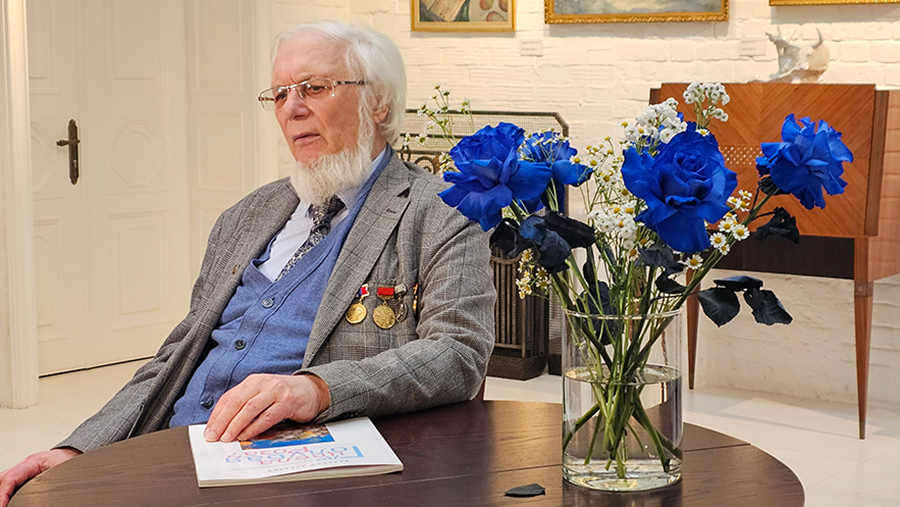
Like the Tretyakov brothers, Savva Mamontov and other famous Russian philanthropists, our contemporary Valery Dudakov donated a unique collection to the state Museum. It includes about 40 works, including works by Larionov, Serov, Sapunov, Vrubel, Somov and other representatives of the Blue Rose association. In the autumn, the collection will be sent to Nizhny Novgorod for permanent storage. In the meantime, it can be seen at a new exhibition in Moscow. Izvestia visited the opening day and found out why the collector decided to give away a unique collection worth several billion and about plans to create a Museum of Russian Symbolism.
"The cost of each exceeds one million dollars"
On July 2, the Miral Gallery of Art and Object Design, which is located in the mansion of the Diplomatic Club of the Ministry of Foreign Affairs, opened the exhibition "Where did the Blue Rose Bloom? Leaving Moscow." The name hints at the fate of its exhibits — paintings by world-renowned artists who will soon leave the capital. These are Vrubel, Serov, Borisov-Musatov, Goncharova, Kuznetsov, Larionov, Milioti, Ryabushinsky, Sapunov, Sudeikin, Utkin, Fonvizin. All of them are from the personal collection of the famous collector and philanthropist Valery Dudakov. He transfers the masterpieces for permanent storage to the Nizhny Novgorod State Art Museum (NGHM).
"According to my calculations, the collection of 40 paintings is worth from 2.5 to 3 billion rubles,— Valery Dudakov told Izvestia. — The most valuable are Sudeikin's "My Life is a Shelter for comedians", Vrubel's "Demon" and two paintings by Sapunov: "Still Life with Self—portrait" and "Ball". These are the most significant works. The cost of each exceeds one million dollars.
The collection is dedicated to the work of the iconic artistic association of the XX century "Blue Rose". The name was given to him by the exhibition of the same name, which took place in Moscow in 1907. At one time, the "Blue Roses" did not pay close attention to the value of their work, criticized for decadence and formalism. Dudakov decided to approach the study of the phenomenon from a scientific point of view — he wrote a dissertation on the problems of synthesis in Russian art of the late XIX – early XX centuries. There was an idea to save the works for posterity. This is a very valuable gift for Nizhny Novgorod and the Museum Fund of the Russian Federation, says Sergey Uvarov, Candidate of Art History and curator of exhibitions.
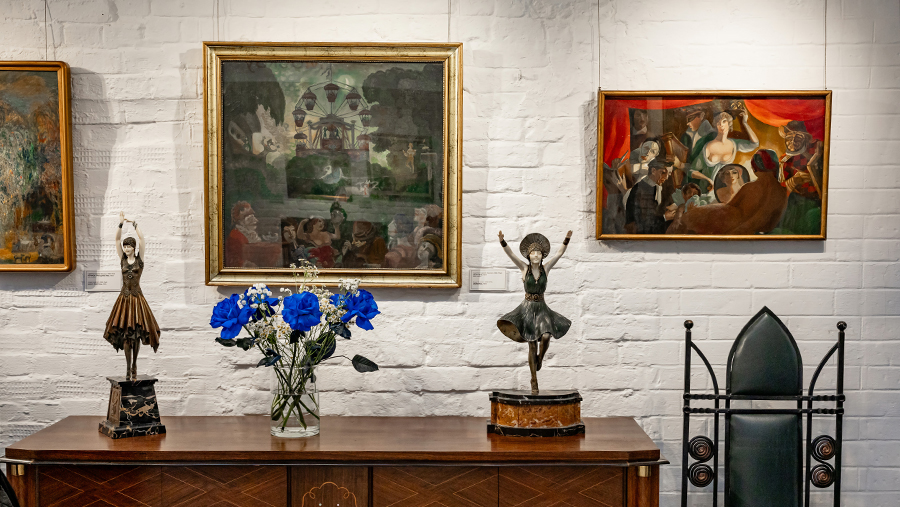
— Russian painting of the first quarter of the 20th century is perhaps the most expensive and sought-after of all Russian art in the world. The artists of the Blue Rose association are among the most beloved by both viewers and collectors. This is the period of the Silver Age, symbolism and the birth of the Russian avant-garde. So here we can talk not only about one style, but about the stylistic evolution of the era. For example, in the collection donated by Valery Dudakov, there is Borisov-Musatov, the brightest representative of Russian Art Nouveau, but there are also Larionov and Goncharova, who are already associated with the avant—garde," the expert said.

Dudakov calls Mikhail Larionov's work "The Walk" his favorite piece in his collection. Its acquisition is almost a detective story. In the mid-1970s, a collector bought the painting "Walking with a Cat." It turned out to be only a part — on the right — of one canvas by the famous artist.
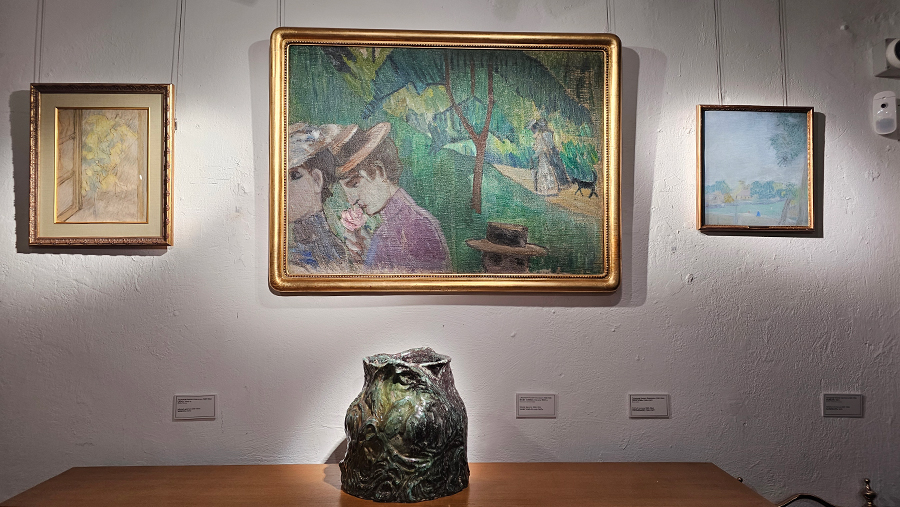
"It belonged to the collection of Lev Fedorovich Zhegin, the son of the great architect Fyodor Shekhtel," recalls Valery Dudakov. "I knew his widow. She had two works by Larionov hanging there. I bought "Walking with a cat" from her for 2 thousand rubles. That's a lot of money for 1976. It was possible to buy three Falkas with them. And I've been waiting for the second picture for exactly 30 years. And I already bought it for $50 thousand.
Museum of Russian Symbolism in Nizhny Novgorod
Valery Dudakov can be called a follower of great patrons. There are such examples of generous gifts in the history of Russian art. Ilya Zilberstein created the "Museum of Personal Collections" at the Pushkin State Museum of Fine Arts. Aram Abrahamyan organized the "Museum of Russian Art" in Yerevan based on his collection of several hundred paintings. Thanks to Sergey Gorshin, there are Peredvizhniki in the funds of the Khimki Art Gallery. George Costaki has added more than 800 works of art to the Tretyakov Gallery's treasury.
Valery Dudakov dreamed that the "Blue Roses" would have their own museum, and with it, all Russian symbolism. His collection should become the basis for such an institution based on the NGHM.
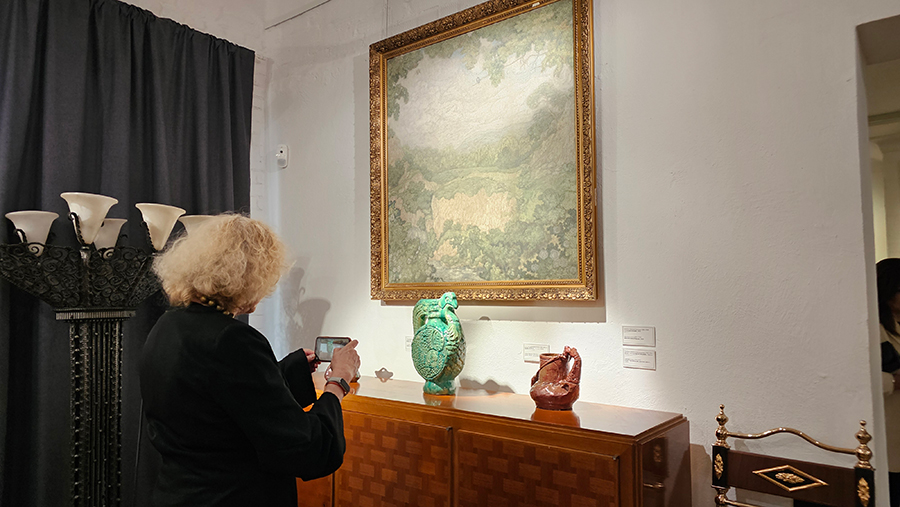
— Among the works transmitted by Valery Dudakov are not just masterpieces of Russian art of the Silver Age. All the works are united by belonging to a common trend in the culture of that era — Russian symbolism. This thematic collection is so expertly selected and self—sufficient that it can not only complement the collection of the National Museum of Fine Arts and fill in the missing works of some authors in the museum, but also form the basis of the future Museum of Russian Symbolism," Roman Zhukarin, the museum's general director, told Izvestia.
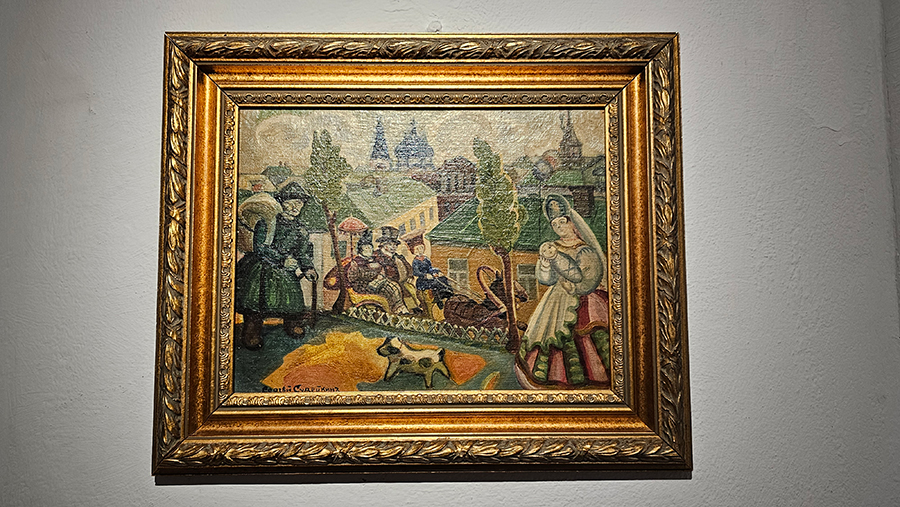
It took the collector two five-year plans to make the dream of a Museum of Russian Symbolism a reality. Before that, he had tried to negotiate a similar project with the Pushkin Museum and the Saratov authorities. The idea was realized thanks to an acquaintance with the governor of the Nizhny Novgorod region, which was arranged by the artist Yuri Cooper. The Ministry of Foreign Affairs took part in the transfer of valuables.

— The Center for Cultural Diplomacy has digitized the collection and created a catalog. We helped with legal support and monitored compliance with the terms of the donation. According to the agreement, the museum should ensure a single exhibit, preserve the integrity of the collection, develop and replenish the collection," Sergei Shitkov, Acting Rector of the Diplomatic Academy and Vice Rector for Legal Affairs at MGIMO, told Izvestia.
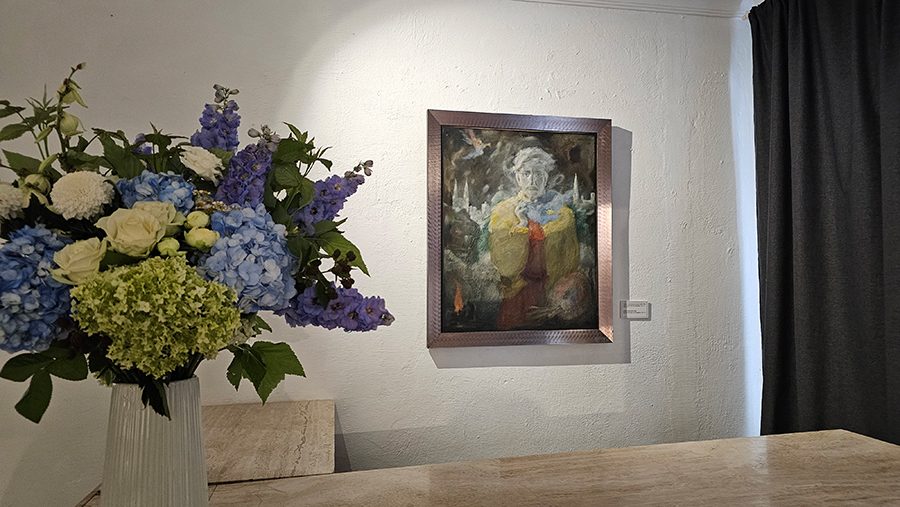
Along with the paintings, the patron is handing over his library. That's more than a thousand books. There are also archives, drawings by famous artists, and their autographs. The meeting will move to Nizhny Novgorod in November. There, the collector wants to celebrate his 80th birthday on December 7 with the opening of the museum. In the meantime, you can see the exceptional rarities he has collected over the years in Moscow — at an exhibition at the Miral Gallery, which will run until August 1.
Переведено сервисом «Яндекс Переводчик»
