Exchange code: how far have the Russian Federation and Ukraine progressed in the implementation of the agreements
- Статьи
- World
- Exchange code: how far have the Russian Federation and Ukraine progressed in the implementation of the agreements

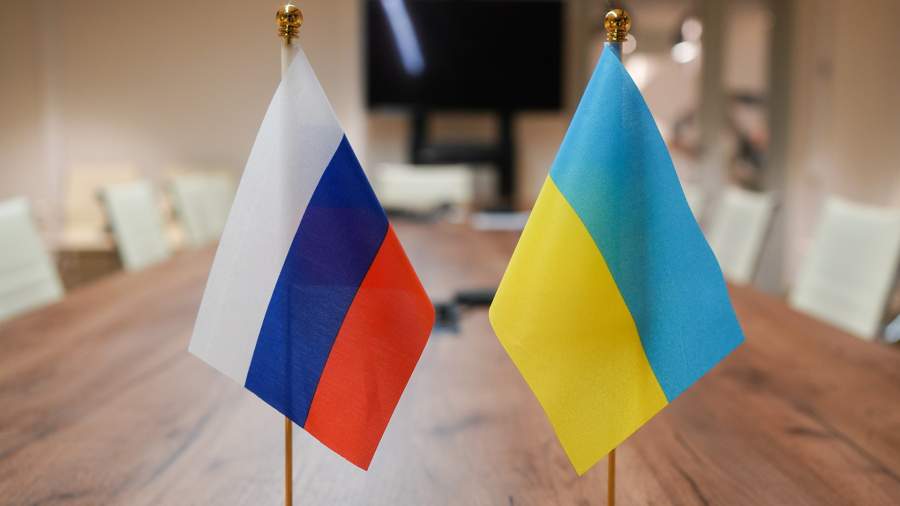
Despite the limited results, actions such as the exchange of prisoners and the bodies of dead soldiers between give hope for Kiev's ability to fulfill its obligations. This was stated to Izvestia by Konstantin Kosachev, Vice Speaker of the Federation Council. Russia has handed over the bodies of 1,212 dead soldiers to Ukraine, receiving in return the remains of 27 of its military, Vladimir Medinsky, Assistant to the President of the Russian Federation and head of our delegation at the talks with Ukraine, said on June 11. The exchange was the result of agreements reached at the talks in Istanbul on June 2. However, this step does not mean a rapprochement between the parties: the memoranda of Moscow and Kiev remain mutually exclusive, and humanitarian actions are only episodes against the background of ongoing hostilities, experts say.
Exchange of dead bodies between Russia and Ukraine
Russia handed over to Ukraine the bodies of 1,212 dead Ukrainian servicemen, receiving in return the remains of 27 of its fighters. This was announced by Vladimir Medinsky, Assistant to the President of the Russian Federation, head of the Russian delegation to the negotiations with Ukraine. He noted that the exchange was agreed upon within the framework of the agreements reached during the negotiations in Turkey.
— This can be considered a confirmation that the bilateral negotiations are yielding certain results. This result is, of course, insufficient to be considered an advance in bilateral relations," Konstantin Kosachev, Vice Speaker of the Federation Council, told Izvestia.
Nevertheless, according to him, there is hope that the Ukrainian side is able to fulfill its obligations, even if not at the speed that the Russian Federation initially expected, but with the result that was expected.
— This is already a good sign. I definitely wouldn't exaggerate the significance of this event, but I wouldn't downplay it," Kosachev says.

Against this background, Russia also announced the start of urgent "sanitary exchanges" — the evacuation of seriously wounded prisoners of war from the front line. "Russia does not abandon its own people!" wrote Medinsky on the Telegram channel.
However, even such a large-scale humanitarian step does not yet change the general confrontational logic of the dialogue between the parties. According to experts, Kiev's actions do not indicate a real willingness to de-escalate.
"This can hardly be called progress in relations between Russia and Ukraine," Alexander Dudchak, a leading researcher at the Institute of CIS Countries, told Izvestia. — Kiev made this decision under pressure from the world community. In the West, they tried to keep quiet about this, but the information passed, causing a resonance. It was a necessary and extremely unpleasant measure for Ukraine.
Recall that on June 2, at a meeting in Istanbul, which became the second round of negotiations between Moscow and Kiev, the Russian side presented a memorandum outlining its positions. Ukraine submitted its document before the start of the negotiations.
The Russian memorandum included demands for the international legal recognition of Crimea, the Donetsk and Lugansk People's Republics, as well as the Zaporizhia and Kherson regions as part of the Russian Federation. The document also stipulated the neutral status of Ukraine, its refusal to join military alliances and a ban on the deployment of foreign troops. The Kiev version, on the contrary, confirmed the course towards joining the EU and NATO, proposed a 30-day truce under international control and postponed the discussion of the territorial issue until the complete suspension of hostilities.
As noted by Bogdan Bezpalko, a member of the Council on Interethnic Relations under the President of the Russian Federation, the current stage of negotiations is more a dead end than progress.
— If we compare the two memoranda, it becomes clear that they are mutually exclusive. Due to the fact that Russia has an advantage on the battlefield and is on the offensive in the Dnipropetrovsk and Sumy regions, it is natural that Ukraine should give way. But she's betting on escalation. Therefore, the exchange of bodies and prisoners of war can be called progress, but I'm afraid that cooperation will be limited to these humanitarian actions," he told Izvestia.
Bogdan Bezpalko also drew attention to the reasons why Kiev delayed the transfer of the bodies.
"This was quite a big problem for Ukraine in the field of media and PR, because such a large number of dead bodies returning to Ukraine at once could lead to a drop in morale among the population," the expert said.
Initially, the Ukrainian side pledged to collect the bodies of about 6,000 of its military personnel by June 7, but later postponed the procedure indefinitely. According to Medinsky, trailers with the bodies of dead Russian soldiers remained at the border for several days. This was confirmed by Kremlin spokesman Dmitry Peskov.
Bezpalko did not rule out that the Ukrainian side was also afraid of financial consequences — the need to pay the relatives of the victims. But the main thing is the unwillingness to make concessions and demonstrate the scale of losses, he believes.
How are the agreements reached in Istanbul being implemented
Meanwhile, the fighting continues. According to the Russian Defense Ministry, the Russian Vostok group is developing an offensive in the Dnipropetrovsk region. During the day, the Ukrainian army, according to the ministry, lost more than 225 soldiers and five artillery pieces.
In accordance with the agreements reached in Istanbul, on June 9, the first group of Russian servicemen under the age of 25 was returned from the territory controlled by the Kiev regime. In exchange, Russia handed over a similar number of Ukrainian prisoners of war.
The next day, a second exchange took place: Russia returned another group of its military from the territory of Ukraine. In return, an equal number of Ukrainian prisoners of war were also transferred.
Vladimir Zelensky said on June 10 that the Kiev delegation was authorized to discuss only humanitarian issues. He claims that he is ready to talk about territories exclusively with Russian President Vladimir Putin.

The issue of holding the next round of negotiations remains open. Kiev has proposed a period from June 20 to June 30, but no specific date has been agreed. Moscow, according to Peskov, is ready for dialogue "despite the terrorist nature of the Kiev regime."
"As for determining the date of the next round of negotiations between Russia and Ukraine, it is unlikely to be directly related to the exchange, however, the process is likely to be launched," Alexander Dudchak summarizes.
Thus, the exchanges between Russia and Ukraine remain more episodic acts than elements of a coherent peace strategy. Without agreement on key issues, the negotiation process is limited, both in terms of content and prospects.
Переведено сервисом «Яндекс Переводчик»
