- Статьи
- World
- A good road: The Northern Sea Route will bring the resources of the Russian Arctic to the Chinese market

A good road: The Northern Sea Route will bring the resources of the Russian Arctic to the Chinese market
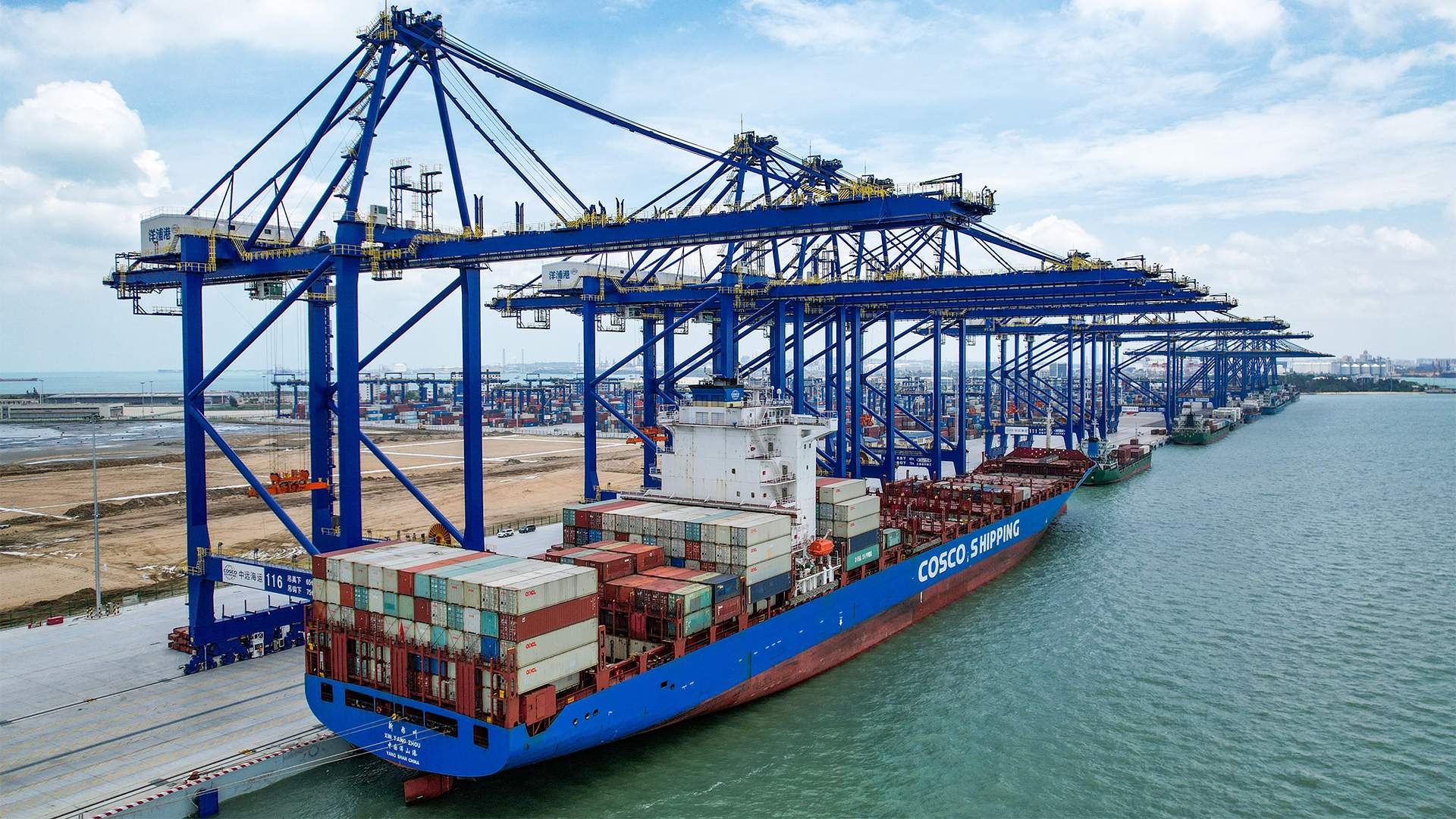
The Northern Sea Route will help increase the supply of Russian raw materials from the Arctic to China, Russian Ambassador to China Igor Morgulov told Izvestia. This opens up access to promising Arctic projects, including in the energy and raw materials sectors. There are already joint LNG production facilities. Other initiatives are also possible, the Ambassador stressed. According to experts, this could be the development of chord routes to China through the northern ports of the NSR. How the new trans-Eurasian logistics is developing is in the Izvestia article.
How the Arctic will strengthen cooperation between Russia and China
The development of the Northern Sea Route opens up access to promising Arctic projects with China, including in the energy and raw materials sectors, Russian Ambassador to China Igor Morgulov told Izvestia.
— China, as you know, is already a participant in our liquefied natural gas production complexes, and other joint initiatives may be implemented in the future. In this context, the Northern Sea Route is becoming not just a transport corridor, but also a link between the Chinese market and the resource base of the Arctic zone of the Russian Federation," he said.

For example, it is possible to increase oil production and LNG production for the Chinese market, as well as establish joint production of equipment, for example, for inclined drilling. It allows you to reduce environmental damage and lay engineering communications in places inaccessible to the open, which is quite important for the Arctic region, says Kirill Kotkov, head of the Center for the Study of the Far East in St. Petersburg.
Cooperation here primarily concerns projects related to deposits, says Vladimir Petrovsky, Chief Researcher at the Russia, China, and the World Center. But there is another interesting direction.
— If we take the route of the Northern Sea Route, then practically every significant port in the NSR area has promising projects of the so-called chord or meridian routes to China in one way or another. The idea is not to pass through the entire Northern Sea Route, but to build railways, highways or river routes that would connect these ports and pass, for example, through Siberia to the territory of China," the expert specified.

Russian President Vladimir Putin during a meeting with Chinese President Xi Jinping at the People's Assembly House in Beijing.
The Krasnoyarsk Territory has such a project in the future — this is the Belkomur highway, which should connect the White Sea with the Urals. Or, for example, a railway line that connects Yakutia with the Amur region. The development of such corridors will relieve cargo routes and increase trade turnover between Russia and China, Kotkov concluded.
Vladimir Putin and Xi Jinping personally agreed to develop the Northern Sea Route back in May 2024 following the visit of the Russian president to China. In particular, the leaders agreed to create a subcommittee on the development of the Northern Sea Route. They immediately moved from words to action. Almost immediately, in June, during the SPIEF, Rosatom State Corporation and representatives of Chinese business signed an agreement of intent to create a joint venture there to build ships and organize a year—round container line along the Northern Sea Route. And in November of the same year, the first meeting of the subcommittee was held.
"The launch of this new area of our cooperation with China reflects the desire of the two countries not only to expand cooperation in the field of Arctic logistics, but also to coordinate the formation of new support points for global infrastructure, an alternative to traditional routes," said Igor Morgulov.

The establishment of such a high-level working body is designed to ensure coordination of efforts between the Russian Federation and China for the long-term development of the transit potential of the Northern Sea Route as an element of the new trans-Eurasian logistics, the diplomat stressed. It is important to note that the interest of the two countries in cooperation in the Arctic is not limited to short-term commercial benefits. We are talking about the strategic task of ensuring stable logical links, supporting global trade and participating in the formation of a new architecture for international maritime logistics, Morgulov noted.
What will give the development of the Northern Sea Route to Russia and China
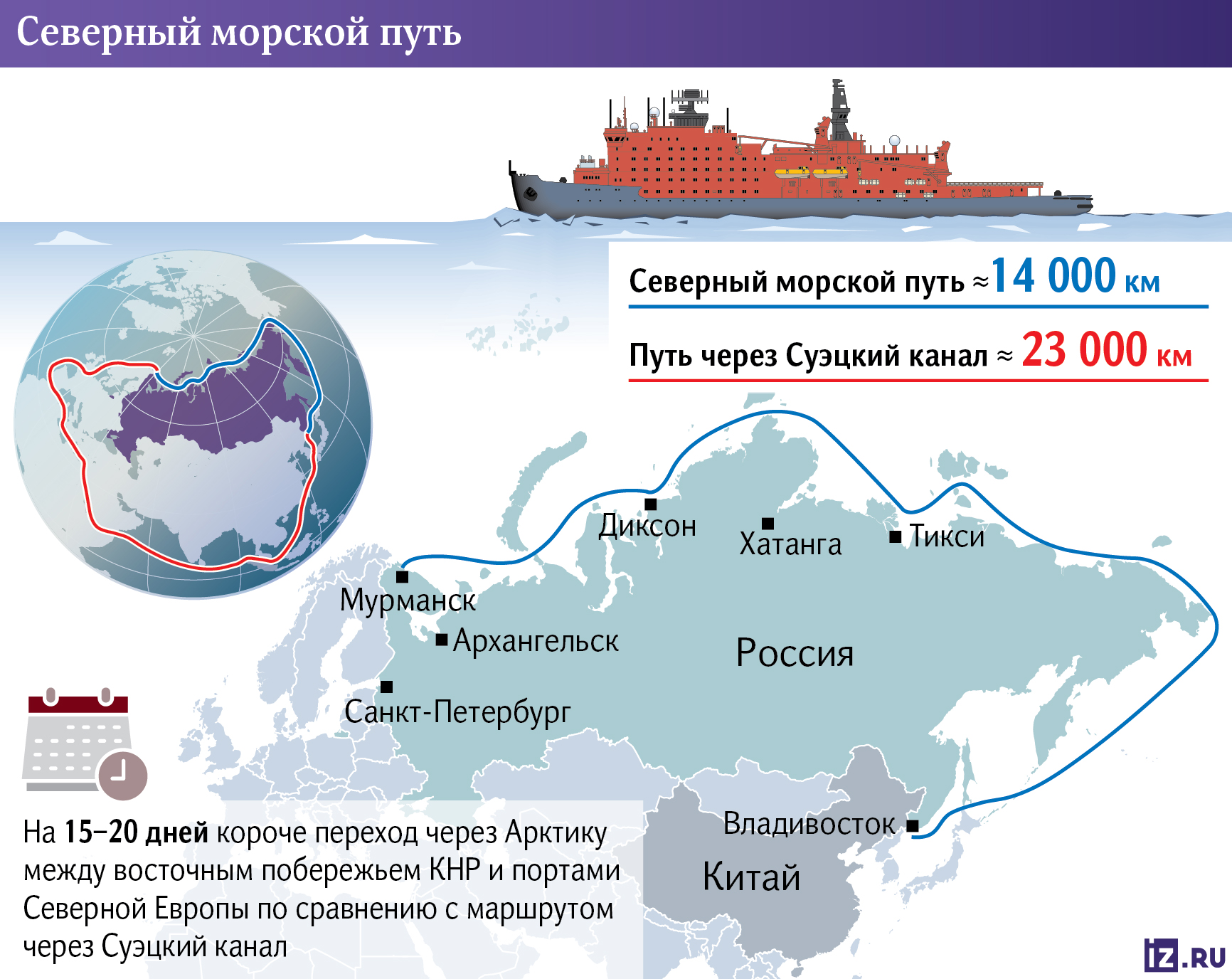
The interest of both countries in the development of the NSR is understandable, especially against the background of sanctions pressure, which is disrupting the entire global logistics. Vladimir Putin called its development the most important strategic priority of the country. At a minimum, this is the shortest water route between the European part of Russia and the Far East (from the Kara Gate to Cape Dezhnev — only 5,600 km).
It is assumed that the NSR will operate all year round, including through the construction of nuclear icebreakers. Continuous navigation will primarily improve the situation with northern shipments — 3.2 million tons of cargo are delivered annually to only 25 regions of the Russian Federation. And the capabilities of the NSR more than allow it — the total volume of cargo transportation by the end of 2024 amounted to a record 37.3 million tons.

They transport, among other things, oil and gas, minerals, bulk and container cargo, metal structures, special equipment, wood, and food products, such as fish. By 2030, the figures are planned to increase to 100 million tons. Given the development of the route, including through the continental routes, this seems quite realistic.
China is also interested in developing the northern corridor, Igor Morgulov emphasizes. There are obvious advantages for Beijing. Firstly, it is economically beneficial.
— First of all, we are talking about reducing transportation costs — the passage through the Arctic between the east coast of China and the ports of Northern Europe is 15-20 days shorter than the traditional route through the Suez Canal. This results in savings of almost two times in both time and fuel costs, which is especially important for high—margin cargoes," the Russian Ambassador to China told Izvestia.

Secondly, the Chinese economy has also needed to diversify trade and transport corridors in recent years. As Chinese Transport Minister Liu Wei emphasized, "the Chinese side is ready to work with Russia to make full use of the mechanism's role and enhance the shipping capabilities of the Arctic region."

From the point of view of maritime transport security, China is not doing well. In the event of a war from the Pacific Ocean, China may be blocked by Japan and South Korea (de facto the United States), where dozens of US military bases are located. With the help of such an island arc, the United States can prevent China from entering the open ocean from the Yellow to the East China Seas, Kirill Kotkov argues.
Next up are Taiwan, which Washington is protecting from a potential Chinese "invasion," and the Philippines, once again a country with American bases. The Strait of Malacca remains the key and only artery directly connecting the Pacific and Indian Oceans. And there is the most pro-American state in Southeast Asia, Singapore. By the way, this is the only country in the region that has joined the sanctions against Russia.
— If the United States and its allies block China in the Strait of Malacca and the shipping lanes of the Indian Ocean, China will lose access to energy and export goods. Therefore, in recent years, China has attached great importance to relations with its land neighbors. If we count the places that President Xi Jinping has visited in recent years, we can find that he has visited China's land neighbors the most," said Cui Heng, an employee of the SCO Center for International Legal Training and Cooperation at Shanghai University of Political Science and Law.

Excessive dependence on individual routes or markets threatens the economic sustainability of countries. China understands this, and therefore the development of various transport infrastructure is the cornerstone of its "One Belt, One Road" initiative. This refers to the creation of trade routes that enhance the security of the global supply chain, Yang Cheng, a professor at Shanghai University of International Studies, told Izvestia.
But there are risks here too. OBOR runs through a number of countries that are not the most stable from a geopolitical point of view — for example, Pakistan recently almost found itself on the verge of a nuclear clash with neighboring India. The route also passes by Myanmar, where a civil war has been going on since 2021.

While maintaining high dependence on the southern sea routes, local suppliers are objectively looking for alternatives that are less vulnerable to international turbulence and unrelenting risks in several regions of Asia and the Middle East, the Russian ambassador draws attention.
New players in the Chinese freight market are already showing interest in the NSR. "As a new Chinese shipping company, we really want to find a new way of development. Currently, the NSR meets our expectations in terms of development," said, for example, the transport and logistics company Torgmoll.

Russian Ambassador to China Igor Morgulov
The demand is already reflected in the numbers. In 2024, Chinese shipping companies made 14 voyages and transported a total of 176,000 tons of containerized cargo, an increase of almost twice as much as in 2023, according to Igor Morgulov.
Переведено сервисом «Яндекс Переводчик»
