Scientific cutting-edge: areas of technological breakthrough discussed at the Kurchatov Youth School
- Статьи
- Science and technology
- Scientific cutting-edge: areas of technological breakthrough discussed at the Kurchatov Youth School


The Kurchatov Institute Scientific Research Center hosted the Kurchatov Youth Science School, an annual event attended by young scientists, undergraduates and postgraduates from different regions of Russia and Belarus. The event took place over four days and was attended by over 300 people. Mikhail Kovalchuk, President of the National Research Center, welcomed the participants and delivered a plenary lecture. He devoted his speech to Russian nuclear space technologies.
How was the youth science school?
The 18th Kurchatov Interdisciplinary Youth Scientific School was held in Moscow. For four days, young researchers, graduate students, and students from Russia and Belarus talked about their projects and listened to lectures by leading scientists at the Kurchatov Institute.
The event, which was attended by more than 300 people, was held from May 27 to May 30 at the House of Scientists of Academician A.P. Alexandrov. Classes were held in five sections devoted to advanced branches of science.
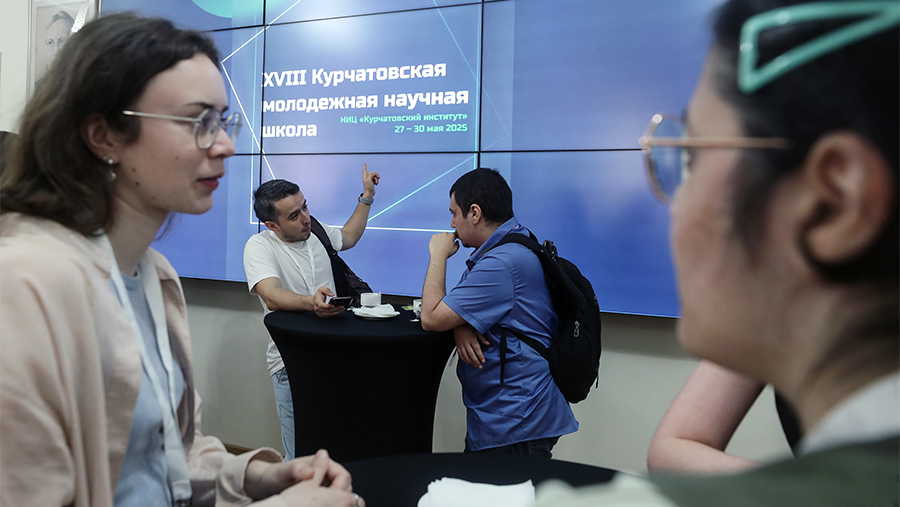
— Russia is implementing a number of major federal scientific and technical programs, including those related to the development of megascience-class research facilities, genetic research, agriculture, and nuclear technologies. According to these programs, the Kurchatov Institute has been appointed the head scientific organization. Therefore, most of the sections within our school are related to these programs. Additionally, a separate section for schoolchildren was organized this year. It is interdisciplinary," Nikita Marchenkov, the curator of the school and deputy director of the Kurchatov Institute, told Izvestia.

Following the results of the youth school, it is planned to publish a collection of abstracts, and the best of the reports can be presented in the form of articles in reputable Russian academic journals.
Nuclear space technologies
The school program opened with a plenary lecture by Mikhail Kovalchuk, President of the Kurchatov Institute Research Center. Its main topic was the development of nuclear space technologies, one of the most serious challenges facing Russian scientists.
— Space nuclear energy is at the forefront of scientific research and technology. In Russia, plans for the creation of nuclear engines and planetary nuclear power plants are being developed as part of new national technological leadership projects that will determine the future of our country. In this context, it is important to know the achievements made in this area and the potential ways of its development," Mikhail Kovalchuk said.
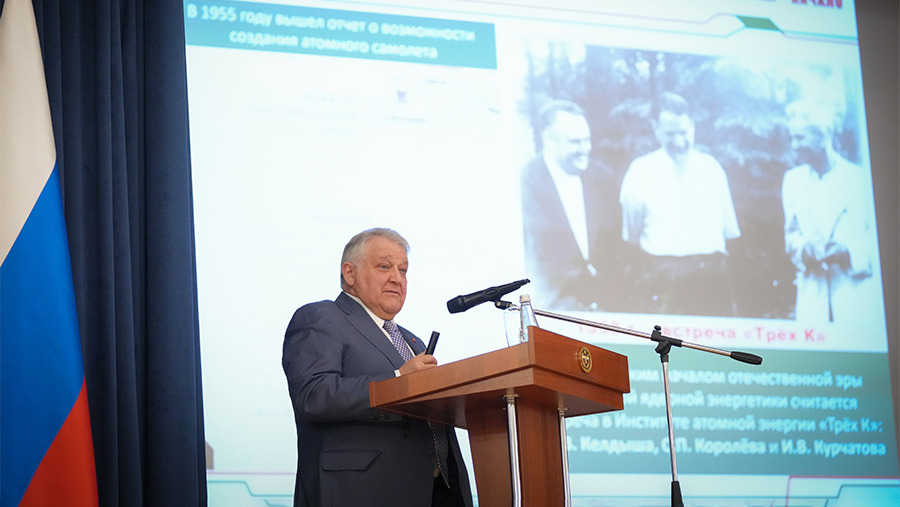
According to him, specialists from the National Research Center are currently creating an energy station for the Moon called Selena. Its capacity will be up to 500 kW. A power plant with a nuclear power source for future spacecraft is also being developed — a super-powerful electrodeless plasma jet engine designed to provide interplanetary flights.
For ground tests of a promising power plant, a space simulator "FINGER" is being created, which is a cylindrical vacuum chamber with a total volume of about 400 cubic meters. It is expected that it will be put into operation next year.
Mikhail Kovalchuk also spoke about advanced developments in the field of new materials and electronic components that are resistant to cosmic radiation, and about research in the field of nuclear medicine and the creation of new-generation pharmaceutical products.
History of the atomic project
One of the main events of the second day of the school was a lecture by Ekaterina Yatsishina, Deputy Director of the Kurchatov Institute, on the history of the Russian nuclear industry.
As the scientist noted, in Russia, the initial research on radioactivity phenomena was undertaken at the beginning of the 20th century. And in 1918, despite the Civil War, famine and devastation, the State X—ray and Radiological Institute was established - the world's first scientific institution of this field. But the key moment was the creation in 1942 of Laboratory No. 2 (the future Kurchatov Institute) and the appointment of Igor Kurchatov as the scientific director of the Soviet atomic project.
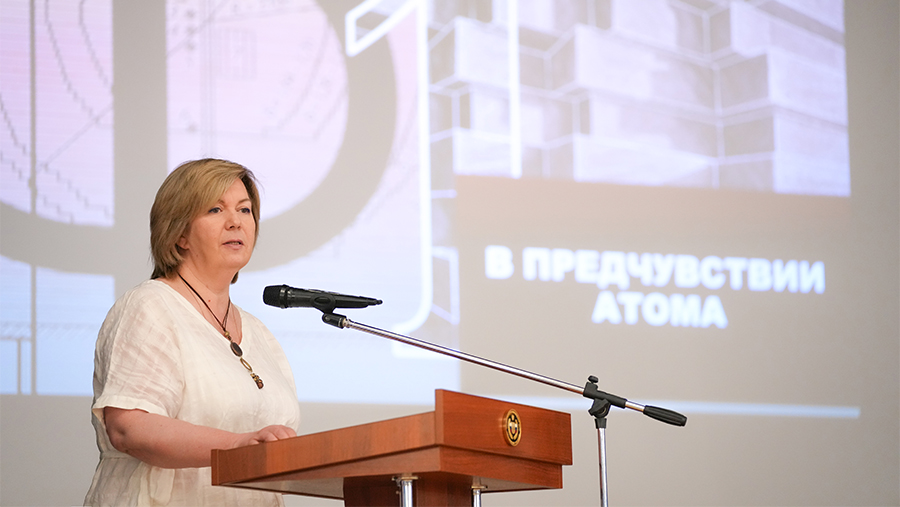
Yelena Yatsishina emphasized the inconsistency of the myth that the USSR "stole" the atomic bomb from the United States. Thanks to the help of intelligence, Soviet scientists avoided the mistakes of competitors (for example, they chose the technology of a uranium-graphite reactor instead of a heavy-water one, which saved time on creating a bomb). However, the implementation of the atomic project in just a few years would have been impossible without its own powerful scientific base.
— The atomic project is one of the most significant achievements of Soviet scientists in the 20th century. He left a deep mark in the history of mankind, as nuclear parity between the USSR and the USA became a factor that determined international relations and became a guarantor of peace on Earth," Ekaterina Yatsishina emphasized.
Development of genetic research
The central event of the third day of the school was a lecture by Maxim Patrushev, head of the Kurchatov Genomic Center at the Kurchatov Institute. In his speech, he spoke about how Russia fulfills the tasks of ensuring scientific and technological sovereignty in the field of genetics.
In particular, he noted that our country is one of the three world leaders in the development of methods of genetic editing and industrial microbiology. These conclusions can be drawn based on the analysis of patents and copyright certificates in the field of agriculture, animal husbandry and crop production. One of the achievements of the SIC specialists has been developments in the field of accelerated breeding.
— The needs of agriculture are changing rapidly: some people need wheat just for nutrition, others as a dietary product, and others for processing into alcohol and other substances. To meet this demand, we have developed a technology that accelerates the breeding of new plant varieties — speed breeding. It uses phytotrons, smart installations that create ideal conditions for plant growth. Such "factories" can significantly shorten the breeding time," explained Maxim Patrushev.
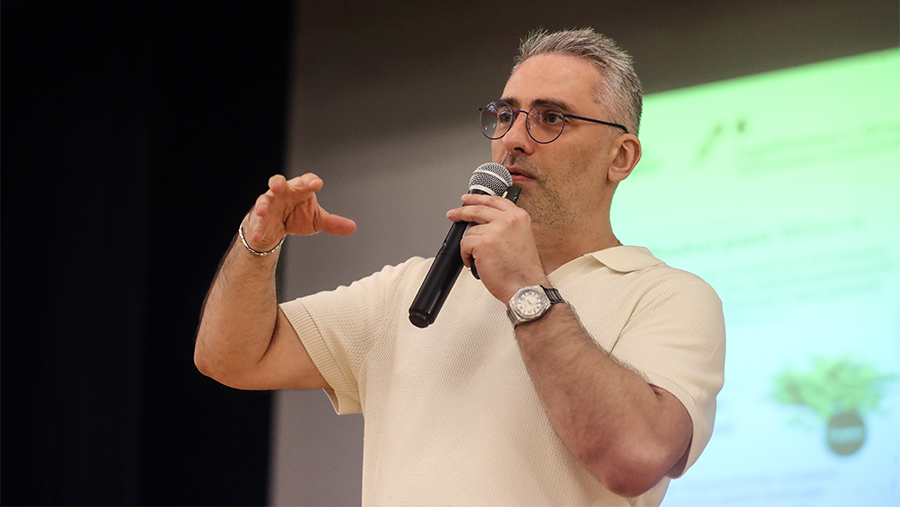
The scientist spoke about the importance of developing methods of controlled evolution that make it possible to change the properties of biological systems using artificial selection and genetic modifications, emphasized the importance of automating laboratory research and introducing technologies where neural networks control experiments, speeding up the process of developing new varieties.
Among the strategic objectives of Russian geneticists is to ensure Russia's "genetic sovereignty" — the ability to develop the production of critically important products based on national genetic resources. And one of the important tools for this will be the National Database of Genetic Information, operated by the Kurchatov Institute. Its commercial operation is scheduled to begin this year.
Переведено сервисом «Яндекс Переводчик»
