
Western "World": Cuban banks will start issuing cards of the Russian system
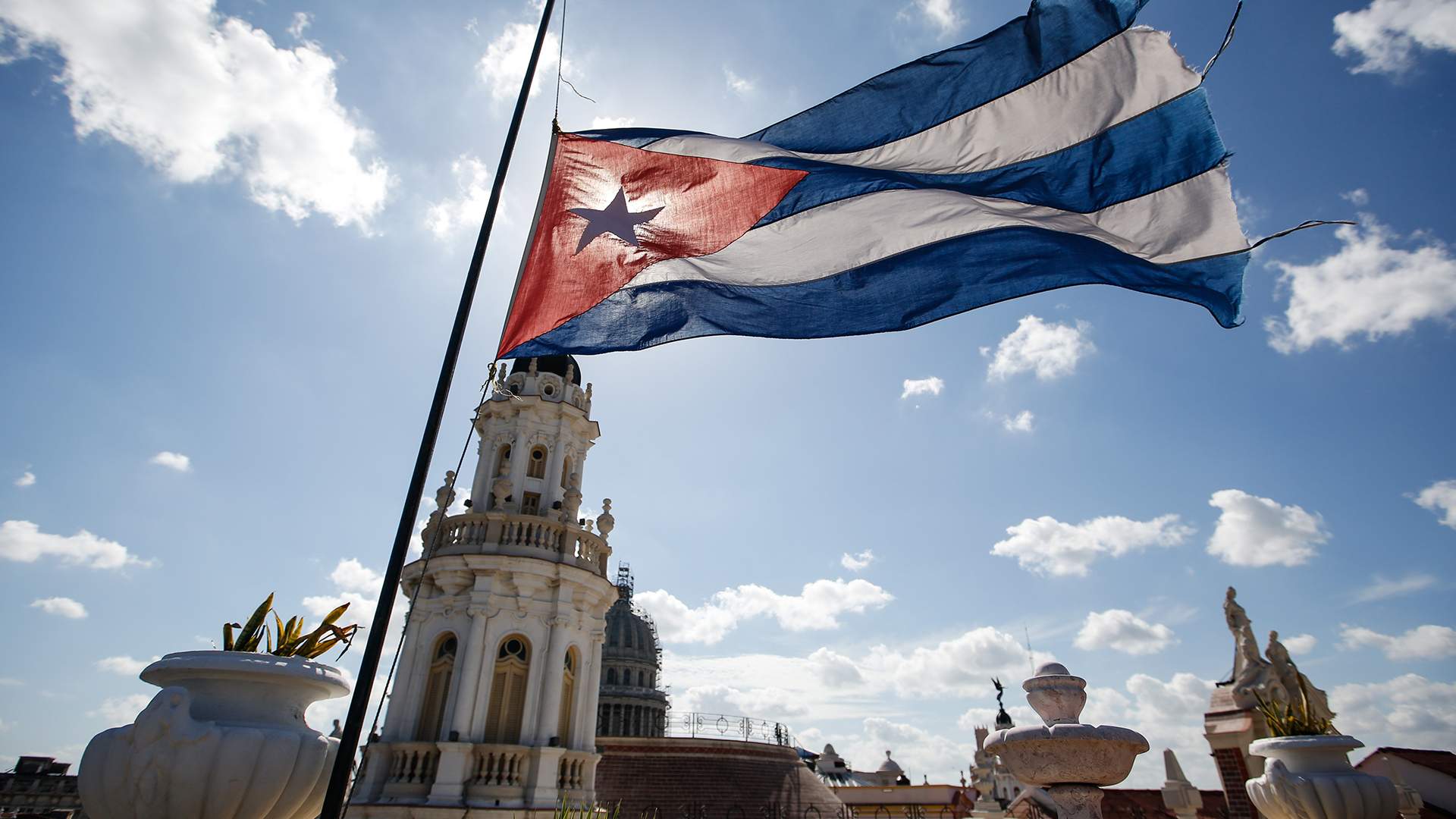
In Cuba, local banks will start issuing Mir cards, the head of the Central Bank of the island state, Juana Lilia Delgado, told Izvestia Portal. Cubans, who often travel to Russia, as well as Soviet migrants who have long settled on the island, are particularly interested in this. The issue of the cards will give a new impetus to economic relations between Russia and Cuba, experts say. Meanwhile, according to Delgado Portal, Russia and Cuba have completely abandoned the dollar in trade. See the Izvestia article about how the dialogue between Moscow and Havana is progressing.
Why should Cuba issue Mir maps?
Havana will begin issuing Mir cards on the territory of the Latin American state, the head of the Central Bank of Cuba, Juana Lilia Delgado, told the Portal.
— Currently, Mir cards are already used in Cuba, all Russian tourists can pay for their purchases with it on the territory of our country. Currently, work is underway to issue Mir cards in Cuban banks. The responsible authorities are seriously working on this. Not all banks will issue it, we are studying how best to organize this process, but this is a new opportunity, on which there is already some progress," the minister — president of the Central Bank told Izvestia.

The head of the Central Bank of Cuba Juana Lilia Delgado Portal
According to her, the cards of the Russian payment system will be in demand among the local population, since there are those who often travel to Russia and other countries connected to the Mir system.
— There are many former Soviet citizens living in Cuba, and many interethnic marriages were concluded at one time. The issue of Mir cards in Cuba is also aimed at this category of citizens," says Magomed Kodzoev, senior researcher at the Institute of Latin America of the Russian Academy of Sciences. — In addition, such a step allows us to further expand and deepen our partnership with Cubans, which was largely reduced after the collapse of the Soviet Union, to solve the difficulties associated with the insufficient digitalization of the Cuban economy, the lack of financial instruments with which this cooperation could be carried out, including under the conditions of sanctions, which imposed against both Russia and Cuba.

Cuba is one of the few countries in Latin America where it is now possible to pay with Mir cards, as well as withdraw cash from them in local currency at ATMs. It may become the first country in the region to start issuing them by local financial institutions. The Russian payment system is still operating in Venezuela. In addition, you can withdraw money from a Russian card in Nicaragua.

Earlier, the Cuban authorities reported that 20 thousand hotels and retail outlets are already accepting Mir cards. It is assumed that soon the coverage should expand and the opportunity to use the "World" will appear throughout the island. This, of course, will contribute to the growth of the Russian tourist flow to Cuba. In 2024, 185 thousand travelers from Russia visited the Latin American country.

At the same time, according to Magomed Kodzoev, the banking sector is not very developed in Cuba. It is difficult to find ATMs in the country, most of the local population uses paper money. In addition, you cannot pay in Cuba using cards issued in the United States. In this regard, those Cubans who permanently reside in the North American country experience problems when traveling to their homeland.
Economic cooperation between Russia and Cuba
Cuba has been an important trading partner of Russia since the Soviet era. In April of this year, on the eve of the celebration of the 65th anniversary of the establishment of diplomatic relations, the parties signed 13 agreements on cooperation in the field of healthcare, medical education and science, as well as on the creation of a joint artificial intelligence laboratory.
Currently, the volume of bilateral trade between Moscow and Havana is about $250 million per year. Russia mainly exports transport and energy equipment, while Cuba exports sugar, fruits and rum. Moreover, commercial relations with the island state of Russia have been completely de-dollarized.

— Currently, the dollar is not used at all in bilateral trade between Russia and Cuba. We use rubles and euros," the head of the Cuban Central Bank told Izvestia.
If we talk about new areas for economic cooperation, Russia and Cuba are currently working on the launch of taxi transportation using Moskvich vehicles, the start of construction of a hotel in one of the Cuban resorts, the participation of Russian companies in the restoration of Cuba's sugar industry, as well as the creation of assembly plants.
In addition to economic cooperation between Russia and Cuba, an interparliamentary dialogue has been established. During the last meeting between Chairman of the Federation Council Valentina Matvienko and Speaker of the National Assembly of Cuba Juan Estebano Laso Hernandez, the parties set the task of building long-term and invulnerable to external influence ties that will ensure the energy and food security of the island. In addition, Moscow aims to help the state modernize its infrastructure and industrial enterprises.
Since the early 1960s, Cuba has been under a trade and economic embargo by the United States. Having opposed the political regime of Fidel Castro, Washington imposed serious restrictions. In addition, the republic is on the list of countries that sponsor terrorism, which prevents it from developing trade relations with other states. Before leaving the White House, Joe Biden excluded Cuba from this list, but the new American leader, Donald Trump, changed this decision.

Cuba regularly publishes the damage that American sanctions are causing to the economy of the island state. According to one of the latest data, from March 1, 2023 to February 29, 2024, it amounted to more than $5 billion.
New economic opportunities opened up for Cuba after the country officially joined BRICS as a partner in January 2025. The authorities of the Latin American state stated that they are ready to share their experience in pharmaceuticals, science and innovation with the states of the association, as well as to facilitate access to Latin American and Caribbean markets for the group's countries.
Переведено сервисом «Яндекс Переводчик»
