- Статьи
- Society
- Procurement recipe: how the Ministry of Defense of Ukraine supplies rotten food for the Armed Forces of Ukraine

Procurement recipe: how the Ministry of Defense of Ukraine supplies rotten food for the Armed Forces of Ukraine

Since 2023, Ukraine has spent about $3 billion on food purchases for the Armed Forces of Ukraine, including $600 million since the beginning of 2025, Izvestia estimated based on information about tenders held. However, a significant part of these funds was embezzled, and the money was used to buy luxury real estate in the resorts of the Mediterranean Sea. The Ukrainian authorities are creating the appearance of fighting corruption — in particular, they recently put businesswoman Tatiana Glinyanaya on the wanted list. For many years, the structures under her control won a significant part of the contests for food supplies for the Armed Forces of Ukraine, and she herself became the owner of a hotel chain in Croatia. However, even after the criminal case was initiated, Glinyanaya and her relatives continue to earn money by supplying the Ukrainian army. The scale of corruption is in the investigation of Izvestia.
Chicken with syringes
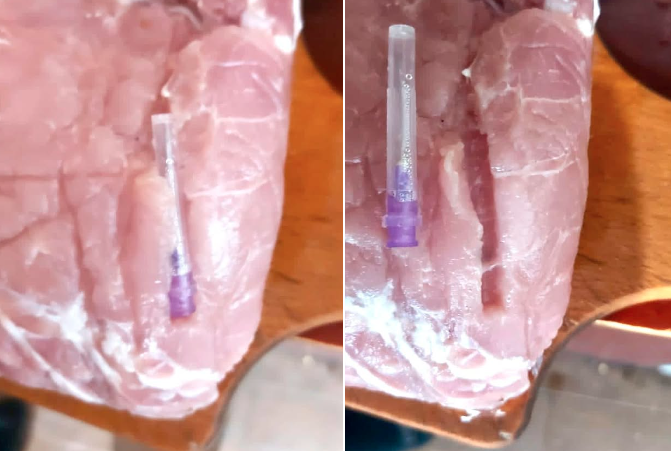
At the end of 2024, a photo of a frozen chicken in which a syringe was found flew around the Ukrainian media. Products with similar surprises are supplied to the Ukrainian military under government contracts. However, the story surprised few people — a series of scandals related to the purchase of food for the Armed Forces of Ukraine has been shaking the Ministry of Defense of Ukraine since the very beginning of its military operation.
One of the loudest erupted in January 2023, when journalists discovered that the authorities were buying chicken eggs from an Active Company supplier for 17 hryvnias apiece at a retail price of 7 hryvnias. As a result, Deputy Director of the Department of Public Procurement of the Ministry of Defense Bogdan Khmelnitsky and Deputy Minister Vyacheslav Shapovalov, who was responsible for logistics of the Armed Forces of Ukraine, lost their posts. Later, Defense Minister Alexei Reznikov resigned.
However, the main result of the scandal was not even resignations and criminal cases, but the launch by the Ukrainian authorities of a new procurement system for the Armed Forces of Ukraine — it was presented that they would be conducted according to NATO standards. As part of this reform, the State Logistics Operator (GOT) agency was created, which was entrusted with purchasing food, ammunition, and fuel and lubricants for the army. Prior to its creation, all procurement issues were supervised by the Department of Resource Support of the Ministry of Defense.
The Agency started working in December 2023 and was supposed to introduce mechanisms that would make non-lethal procurement more transparent and minimize corruption risks.
The cartel was ordered
Izvestia has studied all publicly available tenders for the purchase of products for the Armed Forces of Ukraine starting in 2023. According to our calculations, Kiev has allocated about $3 billion for these contracts alone (not counting classified ones). In particular, three auctions were held for the supply of products in the first half of 2025 for a total amount of about 22 billion hryvnias, or more than $ 600 million. However, despite the creation of the GOT and the launch of new procurement mechanisms, the ongoing tenders have all the signs of a cartel agreement.
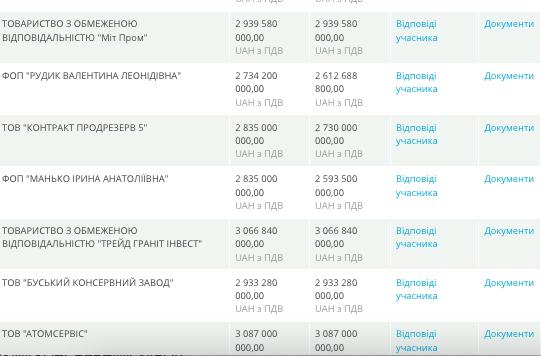
For example, in a tender worth 10 billion hryvnias (or almost $250 million), which consisted of three lots, the same companies competed: Kontrakt Prodreserv 5, Busky Cannery and Mit Prom. In each lot, one of these firms lowered the price, while the other two either kept their price offers at the same level or reduced them slightly.
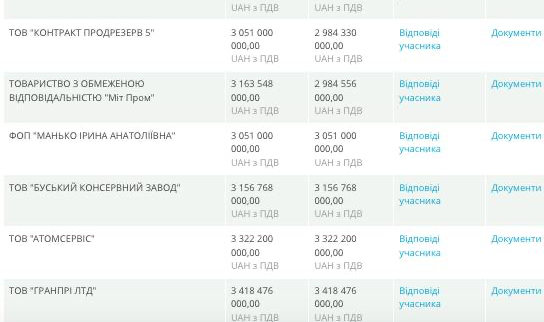
In the first lot, the price was reduced by Kontrakt Prodreserv 5, in the second by Busky Cannery, and in the third by Mit Prom. Thus, the participants actually secured victory for each other without a real price struggle, and this is one of the key signs of the cartel. Other firms also participated in the cartel agreement on these trades. For example, two more bidders— Atomservice and Granpri LTD, did not even try to lower their price offer for any of the lots where they applied.
Old connections
This is not the only oddity accompanying the bidding for the purchase of food for the Armed Forces of Ukraine. According to the results of auctions for the first half of 2025, the Mit Prom company received two contracts worth 2.9 and 1.1 billion hryvnias.
Mit Prom was founded in Lviv in 2021 by local MP Igor Kreminets. In 2022-2023, the company supplied products worth UAH 14.5 billion (about $350 million) under contracts with the Ministry of Defense of Ukraine. It became clear how profitable this business was after Ukrainian security forces stopped the company's accountant's car near Kiev in August 2024 and found €4.7 million worth of carelessly dumped cash in its trunk. The detainee could not explain their origin. And the Bureau of Economic Security stated that there had been registration of "commodity-free transactions for the purchase and supply of food at inflated prices with controlled enterprises that have signs of fictitiousness."
After this incident, the company changed ownership and ... again successfully participated in tenders of the Ministry of Defense of Ukraine. Stanislav Maistrenko, an entrepreneur from the city of Bila Tserkva, became the new owner of the company. Previously, he had no experience in commercial management and supplies within the framework of public procurement of food.
The tender documents indicate that Mit Prom leases warehouses and equipment from Mit Mix, which, in turn, leased them from private individuals Irina Kut and Elena Bereziuk.
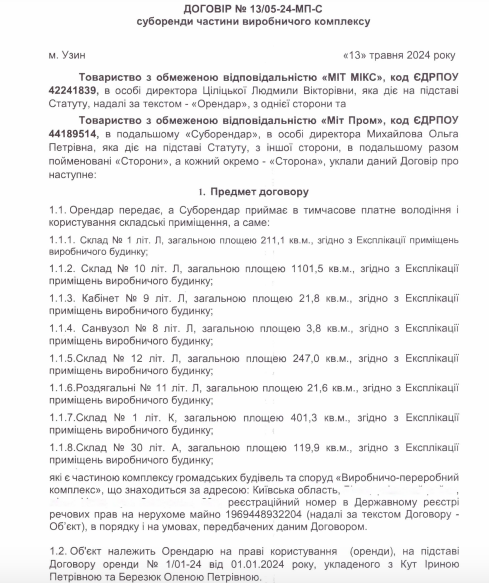
According to the Ukrainian register of legal entities, the Mit Mix company has been owned in recent years by a businesswoman from Bila Tserkva, 65-year-old Tatiana Glinyanaya. In 2024, she transferred the business to Nazari Berezyuk and Alexander Dmitrievich. The latter is also listed as the owner of the Asset Company, the same company that was convicted in 2023 of inflating prices for the supply of eggs for the Ministry of Defense. Moreover, the Asset Company is managed by Valery Melesh, who in the past was the director of the state-owned enterprise Belotserkovsky Voentorg controlled by the Ministry of Defense of Ukraine.
There are other coincidences that prove the affiliation of Mit Mix with the Asset Company: both companies use the same phone number.
As for Irina Kut and Elena Bereziuk, who lease warehouses to Mit Mix, they were registered at the same address in Bila Tserkva as Tatiana Glinyanaya, and, according to leaks from Ukrainian registers, they are her daughters, and Nazariy Bereziuk is her grandson.
The connections between Mit Mix and the Asset Company only confirm that the supplier company Mit Prom is closely linked to the infamous Asset Company. That is, in fact, despite the change of signage and formal owners, the same beneficiaries are behind the contract — Tatiana Glinyana's family.
Who is Tatiana Glinyanaya?
Tatiana Glinyanaya, a native of Bila Tserkva, has been making money over the past two decades by supplying food to many government institutions in Ukraine, from educational institutions to military units. At various times, she was the founder and head of supplier companies Visit, Ukrprodakord OR, Grand Consult, Hutrovik and others. Subsequently, it was Glinyanaya's firms that became the largest contractors of the Ministry of Defense of Ukraine for public procurement of products.
Glinyana's name has repeatedly surfaced in scandals related to fictitious competition during tenders, price gouging and the supply of substandard or dangerous products. For example, in 2013, the Visit company provided food for Chernobyl children, supplying products twice as expensive as market prices, often rotten and expired. Despite this, claims against her by the Ukrainian security forces have only now emerged.
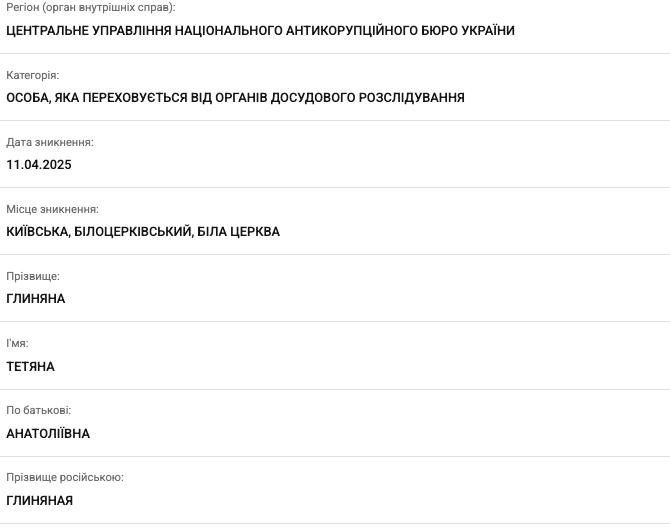
In the spring of 2025, the National Anti-Corruption Bureau of Ukraine put Tatiana Glinyanaya on the wanted list under articles on embezzlement, embezzlement of property or taking possession of it through abuse of office, as well as the legalization of proceeds from crime.
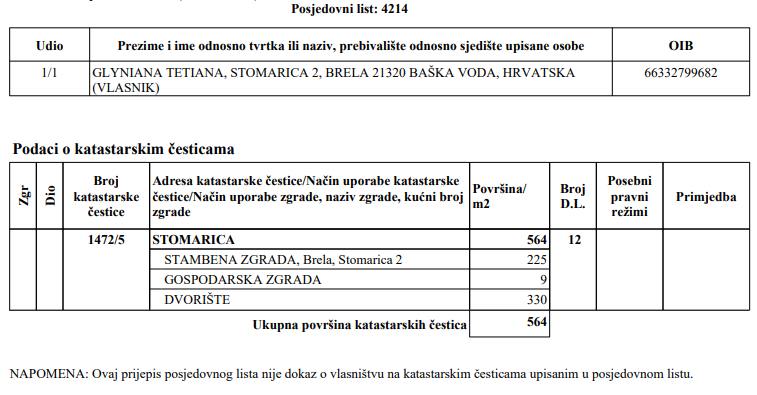
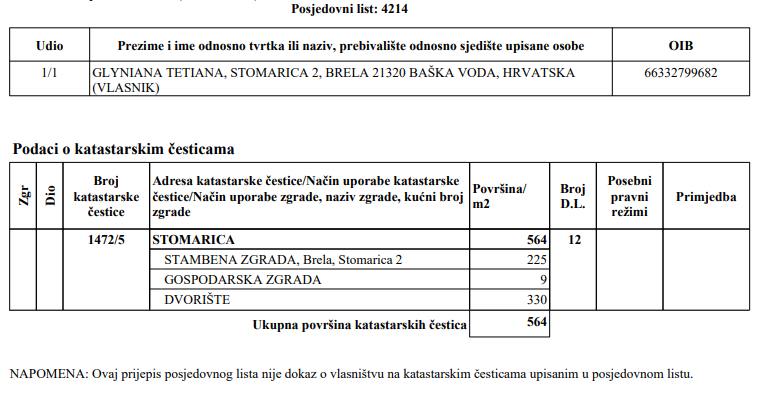
It is not known what exactly was the reason for the search for Glinyana. But we can say for sure: a significant part of the money allocated for the supply of the Armed Forces of Ukraine is returned to NATO countries in the form of investments in luxury real estate. So, according to the cadastral register of Croatia, Tatiana Glinyanaya owns a villa in the popular resort of Brela — similar houses there cost on average about 500,000 euros.
In addition, until recently, she also owned a hotel chain in Croatian Split — the Mirari boutique Hotel, the four-star Ora and Luxe, and the five-star Posh. She owned them through Zen Adria, Pigment, Mimoza, and Nazarii (the latter was owned by her daughter Irina Kut for some time). Glinyanaya withdrew from the list of founders of these companies only after publicity in the media.
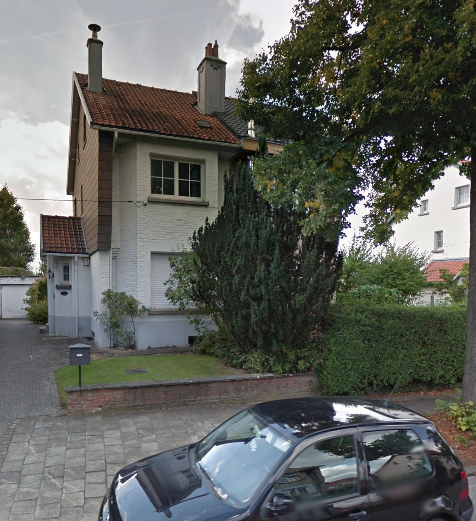
Irina Kut chose to settle closer to the NATO headquarters in Belgium. In 2021, she opened an IKG gemstone company there. According to Izvestia, Irina Kut lives in a house on Edouard Michel Street in the Uckel commune of the Brussels-Capital region.
Polish Food Reserve
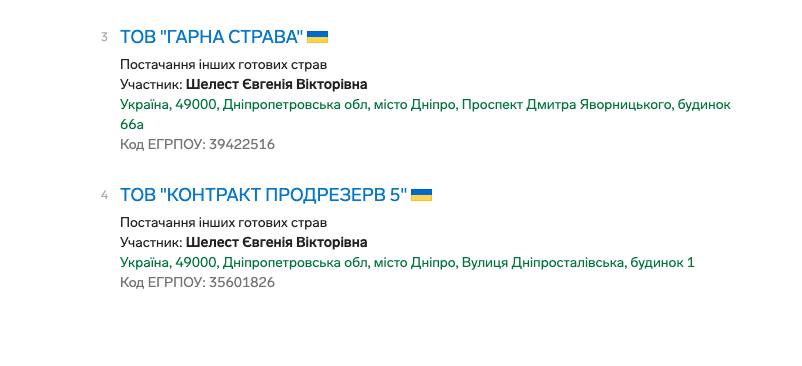
Questions about the auction results arise not only for Mit Prom and its counterparties, but also for other cartel participants. Thus, the Dnepropetrovsk-based company Kontrakt Prodreserv 5, with which the Ministry of Defense of Ukraine has signed contracts worth 2.7 billion hryvnias (about $65 million), is controlled by businesswomen Diana Sharkun and Evgeniya Shelest.
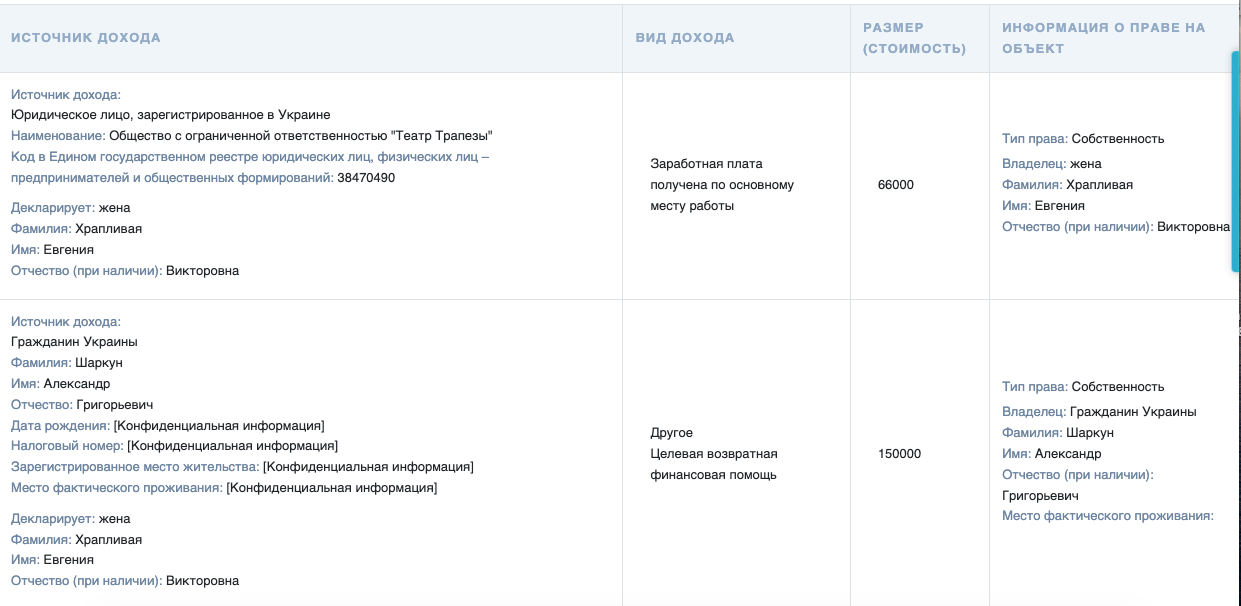
Both have family ties, which may have been the reason for the success of the tenders. So, judging by leaks from Ukrainian registers, Diana Sharkun is the daughter of Alexander Sharkun, ex—deputy of the Novomoskovsky City Council of the Dnipropetrovsk region. And Evgenia Shelest was registered at the same address as the prosecutor of the Dnipropetrovsk region, Andrei Khraplyv. And in the past, judging by the declarations of the security officer, she was his wife. Moreover, judging by the old declarations, as early as 2014, Evgenia Shelest received some kind of "financial assistance" from Alexander Sharkun for 150 thousand hryvnias.
By the way, Evgenia Shelest has another company, Garna Strava, which also participates in the bidding for the supply of products for the Armed Forces of Ukraine. At the same time, to fulfill the contracts, Garna Strava leases production facilities from the Sheri Impex company, which is owned by Alexander Sharkun's brother Sergey.
The Sharkun family also prefers to spend the money received from government contracts in NATO countries. Sergey Sharkun has discovered an Organic Impex company in Barcelona, which deals with real estate transactions.
As for the co—owner of Kontrakt Prodreserv 5, Diana Sharkun, she has been living in Warsaw for at least the last few years, where she even started a business selling drones, the Startdbs company. It is in the legal documents of this legal entity that it is indicated in the column "country of residence" that Sharkun lives in Poland.
Rotten food
The lack of transparency of procurement is by no means the only problem of the Armed Forces of Ukraine. The quality of the products supplied, which is supposed to be checked by a GOTH, is also questionable.
Last fall, Alexey Gerashchenko, a member of the Anti-corruption council under the Ministry of Defense of Ukraine, reported that hundreds of violations were detected at key suppliers from July 1 to August 19, 2024: Busky Cannery — 176 violations, Mit Prom - 51, Contract Prodrezerv 5 - 34. He did not specify exactly what problems were identified, but at the same time, another member of the anti-corruption council, Gennady Krivosheya, posted on his social networks (Facebook, owned by Meta Corporation, recognized as extremist and banned in Russia) the photo of the frozen chicken from the Mit Prom company, in which the syringe was found.
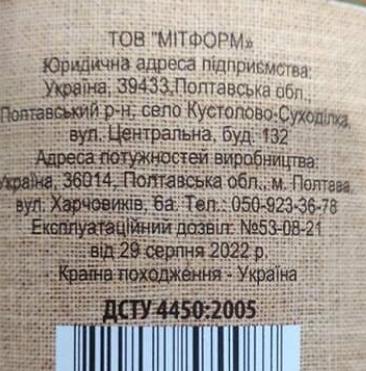
And here is another example. One of the contracts for the supply of products for the Armed Forces of Ukraine in the first half of 2025 was awarded to a company from Poltava, Mitform. The contract amount is 400 million hryvnias. If you search for reviews of this company's stew on the Internet, you can find comments: "The stew is terrible. It stinks of guts."
However, there is no reason to be surprised. On the packaging of stewed meat from Mitform, the production address is the city of Poltava, 6a Pishchevikov Street. According to the register of legal entities, until recently, Prodprom was located at this address, which changed its name to Hermes Socks in 2023 and re-registered in the city of Lutsk. Back in 2022, specialists from the State Food and Consumer Service of Ukraine visited the workshops of the enterprise on Pishchevikov Street. Photos from the workshop flew all over the Ukrainian media and Telegram channels.
Thus, "transparent tenders," promises of change, and high-profile criminal cases actually make little difference: all the same individuals and families receive billions of hryvnias to invest in homes by the sea and businesses in Europe. And the Ukrainian military continues to eat rotten food.
Переведено сервисом «Яндекс Переводчик»
