Joy and fragrance: new technology will reduce the cost of production of polymers and household chemicals
- Статьи
- Science and technology
- Joy and fragrance: new technology will reduce the cost of production of polymers and household chemicals


Scientists have developed a new method for producing α-cumyl alcohol, a key component for the production of polymers, cosmetics and detergents. This compound is also used as an intermediate in the creation of additives that increase the strength and heat resistance of plastics. The new method makes it possible to synthesize a high-purity product at room temperature and atmospheric pressure, without using complex and expensive equipment. How the development will help the domestic chemical industry is described in the Izvestia article.
Where industrial alcohol is used
Scientists from the Zelinsky Institute of Organic Chemistry of the Russian Academy of Sciences, together with colleagues from the Topchiev Institute of Petrochemical Synthesis of the Russian Academy of Sciences, for the first time used an affordable platinum—based catalyst with an ultra-low content of precious metal particles (only 0.25%) to obtain a special substance, alpha—cumyl alcohol. As the scientists explained, this alcohol is used as an aromatic fragrance in cosmetics and household chemicals, and is also used in the production of plastics and polymers. To get it, they use sophisticated technology that requires strict temperature control and is not always safe for humans. In addition, a significant amount of wastewater is generated during the production process, which creates an additional burden on the environment.
A safer method for producing α-cumyl alcohol involves the use of catalysts based on precious metals, but in practice such technologies are almost not used. The reason is the need to operate at high pressures 10-15 times higher than atmospheric pressure and elevated temperatures (+60... +70 degrees), which reduces the efficiency of the process and leads to the formation of by—products. An additional limitation remains the high cost of precious metals, which significantly increases the cost of production.
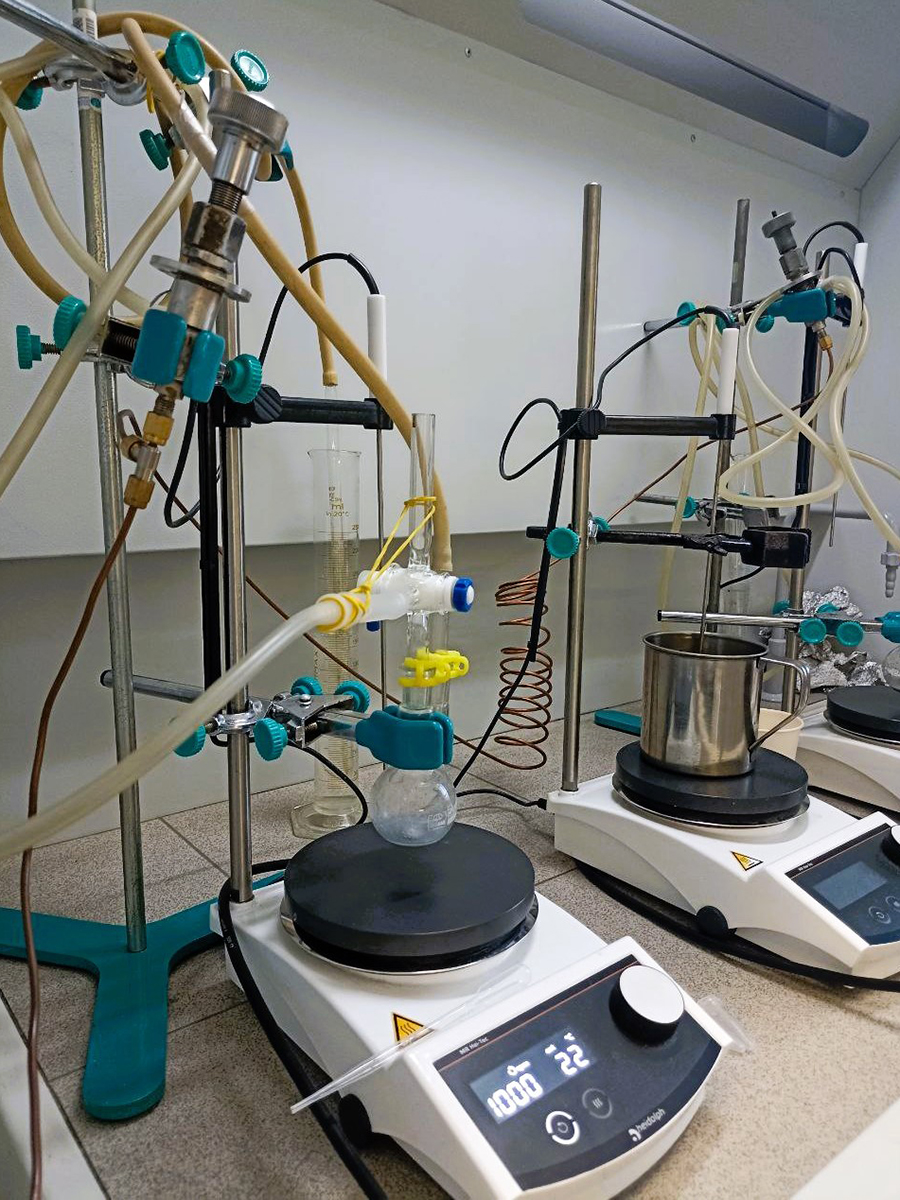
The new catalyst works five times faster than the best commercial palladium—based analogue - previously, such activity could not be achieved for this reaction. At the same time, the resulting catalyst operates under normal conditions — at atmospheric pressure and room temperature. The scientists also proved that the catalyst can be used several times, so that the synthesis of α-cumyl alcohol with its help will be easy to scale.
— We have shown for the first time that the process of producing α-cumyl alcohol, which is valuable for industry, can take place at room temperature and atmospheric pressure. And this does not require any "tricky" systems - you can use an affordable catalyst containing an ultra—low amount of platinum and ordinary industrial silica gel. In the future, we plan to develop affordable, competitive and highly efficient catalysts for the production of other industrially important substances," said Elena Redina, Candidate of Chemical Sciences, Senior Researcher at the Zelinsky Institute of Organic Chemistry of the Russian Academy of Sciences.

Advantages of the new technology
Thus, the proposed approach will help develop safe and energy-efficient industrial processes not only for the production of α-cumyl alcohol, but also for the synthesis of other valuable compounds using available catalysts, the scientists said.
As for products, α-cumyl alcohol, or 2-phenyl-2-propanol, plays an important role in the cosmetics industry, and also serves as a valuable intermediate for the pharmaceutical industry and agriculture, Anton Muravyev, associate professor at the ITMO University Scientific and Educational Center for Infochemistry, told Izvestia.
— One of the most significant applications of alpha-cumyl alcohol in organic synthesis is the production of dicumyl peroxide based on it. It is a modifier of the mechanical properties and temperature stability of polymer materials. The production technology proposed by the authors of the study is valuable for industrial synthesis due to the low consumption of platinum along with the high number of revolutions of the catalyst and mild hydrogenation conditions (room temperature, reaction in alcohol), — said the scientist.
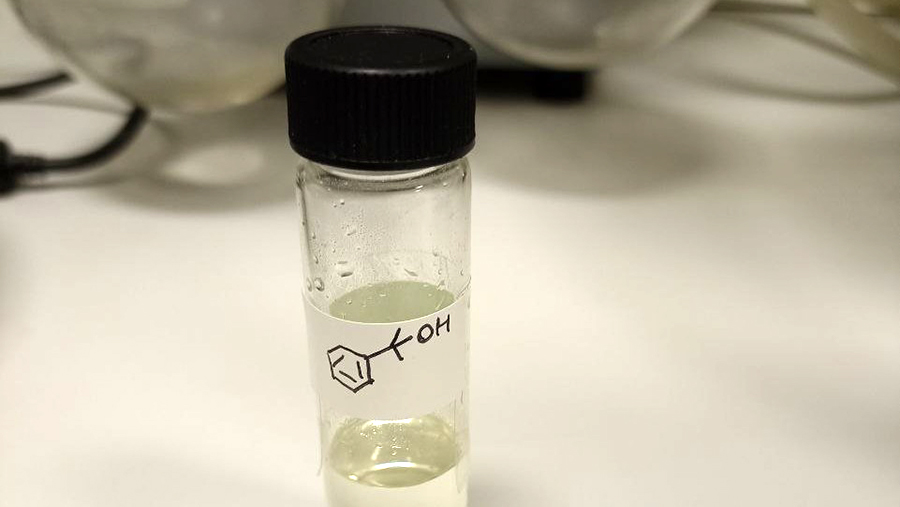
Cumyl alcohol is a substance with a wide range of applications. It is indeed used in the cosmetics industry, but it is much more in demand in organic synthesis as an additive to polymers, said Vladislav Ionin, a junior researcher at the Institute of Chemistry and Chemical Technology of the Siberian Branch of the Russian Academy of Sciences.
— With its help, for example, thermoplastics are produced — materials that, when heated, can repeatedly become viscous, flexible or liquid, and then return to their original state. Also, the addition of cumyl alcohol increases the strength of finished products and their resistance to high temperatures. In addition, this substance is a part of household chemicals, such as detergents. In cosmetics, cumyl alcohol is added in small doses — about 0.5% — as it has a peculiar pungent odor. The main volume of its consumption falls on the production of plastics, where the concentration of additives can reach 5-10% or more," he added.
The fact that the reaction proposed by colleagues can occur at room temperature and atmospheric pressure is very important for production, because even small increases in temperature and pressure make the technology much more expensive. According to him, any process that can be carried out with normal parameters is a great technological achievement.
The main advantage of the new method of synthesis of α-cumyl alcohol is the use of mild conditions (the reaction proceeds at room temperature and atmospheric pressure). Due to this, there is no need to use complex equipment, which significantly reduces costs and makes production more economical and safer, added Alexey Fedorenko, a junior researcher at the Laboratory of Aromatic Nitrogen-containing Compounds at the Zelinsky Institute of Agricultural Sciences.
The fact that colleagues were able to adapt the use of mild conditions (the reaction proceeds at room temperature and atmospheric pressure) to the synthesis of cumyl alcohol is, of course, a breakthrough and innovation. However, there is a long way to go from laboratory synthesis to scaling the method in industrial conditions, said Maria Lomakina, a researcher at the Laboratory of Condensed Matter Systems at the Lomonosov Moscow State University Faculty of Chemistry.
The results of the study, supported by a grant from the Russian Science Foundation (RSF), are published in the journal Industrial & Engineering Chemistry Research.
Переведено сервисом «Яндекс Переводчик»
