"Ion" and she: the location of the future earthquake will be predicted using atmospheric analysis
- Статьи
- Science and technology
- "Ion" and she: the location of the future earthquake will be predicted using atmospheric analysis


Russian scientists have created a computer program called Ion, which analyzes satellite data on the state of the upper atmosphere and predicts a possible earthquake epicenter based on their characteristic changes. The development has already been implemented into a comprehensive monitoring system in Kamchatka and is designed to analyze particularly powerful seismic events of magnitude six and above. The system will also help scientists better understand the mechanisms of the most devastating earthquakes, including those that occurred in the region in the summer of 2025. According to experts, the software can become an important tool in the work of seismologists. However, for an objective assessment of its effectiveness, it will be necessary to compare the forecasts of the system with actual events.
Satellite data analysis
Specialists from Kamchatka State University (KamSU) and the Institute of Volcanology and Seismology (IViS) have developed the Ion computer program, which analyzes satellite data on the state of the ionosphere and allows predicting the location of the epicenter of a possible earthquake. Changes in the upper atmosphere are often a sign of upcoming events. It is integrated into the integrated geophysical monitoring system in the Avacha Bay area, one of the most seismically active territories in the world.
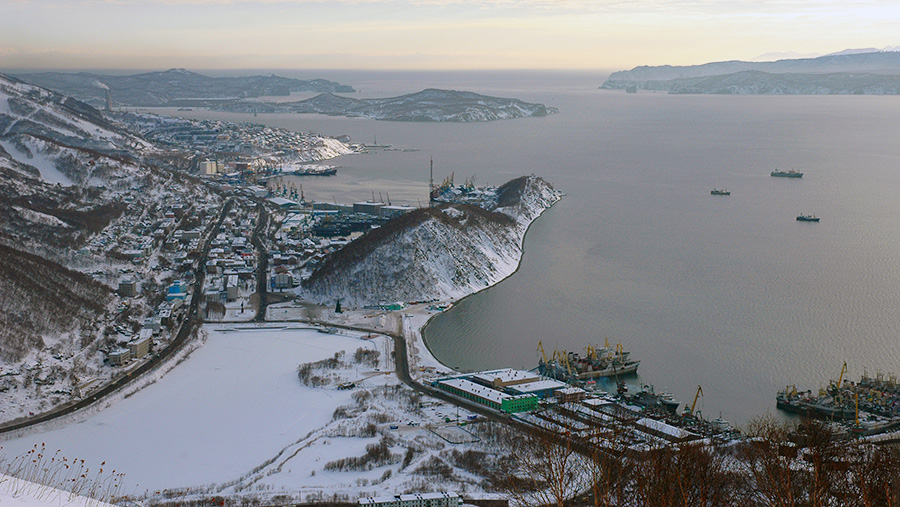
The software is aimed at detecting the most powerful tremors of magnitude six and above. Such earthquakes are relatively rare, but they are highly destructive. For example, about ten similar seismic events have been recorded in Kamchatka over the past 20 years.
— The idea of developing Ion arose from the need to automate the processing of data on the state of the ionosphere. The program analyzes satellite monitoring results, identifies anomalies associated with the preparation of strong Kamchatka earthquakes, and presents the results in the form of time series and maps of the ionospheric content distribution. The software allows you to quickly study large amounts of data and present the results in a format convenient for researchers," said Ilya Sagaryarov, a researcher at the Laboratory for Integrated Monitoring of Seismically Active Environments of the Far Eastern Branch of the Russian Academy of Sciences and the Scientific Research Laboratory for the Study of Extreme Phenomena in Kamchatka at the Vitus Bering KamSU.
Ionospheric anomalies associated with the preparation of strong earthquakes are fairly confidently recorded about one and a half to four weeks before the event. The timing largely depends on the location of the future hearth. Studies have shown that one of these earthquakes with an epicenter on land caused changes in the atmosphere in a month, whereas in a similar event at the bottom of the Avacha Bay, such effects appeared only in a day due to the influence of the sea water layer on the measurement results.
In seismology, when analyzing earthquakes, three key parameters are traditionally considered — location, magnitude and time. The new program focuses specifically on the spatial parameter. Its use increases the accuracy of the analysis, which directly depends on the volume and quality of the source data, as well as significantly reduces the processing time. The calculations obtained are then applied in conjunction with monitoring results for other types of geophysical measurements, primarily with data obtained from deep wells.
— The development of the Ion program and its implementation into the system of continuous integrated geophysical monitoring of the state of the geological environment in the Avacha Bay area is an important step in predicting seismic hazards for the eastern coast of Kamchatka. It also provided an opportunity to obtain a number of very important scientific results related to the preparation of the Kamchatka mega—earthquake that occurred in July 2025," said Valery Gavrilov, head of the Laboratory for Integrated Monitoring of Seismically Active Environments of the Far Eastern Branch of the Russian Academy of Sciences and head of the Scientific Research Laboratory for the Study of Kamchatka's extreme Phenomena at the Vitus Bering KamSU.

We are talking about the earthquake in Kamchatka of magnitude 8.8, which became one of the most powerful seismic events in the history of instrumental observations. It also caused tsunamis throughout the Pacific region, which, however, were not as devastating. Earthquakes also occur in other regions of Russia.: So, on the night of February 10, tremors of magnitude 4.7 were recorded in the Krasnodar Territory.
Ion consists of three modules. The first is responsible for searching and downloading satellite data, the second performs calculations to determine the state of the ionosphere, and the third performs visualization in the form of maps.
A promising method
Forecasting earthquakes based on ionospheric data is a promising but complex area of research, said Alexander Kotelnikov, Head of the Department of Subsoil Use and Oil and Gas Engineering at the RUDN University. Such anomalies can occur several hours or days before an earthquake, which provides a potential window for their prevention. And Ion-type systems allow you to accumulate data and improve event forecasting models. However, they require lengthy validation and integration with other geophysical methods.: seismic, deformation, and geochemical.

"In general, the developed program can be considered a useful and practically significant system for monitoring ionospheric anomalies in seismically active regions," the expert noted.
According to Tamara Zhuravleva, a leading engineer at the Laboratory of Rock Mechanics at MIPT, the activity of the ionosphere of our planet is closely related to the processes occurring in the earth's crust. Before strong earthquakes, changes in electron density and ionospheric temperature are observed.
— The movement of rocks leads to distortions of electromagnetic fields and, as a result, the activity of the ionosphere, causing a local change in its structure and composition, which is recorded by special satellites and ground stations. These changes have a specific character and are different from the usual variations caused by solar activity," she noted.
However, in order to accurately assess the capabilities of the system, it would be correct to provide actual results confirming the reliability of the algorithms and what percentage of convergence of forecasts and facts was noted during the work. But so far there is no such data, the specialist noted.
Переведено сервисом «Яндекс Переводчик»
