Society's Friend #1: Patriotic business creates the basis for the country's future
- Статьи
- Local news
- Society's Friend #1: Patriotic business creates the basis for the country's future


The importance of the systemic contribution of business to public welfare is increasingly being discussed in the Russian business environment. We are not talking about one-time charity events, but about strategic work, the results of which directly affect the development of regions, the quality of life and the achievement of national goals set by President Vladimir Putin in the decree of May 7, 2024. It is this practical aspect of the formation of social capital that the ambassador companies of the same Standard demonstrate. Read about their experience, which shows how industrial and technological enterprises become drivers of positive change, creating value for the whole society, in the Izvestia article.
A multi-layered approach
For the Karacharovsky Mechanical Plant, social capital is a management practice consisting of three interrelated layers. As Anton Shuvakin, Director of HR and Operational Efficiency at KMZ, explains, the first layer is production logic, when efficiency is measured by external value for the customer and the city.
The plant has completed a strategic transition from one-time purchases to long-term supply models, which ensures predictable timing and prices. A striking example was the offset contract between KMZ and Moscow, which will ensure the supply of at least 22.7 thousand elevators to apartment buildings in the capital for 10 years.
"This gives the company the opportunity to carry out large—scale modernization, build new production buildings and localize the mass production of new—generation passenger elevators," notes Shuvakin.
Thus, the city's needs for safe and affordable vertical transport directly stimulate the development of local production and technological growth.
The second layer is openness and transparency. KMZ regularly presents its developments at industry exhibitions and competitions.
— Production processes and quality control standards remain transparent, with enhanced metrological support and digital traceability of components, — the representative of the plant emphasizes.
The third and possibly key layer is the human—centered HR model. It is based on the preservation of labor dynasties and the transfer of their experience from generation to generation, the purposeful involvement of experienced specialists and close cooperation with specialized universities. KMZ has established its own training center with full-time and distance learning courses, where training is structured according to four profiles: electric lift installer, electronic equipment adjuster, elevator electrician and dispatcher equipment electrician. Thanks to the mentoring system, which employs more than 20 specialists, it takes no more than 12 weeks for a beginner to adapt to independent work.
— For the plant, this means accelerated selection and precise "fine-tuning" of candidates for production lines, reducing the proportion of errors during commissioning. The city receives standardized, practice—oriented programs coordinated with the relevant employer, and an increase in the availability of qualified specialists in the industry," summarizes Shuvakin.
This approach creates a solid talent pool for the entire industry and represents a tangible contribution to the development of the human potential of the capital.
Technological sovereignty
The Banking and Financial Systems Company, another ambassador of the Standard, concentrates its efforts on creating technological, human and social potential in the regions of its presence. The leading Russian manufacturer of self-service devices considers import substitution not as an end in itself, but as an integral part of activities directly related to achieving national goals and strengthening the country's technological sovereignty.
Today, 80% of the company's devices consist of Russian components, and in the coming years it is planned to switch to full localization. A strategic step in this direction was the construction of a modern technology park in the field of radioelectronic industry in Omsk. This project is aimed at stimulating the development of the entire industry and the introduction of innovative technologies in the region.
In parallel with the development of the technological base, the company is making large-scale investments in personnel training. The strategic partnership with Omsk State Technical University includes the creation of laboratories, support for student research and start-ups. Working with young people is one of the key elements of building social capital, as it creates a long—term foundation for the development of Russian engineering schools, according to the leadership of the BFS.
A separate and important area is the social support of employees and their families. The company has a comprehensive HR program that includes an extended VHI package, insurance, financial assistance, sports compensation, career guidance testing for employees' children, and even reimbursement for university tuition for large families. These initiatives are directly aimed at improving the quality of life of employees and their families, which strengthens the corporate human capital.
A striking example of the contribution to the social environment of the region was the BFS project for the development of wrestling in the Omsk region. The company, acting as the general sponsor of the Russian Greco-Roman Wrestling Championship, helped organize the event, which was attended by more than 4,600 spectators and which inspired 147 young Omsk residents to enroll in sports clubs. This project clearly shows that the formation of social capital includes not only education and science, but also health, character education and support for mass sports.
— By signing the agreement (on the status of Ambassador — Izvestia), we confirm our commitment to develop advanced technologies, create new opportunities for young people and support initiatives that can shape the future of our country. We are confident that the interaction of the state, business, education and the sports community allows us to create a solid foundation for the development of the regions and society as a whole," said Artem Zhilonov, CEO of the BFS.
Social engineering and historical responsibility
The Moskvich Automobile Plant, reviving the legendary brand, considers the formation of social capital as an important part of a corporate strategy combining technological development, social responsibility and the strengthening of the industrial ecosystem. The company's approach is based on specific projects, the results of which contribute to the development of the industry and society.
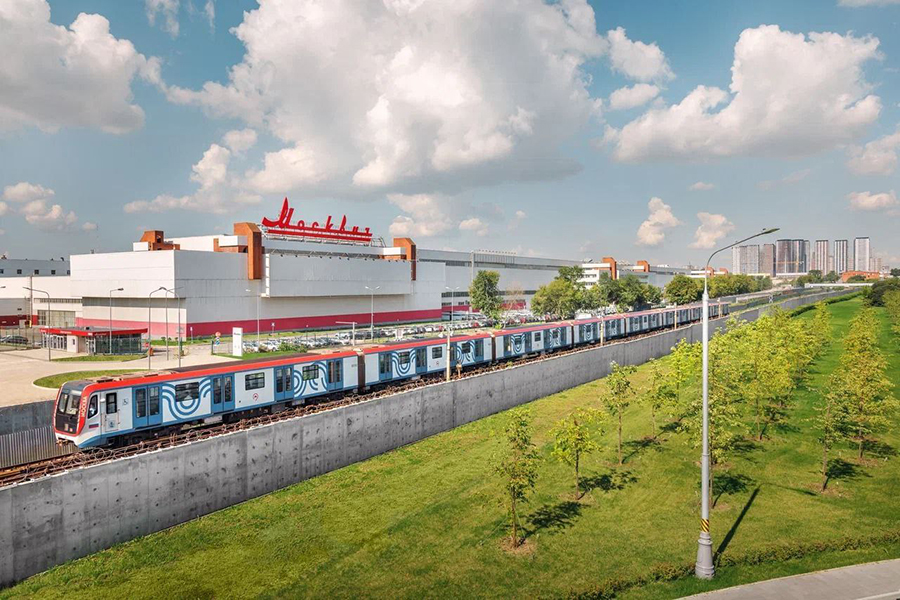
One of the main directions is the development of a local production ecosystem. According to the company's press service, the plant is consistently expanding cooperation with domestic suppliers, establishing strong supply chains. This work not only reduces dependence on external factors, but also contributes to the development of related enterprises, strengthening industry competencies in general. Logistical efficiency is supported by a strategic partnership: the multimodal transportation agreement with Russian Railways Logistics JSC makes it possible to optimize delivery, reducing the burden on road infrastructure and increasing the overall sustainability of production.
The company's special concern is human potential and continuity. The company cooperates with leading universities such as Moscow Polytechnic University, MIREA and several metropolitan colleges. The factory not only provides guided tours for students, but also internships for young people.
Thus, graduates can be guaranteed to get a job, and the plant has a talent pool. This approach directly affects the improvement of the level of training of specialists for the real sector of the economy.
The company also implements significant social projects. A striking example of the combination of technological solutions and social responsibility was a special project for the production of manually operated Moskvich 3 cars. This project, developed by the plant's engineers, is aimed at ensuring the mobility and independence of ITS veterans and people with disabilities.
Such vehicles have already been transferred to the regions and included in preferential loan programs, which make it possible to provide special vehicles to those who need it. The initiative clearly demonstrates how an enterprise's engineering and production capabilities can be used to solve specific social problems.
Thus, through the development of localization, investments in personnel, the introduction of modern solutions and the implementation of socially significant initiatives, Moskvich forms a significant practical contribution to strengthening public capital. His work shows how an industrial enterprise becomes an active participant in socio-economic development, creating tangible values for employees, partners and society as a whole.
Business engagement and support tools
The practices of companies such as KMZ, BFS and Moskvich do not go unnoticed. Such initiatives confirm the continuity of the best traditions of Russian charity.
As Asiyat Bagatyrova, Director General of the NGO "Public Capital", noted, the pre-revolutionary history of our state knows many examples of patronage. For example, a representative of the Moscow merchant dynasty, industrialist Alexander Bakhrushin donated 1.3 million rubles to the Moscow City Public Administration. The Bakhrushin family also maintained a home on Bolotnaya Square for widows with many children and poor college students with an infirmary, library, kindergartens and a school, opened a home for the terminally ill and a family-type orphanage. In total, almost 6.5 million rubles were allocated to the Bakhrushins' charity, which is a very impressive amount by the standards of that time.
— There are such heroes among our contemporaries, but many companies are also clearly aware of the impact of the social and environmental agenda, the quality of life of people and the state of the urban environment on their activities. A business cannot be truly successful if it operates under conditions of constant staff turnover or if there is an outflow of population in the region due to unacceptable living conditions, and as a result, there is simply no one to work in production. Nowadays, caring for people, the environment, and everything that forms social capital should become a conscious part of companies' strategies that benefit both citizens and the business itself. Society should be based on the priority of social values over economic ones. In such a society, the economy serves the individual, not the other way around; the main value is social connections, not material goods. Such an economic model is close to "corporate socialism", which is based on cooperation and solidarity of the parties involved, rather than on state control. We clearly see that Russian business is interested in this topic, is aware of its social responsibility and is ready to act in the appropriate direction," Bagatyrova stressed.
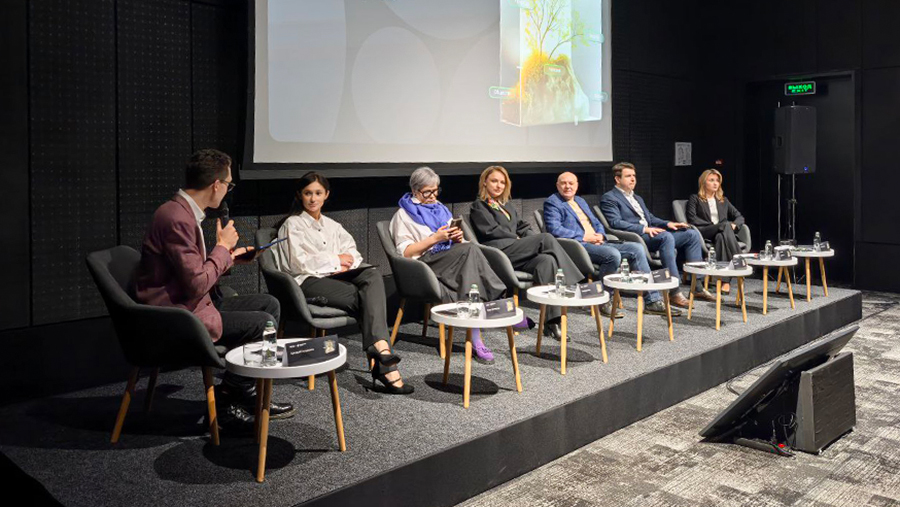
Business interest in the topic of public capital formation was confirmed at the V Forum of Responsible Business "Congress: RBC-Public Capital". Initially, it was planned to attract about 300 companies, but the public capital aroused much greater interest: about 1,000 organizations submitted applications, of which over 400 are already at the evaluation stage, Bagatyrova said.
From private practices to a shared future
Different industries, different approaches, but the vector is the same. The practices of the Karacharovsky Mechanical Plant, the Banking and Financial Systems Company and the Moskvich Automobile Plant clearly illustrate how business can systematically form social capital. This includes the development of urban infrastructure through long—term supplies and innovations, and the strengthening of technological sovereignty through localization and the creation of new industries, and investments in the future through the training of engineering personnel, and concern for the well-being of specific people - employees and their families.
These efforts are no longer separate initiatives. The formation of social capital is becoming the practical philosophy of an increasing number of companies, for which long-term success is inseparable from the development of the country and the well-being of its citizens. As the experience of the Standard's ambassadors shows, it is precisely this systematic approach that creates a solid foundation for a future in which the benefits of business development benefit the entire society.
Переведено сервисом «Яндекс Переводчик»
