- Статьи
- Army
- A detachment of special significance: unique documents about the partisan special operation that turned the tide of the battle of Moscow have been released

A detachment of special significance: unique documents about the partisan special operation that turned the tide of the battle of Moscow have been released

"At the door, he saw a large German map with arrows pointing towards Moscow. On the map, the capital of the Motherland was completely surrounded by these arrows, indicating the paths of the alleged invasion of the Nazi grab army in Moscow. Seething with indignation, Comrade Karasev tore this map from the wall and, crumpling it, threw it to the ground..."These are not lines from a military novel, but a quote from a unique archival document of the NKVD, which was in the possession of Izvestia. The report on a little-known Polish-Factory operation in November 1941 contains startling details of a lightning attack by a partisan detachment on the German headquarters, whose garrison outnumbered it by more than ten times.
"Not far from the camp, the characteristic noise of tanks was heard"
The village of Blagodarsky-Zavod (from the Zagodka River) in the Moscow region in 1941 is the town of Zhukov in the Kaluga Region today. In the days of preparation for the operation, Georgy Zhukov himself, then still an army general, but already the commander of the front, most likely did not even suspect about it. On November 20, 200 km from the place that would later be named after him, he argued with Konstantin Rokossovsky (then still a lieutenant general) about whether or not to withdraw parts for the Istra reservoir. The battle for Moscow was in full swing: the Germans occupied the Tula region city by city, rushed to Solnechnogorsk, and there were battles for the Wedge.

South of the capital, the Germans had been stationed in Maloyaroslavets - Blagodarsky—Zavod since October 1941, 20 km away. Immediately after the occupation, partisans began operating in the area. In the archive file of the NKVD of Moscow and the Moscow region, under the heading "The Slavyansk-Zavodskoy partisan detachment", it is recorded:
"On the night of 17-18/X, the Germans broke into the Blagodatsky factory. By this time, the whole squad had reached the base."
The dugout base had been prepared by the local partisans a week earlier. It follows from the documents that there was a second dugout — both Germans found it almost immediately.
"It was clear that the Germans were moving towards the detachment's base. The partisans prepared to defend themselves. Not far from the camp, the characteristic noise of tanks was heard and wagons and horsemen appeared. There was a danger of encirclement. It was necessary to make a decision and act," says the NKVD archives.
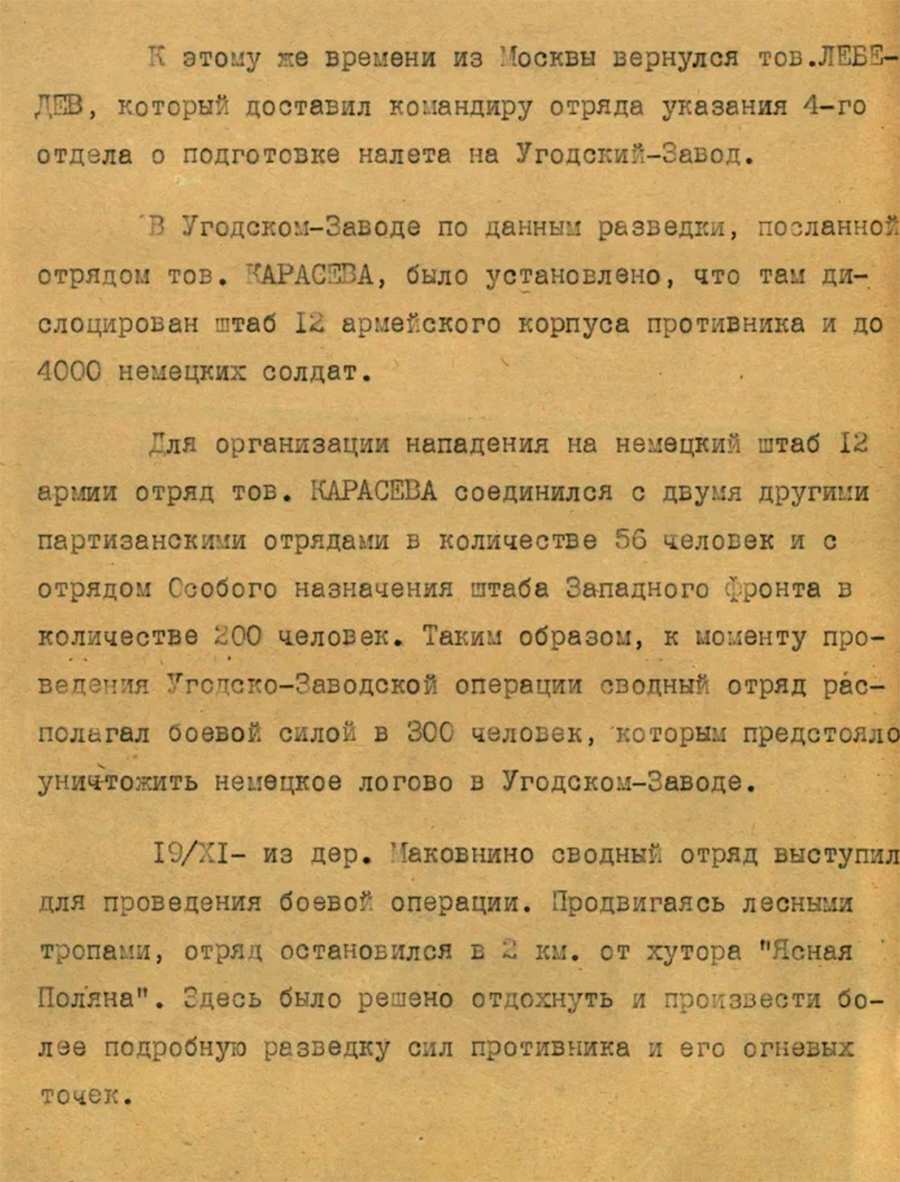
The partisans decided to move 200 m away from the camp and hide in the forest. By evening, they returned to the base and realized that the Germans had already been there — they had taken away all the food. The Soviet soldiers had to go to the reserve camp, leaving two guards at the open dugout. Only one person was able to return alive.
"Upon returning to the detachment, Gerasimovich and Alexandrov encountered forest fumes on their way. While crossing it from the edge of the forest, they began to be fired at with machine guns. They ran. They were both out of breath from exhaustion. Gerasimovich told Alexandrov, "I can't take it anymore. I'm exhausted." When Alexandrov turned to his lagging comrade, he saw that Gerasimovich had fallen," the documents say.

After both partisan camps were dismantled, the partisans retreated for several days to the village of Makovnino, where Red Army units were stationed. By this time, another soldier of the detachment, Nikolai Lebedev, had returned from Moscow, who "delivered to the commander the instructions of the 4th department on the preparation of the raid on the Blagodatsky Plant."
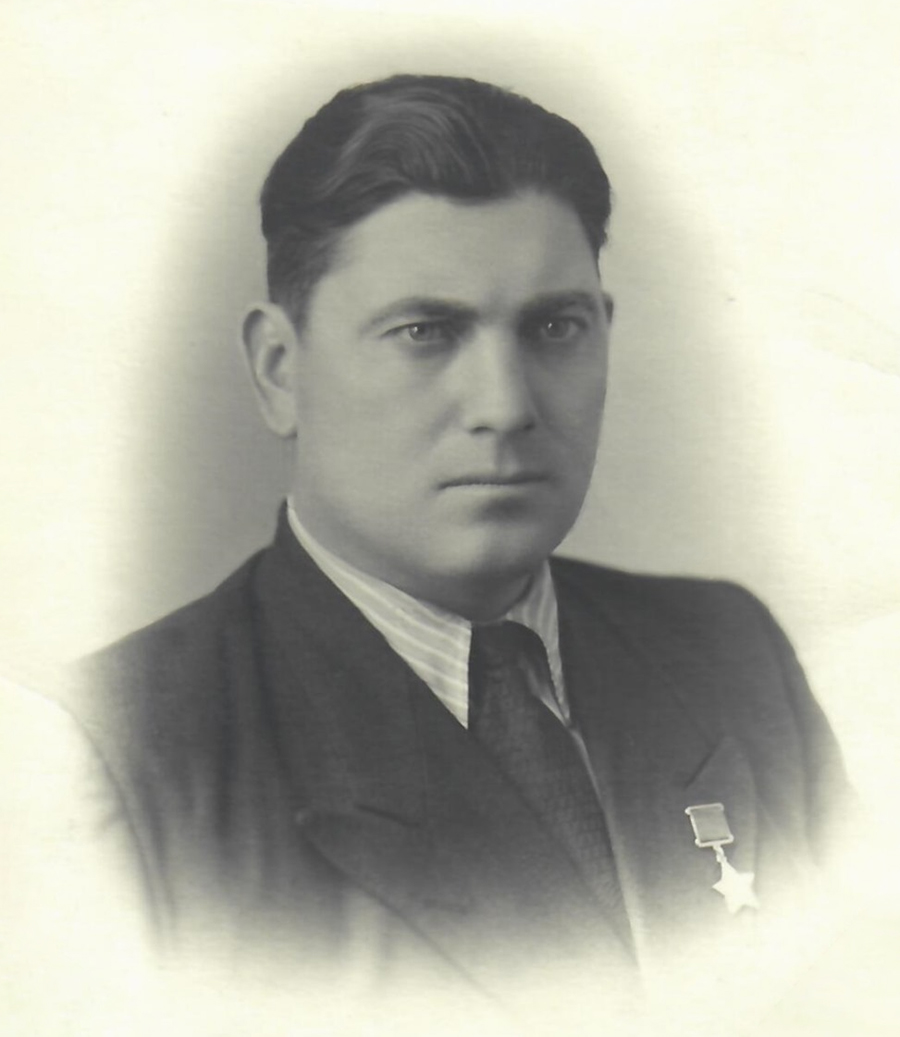
The commander was State Security Lieutenant Viktor Karasyov. Back in November, his intelligence service informed the command about the headquarters of the German 12th Army Corps, which was located in the village of Blagodarsky-Zavod. Now the partisans were tasked with defeating this headquarters.
Search with a woman
The partisans were helped to prepare the operation by local women who found themselves in the same houses with the Germans and became partisans themselves. There are several surnames in the NKVD archive:
"Selfless patriots of the Motherland, Isaev's wife and sister, the wife of the partisan Tokarev, in the presence of the officers stationed with them, more than once hosted the scouts of the partisan detachment and walked with them through the streets of the city. Not being afraid of German soldiers and patrols, they showed the partisan scouts the wasp nests of Hitler's vultures, the locations of the Gestapo headquarters, dormitories for officers and soldiers, ammunition and fuel depots, and machine—gun nests," the report says.
Zoya Isaeva was later tortured by the Germans, demanding to give up the location of the partisans. They did not stop before interrogating her seven-year-old son. The mother of three children herself was shot in the arm by a fascist officer, but he did not get anything out of her.

Thanks to the dedicated women, the partisans knew well which targets made sense to attack first. The squad leader has assigned targets:
- The former school building is a branch of the headquarters.
- The former building of the district council is the central office of the headquarters.
- The former building of the House of Social Culture and Savings Bank is the headquarters maintenance team.
- The former building of the RK VKP(b) is a dormitory for the command staff.
- The post office and radio building.
- The former building of the pharmacy and adjacent premises — Gestapo.
- The former NKVD building, MTS, Raiso, repair shops are the location of the local garrison.
- Former pig farm — repair shops, garage and staff dormitory.
"Bleeding profusely, Karasyov gave the command, "Anti—tank!"
The combined squad included employees of the NKVD in Moscow and the Moscow region, soldiers of the special forces unit of the Western Front, Red Army soldiers and fighters of partisan detachments. The total strength of the unit is about 300 people, commanded by Viktor Karasyov.
The squad was divided into eight groups, each with 35-40 people. Everyone has their own commander. The fighters have machine guns, submachine guns, rifles, hand grenades and molotov cocktails.

On November 23, at 23:00, the detachment concentrated on its initial position at the edge of the forest 500 m from the village. All the fighters put identification marks — white armbands — on their hats. At two o'clock in the morning on November 24, the signal was given for the start of the battle — a machine-gun burst upward with tracer bullets. Groups of partisans simultaneously stormed the buildings.
Grenades flew through the windows, followed immediately by fire from machine guns and rifles. Having broken into the buildings, the soldiers stabbed the Germans with bayonets.

The commander was wounded. During the storming of the district executive committee building, his mauser ran out of bullets, and he stopped to reload. At that moment, a German officer ran out at him. Karasyov raised his hand to shoot, but the enemy beat him to it, hitting him with an explosive bullet in the arm. The weapon fell out.
"Karasyov grabbed his mauser with his left hand and fired four shots at the officer. The German bastard fell like a log. Bleeding profusely, Karasyov gave the command, "Anti—tank!" The partisan grenades flew into the building again. Finally, all the officers who were in the building of the district executive committee were killed. The task assigned to the group has been completed," the document says.

Just an hour and 10 minutes after the start of the assault, all German facilities were destroyed. When Viktor Karasyov gave the signal to withdraw, the detachment moved towards the forest. Along the way, the partisans came across a fuel depot and set it on fire, blowing up many German cars.
During the withdrawal, the commander began to weaken from blood loss. He was bandaged by military paramedic Galina Rezo, right under the mortar and machine—gun fire of the Germans.
As a result of a deafening operation for the enemy, the partisans destroyed up to 600 German soldiers and officers, burned two fuel depots, blew up ammunition and food depots, destroyed 100 vehicles, blew up four tanks and an armored vehicle, destroyed several machine-gun nests, burned down stables, in which 170 horses died. Important documents were seized from the destroyed headquarters. The telephone connection was severed in 12 places.
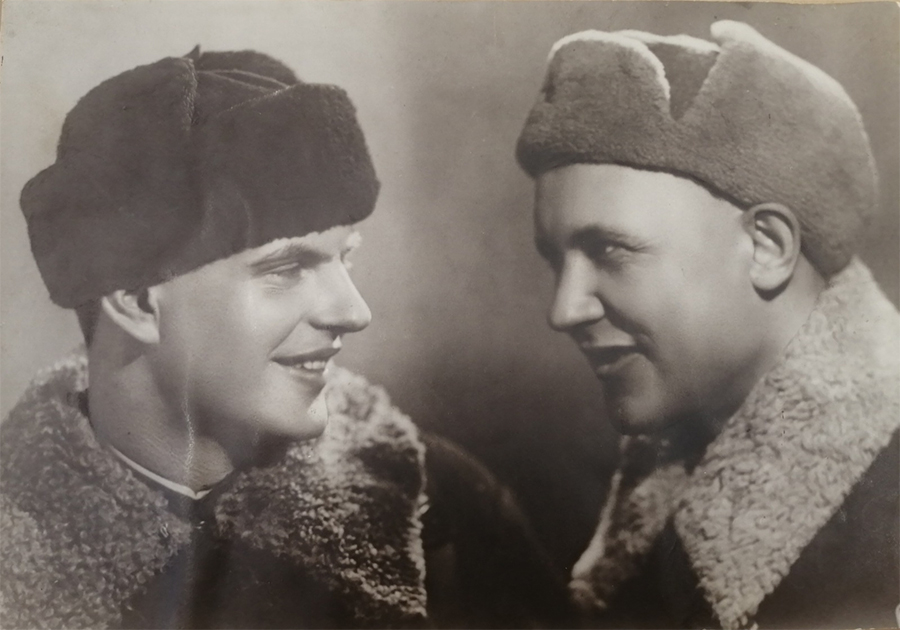
The losses of the detachment amounted to 18 people killed and eight wounded. Despite having more than a tenfold numerical advantage, due to the rapid and decisive actions of the partisans, the Germans were unable to organize a strong resistance. Five days after the operation, the Blagodatsko-Zavodskoy district was liberated by Soviet troops.
"I'll go there and say, come out, the boss has come!"
Upon returning to the base, Mikhail Guryanov, the commissar of the detachment, was ambushed. Before the war, he was chairman of the executive committee of the Blagodatsko-Zavodsky district.
"When the combined partisan detachment headed for the Zapadsky Factory, Guryanov told his comrades: "I'm going to smash up the officers in the building of the District Executive Committee. I'll go there and say — come out, the owner has come!" — it is written about him in the archive.
For several days, the Germans tortured the partisan, trying to find out the location of the detachment, but they did not achieve anything. On November 27, they hanged the former chairman from the iron beams of the district executive committee building.
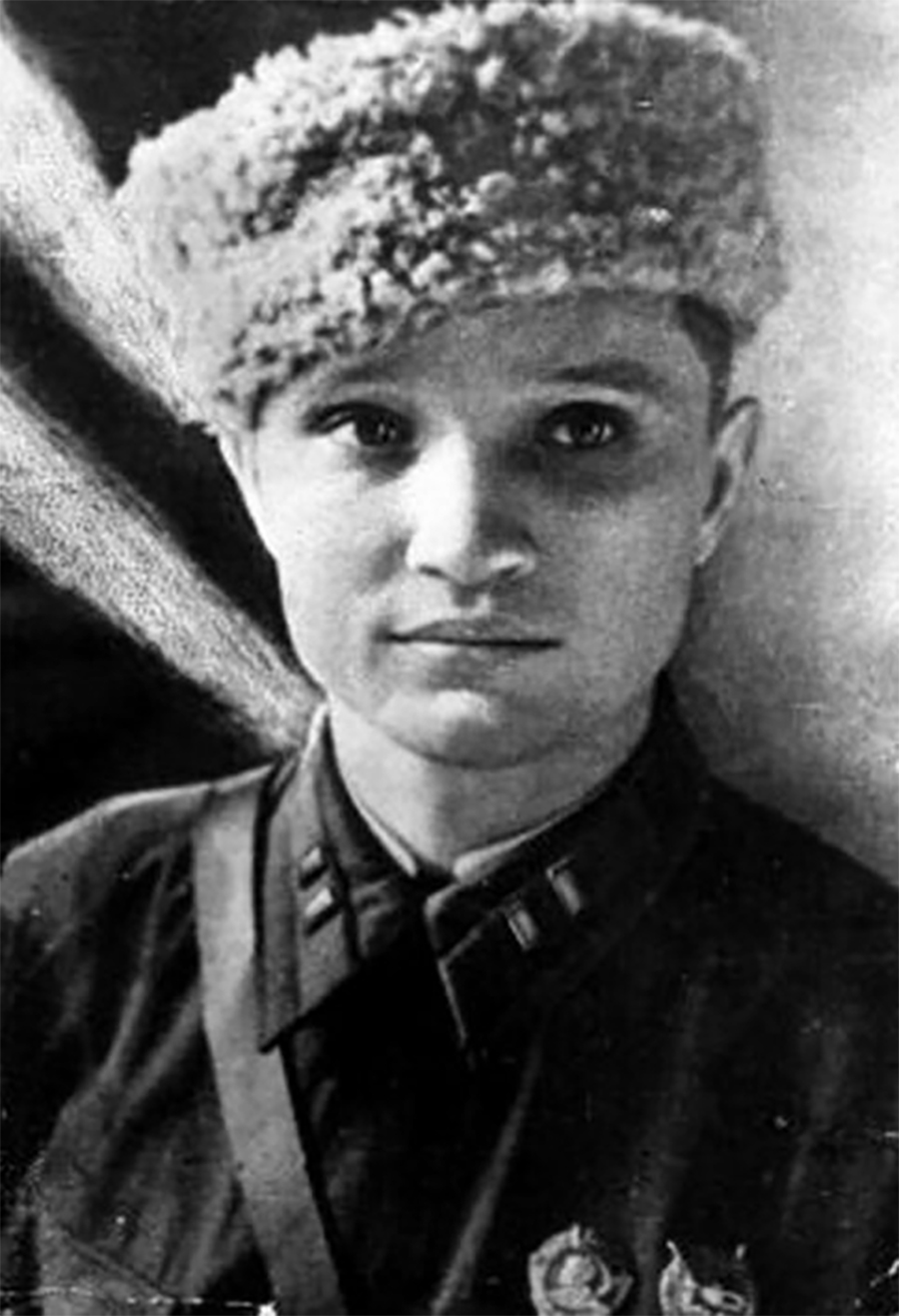
The commissar of the detachment, Mikhail Guryanov, was buried with honors. In February 1942, he was awarded the title Hero of the Soviet Union posthumously.
The commander of the partisan detachment, Viktor Karasyov, was awarded the Order of Lenin for the operation. After treatment, he continued to fight as part of partisan formations. In 1944, he was awarded the title Hero of the Soviet Union.

"The operation caused the German command to feel a sense of panic"
—Viktor Karasev conducted a deep reconnaissance of the Blagodatsky Plant, identified all the specific houses where the German units were located, starting from the guards, the dormitory, and the headquarters building itself,— Oleg Khlobustov, a historian of the special services and writer, told Izvestia. — He assigned tasks to each of the offensive groups. And they carried out a night attack, where they defeated the German headquarters and the units assigned to guard it. It was unexpected for the Germans.
The operation was carried out two weeks before the start of the strategic offensive of the Soviet troops near Moscow, the historian emphasized.
—And it caused the German command to feel a sense of panic," Oleg Khlobustov said. — There were other partisan detachments that operated on the supply routes of the German troops. The actions of the partisans were significant. And this success, the defeat of the corps headquarters, naturally paralyzed the fighting for a period of time. Even a short-term disruption of communication and coordination between the corps units contributed to the weakening of the combat capability of the enemy troops.

In addition, information about the partisan attack on the headquarters in the rear of the German troops demoralized the enemy, the specialist added.
"It was one of the most serious episodes in the defense of Moscow," Denis Martynenkov, head of the exposition and exhibition department of the Zhukov Museum branch of the Victory Museum, told Izvestia. — The defeat of such a powerful point behind enemy lines provided not only military advantages, but also had moral significance for the Germans, who were already preparing to celebrate victory near Moscow. But that was not the case! They were beaten on the front line, and our sabotage groups and partisans harassed them in the rear. The significance of this operation can also be judged by the fact that Yuri Levitan mentioned it in the Sovinformburo report, telling about the actions of the partisans of the Slavyansk-Zavodsky detachment.
In memory of the Heroes
The city of Zhukov still cherishes the memory of the Factory operation and its participants. Many relics of the partisan detachments are kept in the fund of the local museum. Exhibitions dedicated to the actions of the partisans are regularly held.
"We have Mikhail Guryanov's documents: passport, work record, union card," says Denis Martynenkov. — There is a list of the Slavyansk-Zavodsky partisan detachment, a lot of various authentic objects that tell about the activities of the detachment. Next year, when the anniversary of the operation will be celebrated, we are planning an exhibition and various educational programs to attract young people and schoolchildren to our history and educate the younger generation. It will be a series of events.
There is a bust on the grave of Commissar Mikhail Guryanov in Zhukov. The wall of the pre-war building of the district executive committee, where Guryanov worked and where he was executed, has been preserved. Now there is a memorial dedicated to all the victims of fascism.
Переведено сервисом «Яндекс Переводчик»
