"The audience votes with their hearts"


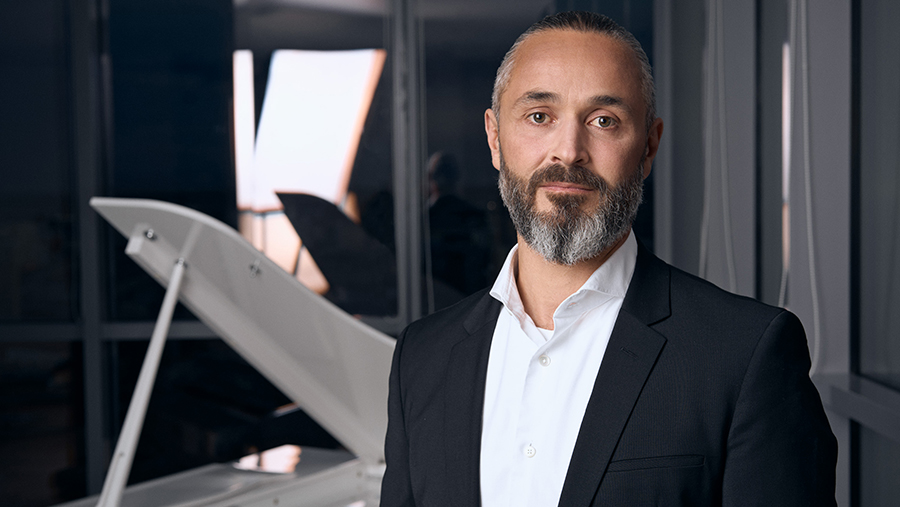
Founded by investor Mikhail Skigin, the Two Captains film company has already achieved fame in professional circles. In September 2024, the large-scale documentary "The Cross" was released nationally and was shown in 500 cinemas across the country. In August of this year, a contract was signed with a US distribution company to place the company's films on international platforms. Most recently, the first screening of the new documentary film "Suzdal. 1000 years and one day." And on September 20, in St. Petersburg, as part of the Petrovsky Ball, Skigin was awarded for his contribution to the development of Russian documentary filmmaking. Izvestia talked with Mikhail Skigin about the prospects of the project.
— Do you agree that documentaries are part of the cultural code of the country?
- of course. We live in a time of change. They occur rapidly, both on a global and personal level — in the human mind, in our perception of the worldview. And documentaries are becoming a valuable tool for analyzing these changes. Interest in documentaries is increasing. In my opinion, documentaries are experiencing a real renaissance today.
— What contribution does your film company make to this process?
— We have set ourselves the goal of reviving great documentaries. We combined deep meanings and a serious conversation with the viewer with artistic images, large-scale images and a musical series. All our films tell about the spiritual foundation on which a person should stand, that there is a state, Russia, Orthodoxy, faith and, of course, hope and love. This is how we show the whole world that Russia is a huge country with a big heart and a big soul. This is a manifestation of soft power.
— How would you describe your audience?
— Our projects are not only for fans of documentary films. We are making great efforts to truly reach a wide audience, in Russia and abroad. I see this as an important mission of the film company in the field of cultural diplomacy.
— What would you call your style?
— New wave documentaries. This is a new art that acts on the viewer through artistic images and reveals to him the meanings, magic and dangers of our changing world. We show real examples of heroism, kindness, and humanity and inspire people with it. I do not know how much this will become part of the cultural code. Time and the audience will decide that.
— The development of documentary films in Russia is difficult. What are the most important sources of financing for the company?
— Initially, the company had the only source of financing — my own funds. After the release of the first films, I saw the sincere interest of the audience, and for me it was a confirmation that everything we do is not in vain. The next step in development was the creation of films with the participation of the Ministry of Culture of the Russian Federation.
Recently, government support has been particularly noticeable, but in order to create large-scale works and reach a wide audience, it is still necessary to attract both own funds and additional resources.
— What, in your opinion, is the reason for this?
— The problem is that documentaries have much more in common with copyrighted films than with commercial films. This is logical, because commercially successful projects are what makes a profit, and documentaries are always risks. It's like investing in art.: You don't know if it will ever pay off. Therefore, it simply will not survive without government support.
— What systemic changes are missing in the industry?
— It is important to get state support for movie rentals. To teach the viewer to watch documentaries on the big screen. Society should understand that cinema is not only entertainment, it is a powerful tool in the hands of the state to shape the worldview.
It is also necessary to ensure the profitability of the industry. When the film industry earns money, it can develop independently, independent of external factors. It is necessary to create a system in which the production of films will be not only a cultural, but also an economically feasible project.
— Is this possible in the future?
— There are prospects, but we need to create conditions under which producers will be interested in supporting original films, in our case documentaries. This can be a system of grants, tax incentives and assistance in promoting paintings with access to international markets.
— Returning to your new film, why was Suzdal chosen?
— In 2024, Suzdal celebrated its millennium. In fact, it was the millennium of Russian statehood, because it was in Suzdal that it was formed. This city, like a textbook, is full of important dates, events and meanings for Russia, and key points important for understanding national identity have been laid here.
— What task did you set for yourself?
— Understand Suzdal and reveal the cross-cutting theme of the film. We used the latest neurogeneration technologies to reconstruct the faces of the grand dukes and historical events. This certainly adds expressiveness to the painting and makes it modern. This approach is important because we plan to show the film to the younger generation, schoolchildren. They are the main audience of our film.
— The audience is not easy. It is difficult to interest young people.
— Young people are already interested in documentary films, and not only as viewers, but also as creators.
— Do you plan to develop educational programs for such novice documentarians?
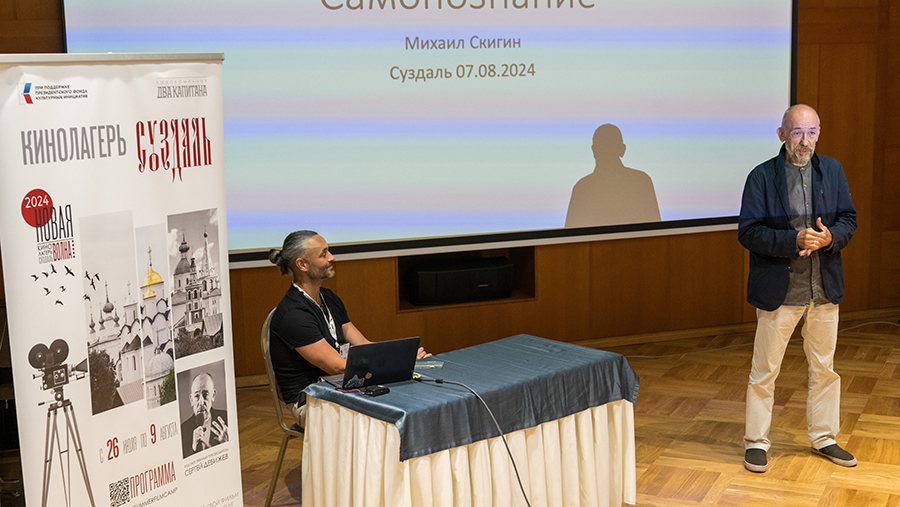
— We are not just planning, but actively developing. We are running a film camp project for young documentary filmmakers under the artistic direction of director Sergei Debizhev, which I consider to be the social responsibility of our film company. Thus, we are trying to create a generation of new wave documentaries who will return this genre to its significance and audience interest.
— Are there similar formats in Russia?
— This is the first and so far the only project in Russia where they teach not only the creation of documentary films based on traditional values, but also its effective promotion on domestic and international markets. The project has become an annual event and is held every summer in one of the cities of Russia.
— How can you explain the interest of young people in the documentary genre?
— Today, even very young guys not only consume rolls and shorts, but also know the techniques of their production; they write a synopsis, shoot, mount using only a smartphone. Documentaries are almost the same, but at a qualitatively high level. And young people are enthusiastically mastering this genre. I believe that the participation of already established bloggers in our film camp is proof of this. For them, this is primarily about improving their skills and skills.
— Your films have a pronounced geographical agenda. Can you say that you see potential in regional content?
— Absolutely. Our world is huge and interesting, but even the most avid traveler will not be able to see everything with his own eyes. Documentaries provide an opportunity to touch the distant, sometimes hard-to-reach corners of the planet, their traditions and events. However, in our film company, we always start from the story, from the meanings that we want to convey. It is history that dictates geography.
— What about nostalgia for Western films? Is it present in the Russian audience?
— I don't quite agree with the wording of the question. What we call "nostalgia for Western films" is a decades-old habit of consuming content from Hollywood majors. And at one point, the rental began to do without blockbusters and Western franchises. However, the audience did not have time to experience the phantom pain, as they had new preferences. The audience rediscovered Turkish, Korean, and Indian cinema.
And trust in the new Russian cinema is growing. From 10 to 20 thousand units of Russian film production are now available on each online platform.
This is a natural evolution of viewers' tastes, not a forced measure.
— And which way are the "Two Captains" going now?
— Our film company is currently actively exploring the Indian market. Filming is underway for a new documentary film "How a Russian ballerina saved India."
The story of the creative union of the great Anna Pavlova and the brilliant Indian dancer Uday Shankar. We tell you how, thanks to this tandem, it was possible to preserve and revive the tradition of Indian classical dances. And this is exactly the kind of topic that can guarantee successful international distribution.
— To what extent do paintings about national identity resonate with an international audience?
— The political context does not block the way for Russian films. Politicians are politicians, and the audience votes with their hearts. We have an amazing example — our film "Holy Archipelago" has won many awards abroad, including seven festival awards in the USA. After that, viewers started writing to us on social media asking us to show the film. Thus, at the request of the audience, screenings took place in American cinemas and on the online platform Belas Artes À La Carte as part of the Russian Film Festival, held by Roskino in Brazil.
— Does the international audience still have interest?
— It continues to grow. This prompted us to look for a partner. And in August of this year, we signed a contract with a Los Angeles-based distribution company. Films are now being dubbed into English. They will be posted on international platforms by the end of the year.
— What, in your opinion, is the reason for the success of the "Holy Archipelago"?
— The "Holy Archipelago" speaks about the essential issues that concern every person on Earth.: what is faith, what is the meaning of life, what to rely on when choosing a path.
We received an interesting comment from one of the experts who was involved in promoting the painting, an Orthodox American. He said, "They tell us that Russia is hell, but you show that it is heaven."
Переведено сервисом «Яндекс Переводчик»
