The way is healthy: capsules for "self-repair" will extend the service life of roads by a third
- Статьи
- Science and technology
- The way is healthy: capsules for "self-repair" will extend the service life of roads by a third


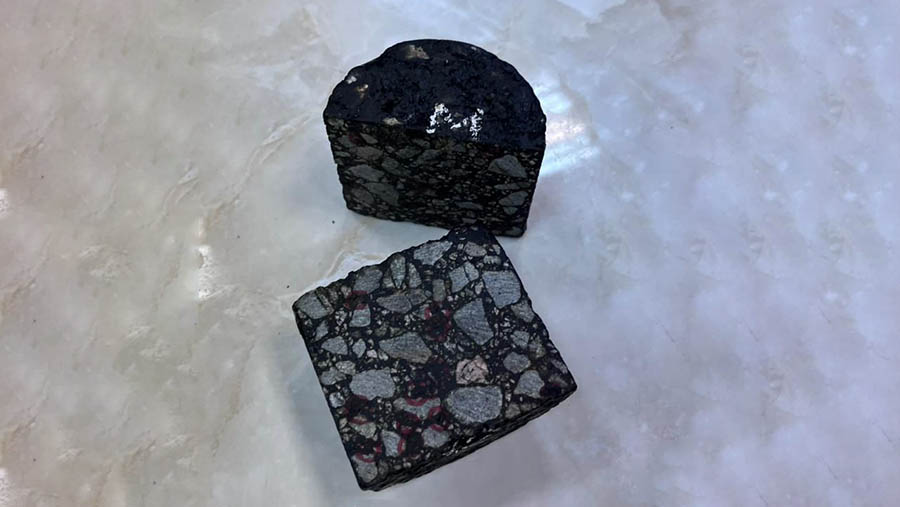
Russian scientists have developed microcapsules with a bonding polymer that will eliminate cracks in the road surface without human intervention. These granules are embedded in the asphalt-concrete mixture, and when cracks form, they collapse, activating the active substance. The released polymer penetrates into the asphalt matrix and "glues" the defect. As a result, the coating restores strength and resistance to loads. When implemented in road construction, the development can increase the service life of the roadbed by a third without repair. The information about how suitable the technology is for Russian conditions is in the Izvestia article.
How to increase the service life of the road surface
Scientists at the National Research Moscow State University of Civil Engineering (NRU MGSU) have proposed a technology that will help eliminate defects in the roadway without human intervention. It is expected that the development will extend the service life of roads by a third and reduce the cost of their repair.
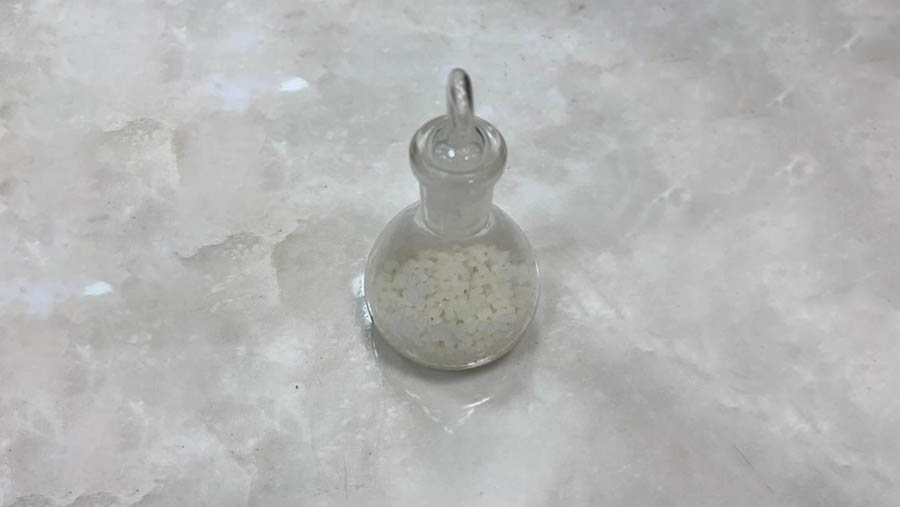
As the experts explained, the key to success is pellets with a diameter of 1-1.2 mm. They are filled with a polymer with high binding properties. As long as the road surface is intact, these granules are in a "dormant" state. But when cracks form, they collapse, and the polymer, penetrating into the asphalt matrix, under the influence of a number of physical and chemical processes, "glues" the defect.
— The reliability of communication routes directly affects the economy and connectivity of the country. However, sudden temperature changes, high traffic loads and other factors quickly disable the road surface. Therefore, the specialists undertook to solve the problem of creating asphalt that is able to respond to defects without human intervention," Sergey Inozemtsev, project manager, Associate Professor of the Department of Building Materials at the National Research University of Moscow State Technical University, told Izvestia.
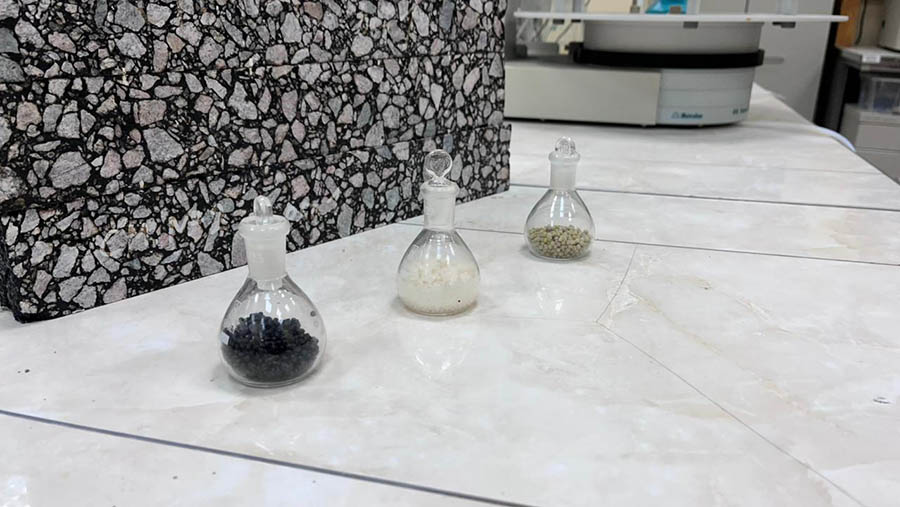
The proposed capsules are created using a series of sequential chemical processes. As a result, elastic balls are formed with a thin film and a gel-like binder inside. These granules are introduced into the ready-made asphalt-concrete mixture.
Moreover, the formulation allows you to create capsules with precisely calculated strength, which is enough for the granules to withstand the technological stages of paving. But then the capsules are easily destroyed when cracks form in the asphalt.
— Research in the field of self-healing materials is conducted in many countries. Oil fractions and oil refining waste are more often used abroad. But this approach works better when the coating is aging, and in the Russian climate it can lead to asphalt softening and rutting in winter. The polymer we use triggers a different self—healing mechanism and is better suited for Russian conditions," said Sergey Inozemtsev.

Which roads require additional strength
According to the test data, the use of capsules will increase the ability of asphalt concrete to withstand mechanical stress by about 30%, which will increase the service life of the canvas. Reducing the amount of damage to the roadway will have a positive effect on traffic safety.
MGSU specialists have developed a system of indicators that helps assess the effectiveness of asphalt concrete restoration. This will allow us to standardize the implementation of the development in practice. With appropriate adaptation of technology and formulation, the "self-repair" approach can be extended to other materials and structures, scientists are convinced.
According to Sergey Inozemtsev, the proposed innovation was highly appreciated at an international conference in Seoul, where the project became the best in the Construction section.
— The condition of any road surface deteriorates over time. This is influenced by heavy trucks, dynamic traffic and the climate. Among the ways to repair roads, it is possible to note the sealing of cracks using bitumen and various emulsions based on it. Another method is Slab Lifting, geopolymer injection. It is used to strengthen and align road lanes," Igor Mishin, an expert at the National Technology Initiative (NTI) Avtonet, told Izvestia.
In his opinion, the development of the NRU MGSU may be in demand to increase the bearing capacity, strength and quality of trails. However, no matter how advanced the technology is, regular inspections are important in road construction, which make it possible to identify cracks, ruts or potholes in a timely manner. Here, in particular, infrared sensors and ground-penetrating radars will help. They detect damage under the surface of the asphalt even before they become visible to motorists.
"The cost of materials for laying and repairing roads is a small part, and the main costs are the payroll, depreciation of equipment and various payments," Vyacheslav Bogachev, head of the laboratory at the NTI Center for Digital Materials Science: New Materials and Substances at the Bauman Moscow State Technical University, explained. In his opinion, the innovation will be beneficial when repairing roads upon their damage, rather than routine repairs, which are carried out regardless of the condition of the roadway.
According to the expert, the main ways to strengthen the pavement have long been known. These are high-quality materials and multi-layered construction (substrate, geotextiles, composite grids, asphalt itself, and the like). The materials presented by NRU MSTU do not strengthen, but restore the coating.
The development may also be promising for improving the properties of the airfield infrastructure, explained Elvir Yakupov, Vice Rector for Strategic Development and Economics at KNRTU-KAI.

— Among the main advantages of the implementation is a reduction in the frequency of repairs and, consequently, a reduction in the downtime of the airfield. However, there are disadvantages. First, the initial cost of materials and installation will increase. Secondly, the use of additives requires careful quality control and competent design of mixtures, which complicates the production process," the expert explained.
In addition to highways and airfields, he added, such modified materials can be used in industrial construction, where increased wear resistance of coatings is required.
Переведено сервисом «Яндекс Переводчик»
