The dark daughter: how the star of the TV series "Wednesday" sets trends in clothing


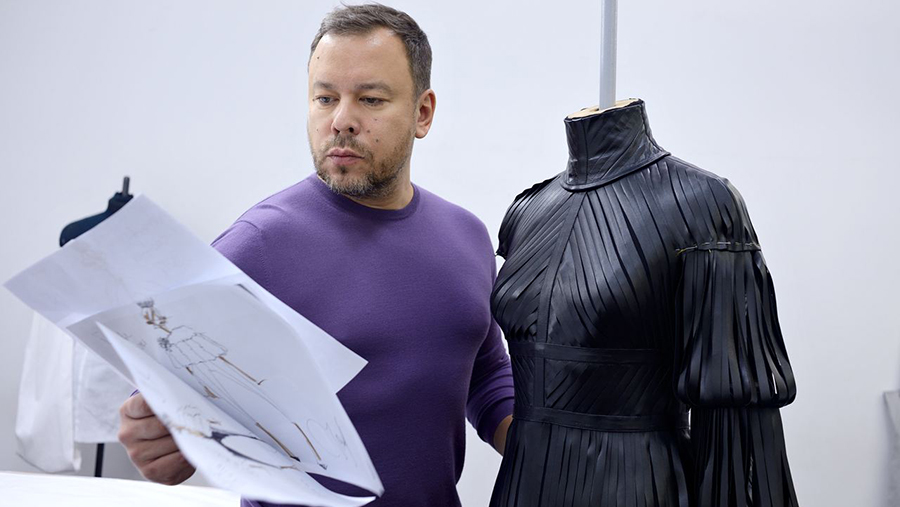
The promotional tour of the second season of the series "Wednesday" became a fashionable triumph for the performer of the main role Jenna Ortega. After the actress's appearances at social events timed to coincide with the premiere of the long-awaited sequel to the project, industry experts announced a trend for beige Gothic. Her images balance between a dark dramatic style in the classical interpretation and romanticism, and the black color loses its power in them. At the request of Izvestia, Russian fashion designer Igor Chapurin revealed the essence of the new Gothic and explained why this style meets the needs of society right now.
Clothing is a visual tool
In the promotion of the first season of the series "Wednesday", the style of images of Jenna Ortega was one hundred percent noir. During the actress' appearances at events dedicated to the recent premiere of the continuation of the project, beige Gothic replaced it. And this is not a random move.
To understand it, it is worth referring to the plot. The heroine gains empathy, and human emotions become familiar to her. Clothing here becomes a visual tool that conveys this idea to the audience. And her requests have changed in the three years since the release of the first season. Now people don't need a perfect emotionless character, but a hero they can see themselves in.
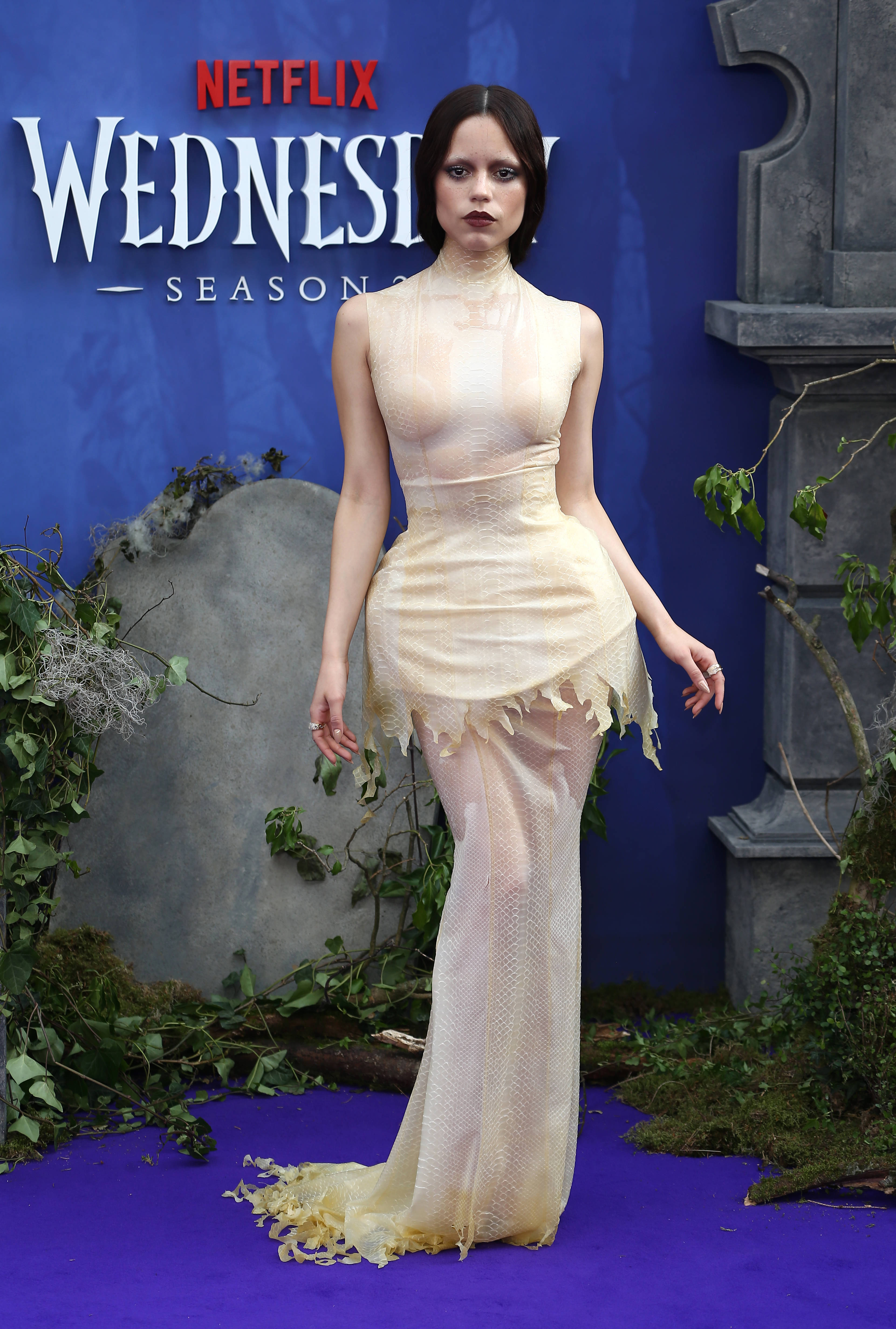
In recent years, we have seen how fashion has become increasingly inclusive and accepting of various forms of self-expression. If the idea of "successful success" used to dominate, now the trend is to accept oneself, one's weaknesses and peculiarities. A kind of beige Gothic, which involves an emphasis on the inner world, on complexity and depth, makes it possible to express its uniqueness, even if it does not fit into the generally accepted framework. This topic satisfies the needs for self-expression, for the search for identity, for a sense of belonging to a community that shares similar values and views.

Between Gothic and Romanticism
The images of Jenna Ortega that we see today are the talented work of stylist Enrique Melendez. The classic Gothic in them is manifested in dark colors and dramatic silhouettes, high collars and lace clearly show a reference to the Victorian era, black leather and platform shoes and huge heels scream about punk culture, which have become a feature of Jenna. But the key here is the transformation of all these elements into a modern context. Lace is combined with a minimalistic cut, leather is used in a set consisting of a top with oversized sleeves and a skirt, and massive shoes are combined with maxi dresses.
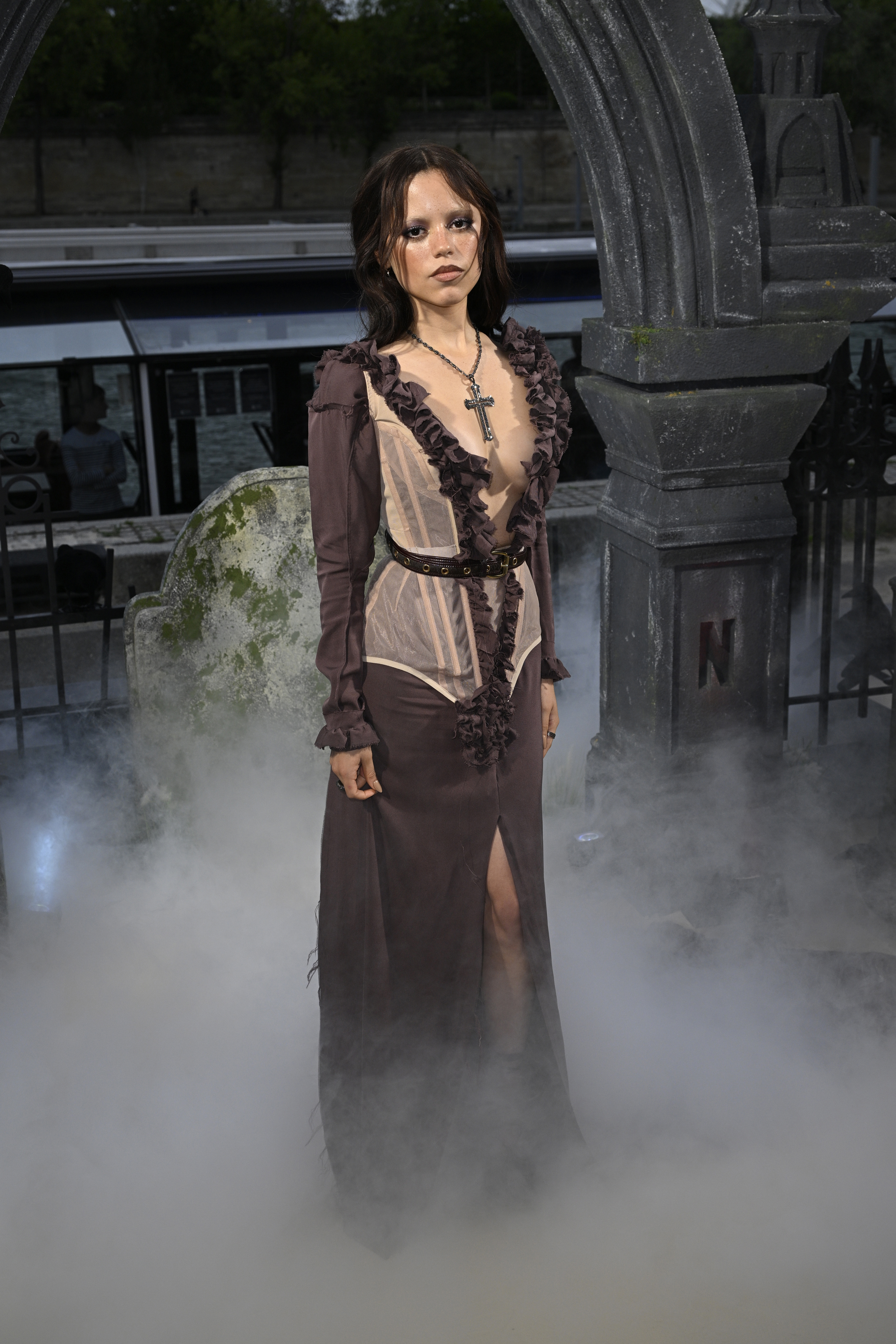
The gothic images of the actress are complemented by bleached eyebrows, which emphasize her beauty. Androgyny has long been entrenched in the DNA of Jenna's style, and the stylistic device is a continuation of this story. The trend is not new — it seems to have returned during the quarantine. Back then, people were looking for creative freedom and weren't shy about experimenting with their looks. Now, by blurring the lines between strictly male and strictly female, they demonstrate that they are not afraid of radical images.

I would call it Neo-Gothic or Neo-Gothic Romanticism. We are talking about a more sophisticated and relevant version of this dark style in a pure reading, where softer details, glamor, if I may say so, are now appearing. The peculiarity lies in the balance between Gothic and romanticism, which are opposite to each other.
New Gothic, in my understanding, is unexpected fabrics, such as latex, resembling snakeskin, bright accents, and playing with proportions. The main thing is not to copy Gothic in its purest form, but to adapt it, taking into account modern realities. The game of contrasts can consist in a combination of delicate colors and one hundred percent Gothic cut, the use of velvet and lace in the most non—trivial design, as well as a combination of drama and rudeness in one image (for example, Jenna's massive shoes).
The style became a logical continuation of Gothic in its purest form. But if earlier the corresponding images implied an attitude to a certain subculture or met at costume parties, now we will see the use of characteristic stylistic techniques not only on red carpets, but also in everyday life.
I can assume that the neo-Gothic will remain with us for the upcoming autumn-winter season, and the designers will show it in a more utilitarian interpretation. Comfort will still be relevant first and foremost. Therefore, deliberate carelessness, pressed like an unladen cloth, exaggeratedly large things and the most unexpected style-tricks with layers will not go out of fashion for at least another six months.
Переведено сервисом «Яндекс Переводчик»
