
Promised freedom: Macron decided to recognize Palestine
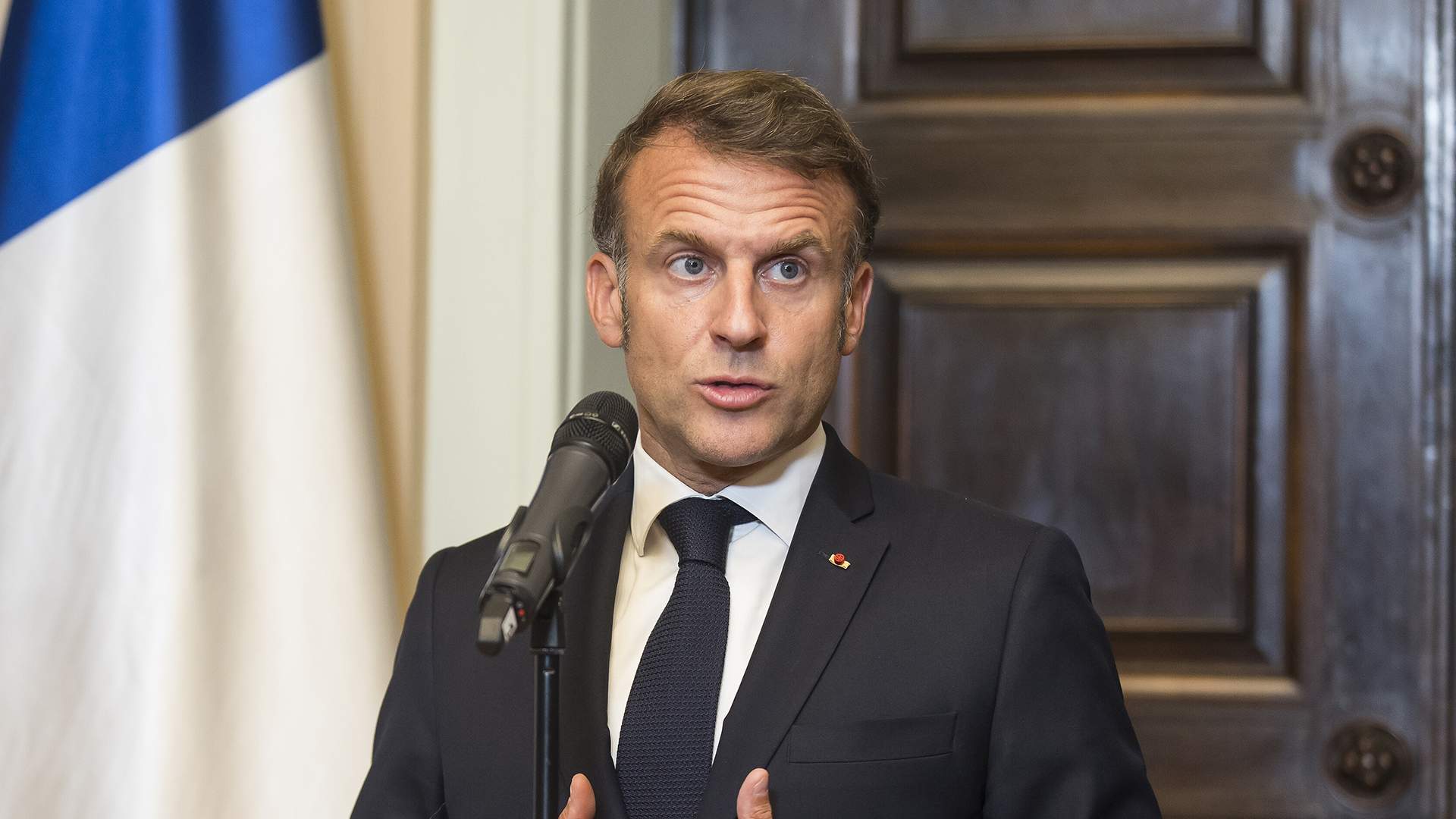
French President Emmanuel Macron has declared his readiness to recognize the State of Palestine at the UN General Assembly in September. No G7 country has ever taken such an initiative before. The idea of the French leader was supported by representatives of the Arab world, it was rejected in Rome, and London seriously considered the possibility of following the example of Paris. Why France needs this gesture and whether recognition of Palestine will become a pan—European trend is in the Izvestia article.
Pressuring the prime minister
British Prime Minister Keir Starmer is under pressure from party members, members of the government and the Foreign Ministry.: According to Politico, citing sources, they are all seeking recognition of Palestine as a sovereign state. Earlier, The Guardian clarified that a third of parliamentarians, including some members of the government, wrote a corresponding letter addressed to the Prime Minister.
Starmer is expected to take a definite position on Palestine, but he is in no hurry to make statements, fearing accusations of anti-Semitism, as well as a serious complication of relations between Britain and Israel's ally the United States. According to one of the senior Labour MPs, the current prime minister is "much more cautious than anyone else in the party." Another parliamentarian, in an interview with Politico, clarified that the head of government "is getting closer and closer to isolation on this issue."

Nevertheless, Starmer himself does not rule out that London may recognize Palestine as an independent state.
The Italian authorities, in turn, oppose the recognition of Palestine. According to Prime Minister Giorgi Meloni, it should take place after the actual establishment of the state, but for now "it may even be counterproductive to achieve the set goal."
"If something that doesn't exist is recognized on paper, it may seem that the problem has been solved. But that's not really the case. That is why, being a supporter of the State of Palestine, I do not support the recognition of the country before it is created," the Italian politician concluded.

The initiative President
The statement by French President Emmanuel Macron about plans to recognize the country made a lot of noise also because it was adopted without prior consultations in parliament.
Macron said that Paris would recognize Palestine as an independent state at the UN General Assembly in September, and stressed that the main task was to end the war in Gaza and provide assistance to the civilian population.

If this happens, France will become the largest and most influential European country to recognize Palestine. Currently, the state is recognized by over 140 countries, including Russia, China, India, Brazil, Sweden, and Poland. Last year, Norway, Spain and Ireland recognized Palestine as independent.
At the same time, the French leader emphasizes that the recognition process must be accompanied by the disarmament of the Hamas group. He also demands that the Palestinians, in return, recognize Israel's right to exist and release Israeli hostages from captivity.
Macron's statement caused a negative reaction in Washington. According to US Secretary of State Marco Rubio, this rash decision only serves the propaganda of Hamas and disrupts the peace process, "it is a slap in the face to the victims of October 7."

The French leader's actions were predictably criticized in Israel: Prime Minister Benjamin Netanyahu called this step "a reward for Hamas terror," and Foreign Minister Yisrael Katz considered the decision a "perverse step insulting the victims of the Hamas attack on October 7" and announced the recall of the ambassadors for consultations.
Palestinian Vice President Hussein al-Sheikh thanked Macron, noting that the president's position "reflects France's commitment to international law and support for the right of the Palestinian people to self-determination."
Although relations with West Jerusalem are very important for Paris, contacts with Arab countries are still considered more significant.
The Saudi Foreign Ministry called the French leader's initiative historic and called on other states that have not yet recognized Palestine to follow France's example. Jordan expressed hope that "the French President's decision will receive support for further recognition of the Palestinian state." Spain and Norway also reacted positively, and Canada promised to actively assist.

It is possible that Emmanuel Macron's actions hoped to launch (and therefore lead) a wave that would involve other European states that have not yet recognized Palestine as independent.
Israel and Palestine's relations with the EU
Against the background of the deteriorating humanitarian situation in the Gaza Strip, Europe is considering a review of relations with Israel. If immediately after the terrorist attack by Hamas on October 7, 2023, the countries of the continent certainly supported West Jerusalem, by now all attention has shifted to the humanitarian catastrophe in Gaza.
In mid—July, the head of European diplomacy, Kaya Kallas, presented ten options for sanctions against Israel, including the suspension of arms exports. Back in the spring, Britain suspended negotiations on a free trade area with the Netanyahu government due to the blockade of Gaza.

However, unity within the EU is still out of the question, primarily because of Germany's position — this country is considered a key ally of Israel in the European Union. Despite calls from some German diplomats to pursue a tougher course towards West Jerusalem, Berlin is in no hurry to support the imposition of sanctions and even more so to recognize Palestine.
What do the experts think
Natalia Yeremina, a professor at St. Petersburg State University, in a conversation with Izvestia notes that the situation with the recognition of Palestine is very difficult, and Macron wanted to show with his statement that France is trying to play an independent role again.
— Paris wants to be an independent violin that will change the situation for Palestine. Given that Donald Trump is against recognizing this state, Macron thus declares his independence in decision—making and that the US president does not order him, the expert believes.
The analyst believes that in this way Macron appeals to his voters and tries to play the role of peacemaker.
— Macron is doing very badly with ratings, he is trying to fix the situation through foreign policy and some high-profile statements. When the situation comes to a specific case and decisions, everything can slow down. We have seen this repeatedly in Macron's statements before, when he promised something, but in the end he did not do it. First of all, this is a game for the domestic voter: in France and Great Britain today there are a lot of immigrants from the Middle East and parts of Africa, and this is an electorate that supports Palestine. His votes are also important," the Izvestia interlocutor notes.

Pavel Timofeev, Head of the Regional Problems and Conflicts Sector at the IMEMO RAS, noted in an interview with Izvestia that the current situation is not a pan-European trend.
— This is Macron's new demarche in line with France's traditional position on resolving the Palestinian-Israeli crisis according to the "two-state" formula. Paris has long supported Palestine's right to independence, but it does not officially recognize it in any way. Perhaps Macron is trying to return France and the EU to the Middle East in this way. However, hardly half of the EU countries support the recognition of Palestine," the expert concluded.
Elena Panina, director of the RUSSTRAT Institute for International Political and Economic Strategies, considers the decision to recognize Palestine by France "not so significant."
"It is possible that the French president was prompted by the adoption by the Israeli Knesset on July 23 of the declaration on the extension of Israeli sovereignty to the territory of the West Bank of the Jordan River. Although this is not a legislative act, but only a recommendation to the Israeli government. Nevertheless, the declaration calls the creation of a Palestinian state "an existential threat to Israel, its citizens and the entire region," the political scientist wrote on her Telegram channel.
The expert drew attention to the response to Macron from Donald Trump.

"He called his colleague a good guy, but immediately added that his statement on the recognition of Palestine "will not change anything." And here we are talking, obviously, about some of Trump's obligations to the Israeli sponsors of his election campaign. In particular, to Miriam Adelson, the widow of Sheldon Adelson, Trump's largest sponsor during his struggle for the presidency in 2016. Donations then amounted to about $90 million," the specialist explained.
"As the Israeli press wrote, in 2024, Miriam made Israel's annexation of the West Bank of the Jordan River and America's recognition of Israel's sovereignty in all regions of the country, including the Gaza Strip, a condition of sponsorship," the analyst concluded.
Переведено сервисом «Яндекс Переводчик»
