
Dobry sprouts: why Russian grain sales are declining
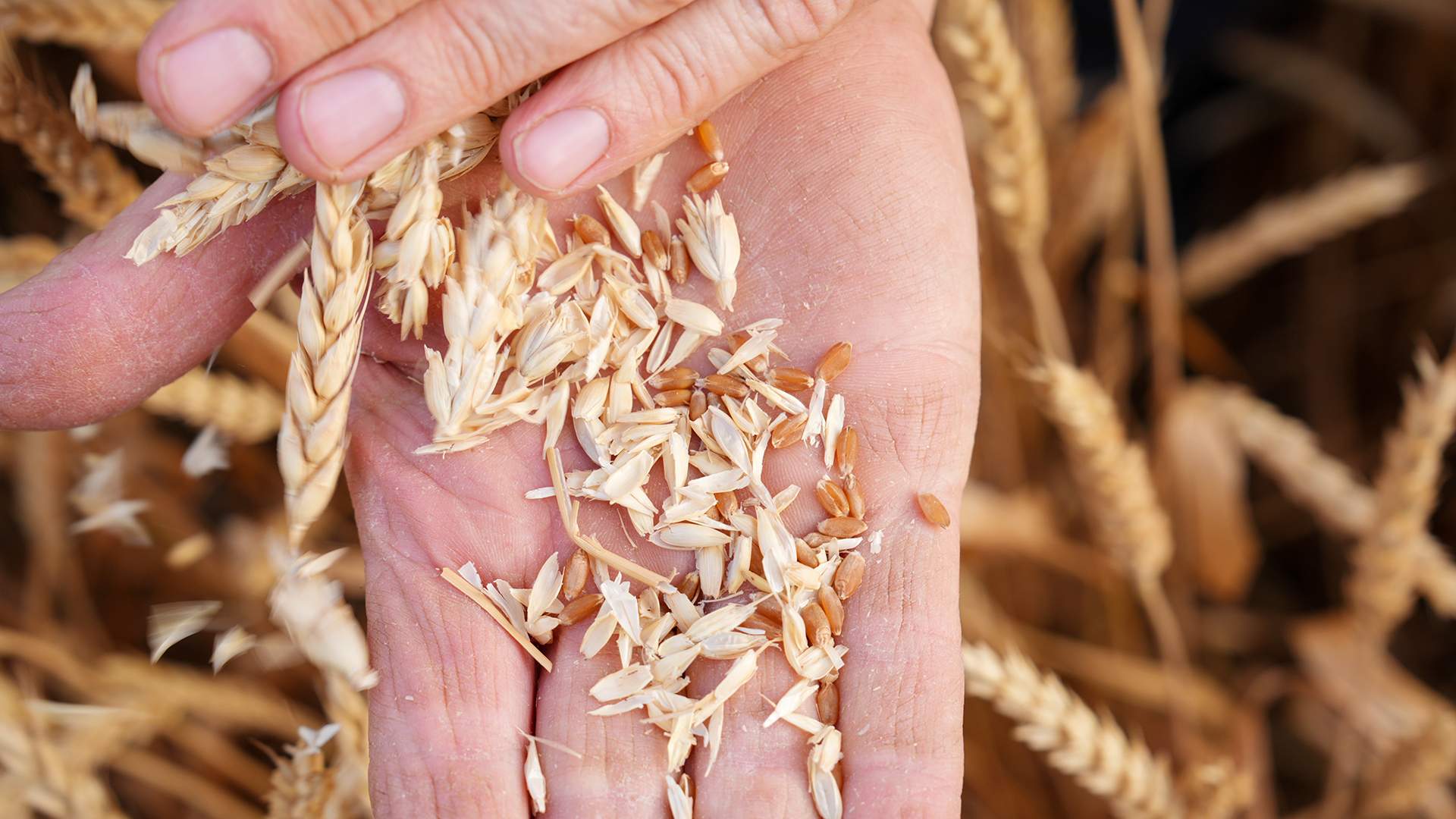
Sales of Russian grain decreased by almost 35% in June, to 2,806 million tons. Since the beginning of the year, 21.476 million tons have been sold, which is 32.9% less than last year's volumes. The June decline is explained by the fact that farms, in fact, were simply selling off their leftovers at that moment, experts believe. The new crop will begin to be sold later, after completing the procedure for completing all necessary paperwork. How the grain harvest is going today is in the Izvestia article.
Optimistic expectations
The gross harvest of cereals and legumes in Russia in 2024 amounted to 129.8 million tons, the press service of the Ministry of Agriculture of the Russian Federation told Izvestia. The ministry's harvest expectations for the current year are very optimistic, despite the drought in some large grain-producing regions.
— The drought in 2025 had a negative impact on the state of grain crops in the Southern Federal District and new regions of Russia. At the same time, in other territories, the condition of crops is estimated to be better than last year's level. The Ministry of Agriculture maintains the forecast for the production of grain and leguminous crops at the level of 135 million tons under favorable weather conditions, the ministry stressed.

Such a harvest is expected to not only fully meet domestic needs, but also maintain the export potential in the current season at the level of 53-55 million tons.
As the head of the Ministry of Agriculture Oksana Lut noted earlier, a "fairly good base" has been laid for it — the area of sowing for grain crops today is about 46 million hectares. According to operational data, as of July 23, grain and leguminous crops were threshed from an area of 11.4 million hectares, 37.4 million tons of grain were harvested.

However, the volume of grain sales, according to Rosstat, decreased significantly in June, amounting to 2,806 million tons. This is 34.5% less than in June 2024, when 4,282 million tons were sold. In total, in the first half of the year, agricultural organizations sold 21.476 million tons of grain, which is 32.9% less than last year's figure (31.984 million tons).
Despite this, grain exports from Russia, according to Oksana Lut, remain stable. According to the results of the last agricultural year, it amounted to 53 million tons. This is generally in line with the average supply results over the past five years.

Today, Russian grain is exported to 108 countries around the world. The geography, as emphasized by the head of the Ministry of Agriculture, continues to expand — in 2024, 11 new countries joined the list of importing countries. Seven more countries that had previously suspended the purchase of grain from the Russian Federation have returned to importing it.
No interference
The pace of grain harvesting is now slightly behind last year's, but it is within the long-term average, said Babken Ispiryan, Deputy Chairman of the Council of the Association of Agricultural Producers "People's Farmer". According to him, this process proceeds at different speeds in different regions, since both rain and drought affect the volume of harvest.
— There may be problems in some regions of Russia, but the harvest in the country is harvested from Kaliningrad to Vladivostok. The main grain-producing regions are concentrated in the Central Chernozem region. Now they are just starting to clean up there, which was slowed down by the recent rains," the expert clarifies.

In the Central Chernozem region, which includes the Belgorod, Bryansk, Voronezh, Kursk, Lipetsk, Orel and Tambov regions, the harvest, according to Ispiryan's forecast, will be higher than last year. The volume of grain harvested in the Stavropol Territory will also increase. But in the Krasnodar Territory and the Rostov region, on the contrary, it will decrease.
— To date, all analytical structures, including the Ministry of Agriculture, are forecasting a harvest higher than last year's values. The level will be higher than last year's volumes if no natural disasters occur," the Izvestia source points out.

At the same time, the observed drought does not mean that the regions it affected have burned out entirely, Ispiryan is convinced. In the Ust-Labinsky district of the Krasnodar Territory, for example, producers have not faced either critical frosts or severe drought this season, says Alexander Endovitsky, Chief agronomist at Progress Agro Group.
"Heavy rains made their own adjustments to the schedule in the spring, we had to quickly redistribute equipment, but the sowing campaign was carried out in full," the expert assures.

In local areas, a short-term drought still partially affected grain filling, so not all fields produced a one-hundred-percent harvest, the Izvestia interlocutor admits. However, despite a slight decrease in yields, the grain quality turned out to be higher this year — the share of third-class wheat increased, which is especially important for processing and the market.
A natural decline
It is important to understand that Russia, as noted earlier by Russian Prime Minister Mikhail Mishustin, is one of the leaders of the global grain market. Every fourth export shipment of wheat in the world is of Russian origin. By 2030, the authorities intend to increase exports of agricultural products by one and a half times compared to 2021, which will largely be achieved by increasing the supply of grain crops.
The volume of grain production in the Russian Federation directly affects its value on global markets. At the beginning of the year, for example, against the background of a reduction in wheat production, wheat prices went up worldwide, which inspired moderate optimism to producers.

The new agricultural year was marked by a decrease in the cost of grain — the average wholesale prices for third-class wheat as of July 18, 2025 were at the level of 16,450 rubles per ton, recalls Dmitry Leonov, Deputy Chairman of the Board of the Rusprodsoyuz association.
— The dynamics are mainly on the decline. In the Center, it was 100 rubles/ton, in the Chernozem region and the Volga region — 165–170 rubles/ ton, in the Urals — 35 rubles/ton, in Siberia — 250 rubles/ton," he points out.
Current prices on the world market (lower than in 2023 and 2024), the dollar exchange rate and drought in the southern regions lead to a reduction in the sale of Russian grain, says industrial expert Leonid Khazanov. This situation is largely caused by a drop in shipments, explains Babken Ispiryan. This is due to the fact that last year's harvest has already ended, most of it was exported in the first half of the agricultural year. And in June, which is the end of the season, only leftovers are sold, the expert clarifies.

In his opinion, the grain of the new crop has not yet been sold, because there is a clear cycle of its registration after harvesting and preparation for sale.
— After the grain has been harvested, it is necessary to determine its quality, bring it to the ports and only then ship it. So this is a purely technical issue — the grain of the new crop cannot be exported yet, and the grain of the previous one is no longer being purchased," admits Ispiryan.

It is also important to take into account that Russia's domestic consumption remains a priority, averaging about 85-90 million tons per year, he notes. Taking into account the projected 135 million tons of harvest by the Ministry of Agriculture in 2025, about 45 million tons will be exported. And if the entire volume is quickly exported in the first half of the agricultural year, by the end of the year there will simply be no grain left in the farms for export.
"Of course, Russians are not in danger of a shortage of bread on store shelves, but a reduction in grain supplies outside Russia will negatively affect budget revenues," Khazanov warns.
It will be possible to fully talk about how the grain will be sold no earlier than in August, when the harvest will be harvested from the fields and all the documents will be processed for it, Ispiryan emphasizes. Now the collection is in full swing and it is premature to draw conclusions.

The decline in grain sales volumes, however, may persist for the next couple of months, Khachaturian does not exclude. Grain shipments from Ukraine will put pressure on prices and interfere with shipments, even if they are carried out on a smaller scale than before.
"However, disasters in Russia's agriculture cannot be expected, federal and regional authorities will do everything in their power to help farmers,— the Izvestia interlocutor sums up.
Переведено сервисом «Яндекс Переводчик»
