Golden Quest: how our athletes started at the World Water Championships

The World Aquatics Championships in Singapore is the first major summer tournament for our swimmers, synchronized swimmers and divers in many years. And after the first week, you can already draw the first conclusions. Russia has one medal, and most importantly, a gold one. But there are also missed opportunities, and the obvious consequences of international isolation, which led the rivals to move ahead.
In the first week of the competition, three types of programs started in Singapore: water polo (Russians do not participate), open water swimming and synchronized swimming. How successful are Russians who perform in a neutral status?
Jump from Mars
First of all, it should be said that the Russian national team came to Singapore in a fairly solid composition, and the international federation of World Aquatics almost did not cause any obstacles. With the exception of the strange ban on publishing results on official social media accounts, ours are represented almost everywhere they could, with coaches and staff — this is a more loyal attitude than in most other federations.
There were many concerns about how Russians would be greeted in synchronized swimming, a subjective sport where judging affects the outcome. And so far, the attitude is quite acceptable, and the results for everyone are affected by the rule change that has made the sport better, and this is the opinion of the press attache of the neutral team, Polina Proschenko.
Of course, there were some oddities: the coach of the Spanish national team, Andrea Fuentes, gave a powerful warm-up interview before the start, in which she stated:
— We'll eat Russians with potatoes and sauce. They have been world champions since 1998, and no one has ever beaten them. They saw us competing this year and hid. Let them copy what they want, and we will go one step ahead. Someday we will overtake them. If we defeat them now, I will parachute from Mars.
It's hard to say what possessed the Spaniard, perhaps resentment for previous defeats. But once her athlete has already overtaken ours, although she did not become a champion. Whether this is considered a fulfilled condition for jumping from Mars is known only to Elon Musk.
Synchronized swimming
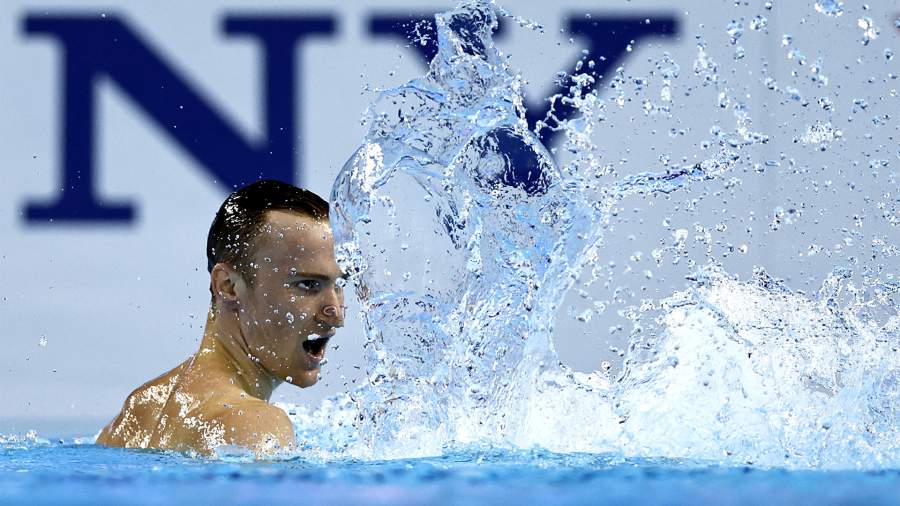
Alexander Maltsev, a native of St. Petersburg, despite the changes in the rules and isolation, did not give anyone the status of a pioneer and leader of his sport, and in a technical solo he brought 10 points to his closest rival (by the way, the Spaniard). More recently, in an interview with SE, Maltsev expressed doubts about the correctness of the rule changes, but showed how to deal with circumstances rather than whine.
But the women's solo did not bring the usual victories: Russian synchronized swimmer Tatiana Gaidai took only 12th place in the final of the technical solo. This is an anti-record: for the first time since 1994, Russian women were left without medals in the finals of one of the key disciplines, although it does not have Olympic status. The lack of experience and the complexity of the program affected — after the seventh place in the preliminary stage, the coaches and the athlete took a risk by putting a super-complex element in the hope of snagging a medal. Gaidai flunked him and rolled back to the last place. But again, an invaluable experience.

Synchronized swimming is sure to bring victories to the Russians: Maltsev is aiming for four gold medals, we have strong women's duets, and it's interesting to see acrobatic programs that are relatively new to this sport. In short, we need a large sample to draw global conclusions.
Open water swimming
The Russians were definitely not extras. Denis Adeev twice got into the top 6 in the individual types of the program, he was separated from the medals by a few seconds. Our team also finished sixth in the 4x1500 m relay. Two Russians, Margarita Ershova and Ksenia Misharina, reached the final of the new three-kilometer elimination format, but took 8th and 10th places.
There is a lack of international experience that has prevented Russians from taking a decisive step towards fighting the elite. Ekaterina Sorokina was in the lead at the beginning of the 5 km race, but on the first turning buoy she allowed her rivals to catch up with her and got into trouble, during which she caught on a buoy, got stuck in it and lost a minute. The situation is rare, but unlikely to be predicted at Russian competitions due to the lower level of competition and the severity of the fight. Margarita Yershova couldn't stand the heat on the first day of the competition and got off: she was taken away in a wheelchair, and she even ran into Haight on social networks.:
— I felt sick at the top ten, and I was forced to withdraw from the race. People were unhappy that I came just like that, that I had to return the money for not showing the necessary results: training camps and competitions are expensive. But there were also those who wished me well so that I could get better. There were few bad comments, but I'm a vulnerable person and I took everything to heart," admitted Ershova.

In general, open water has been developing very dynamically in recent years — both training practices and techniques, including in the context of contact wrestling with rivals. There is no substitute for such an experience.
And that's probably what Sports Minister Mikhail Degtyarev said in a recent speech.:
— Will holding any alternative tournaments help our athletes? No, it won't help, because we've been through it — the Friendship Games, 1984, the Goodwill Games. All of them passed without a proper level of competition and only dropped international sports cooperation for years, so to speak, so the alternative is not our way. Our path is to return fully to the Olympic family.
So we're going back. It will not be easy on this path, but it is necessary to overcome these difficulties.
Переведено сервисом «Яндекс Переводчик»
