
Well-fed life: Russia may introduce a price "fork" for the "borscht" set
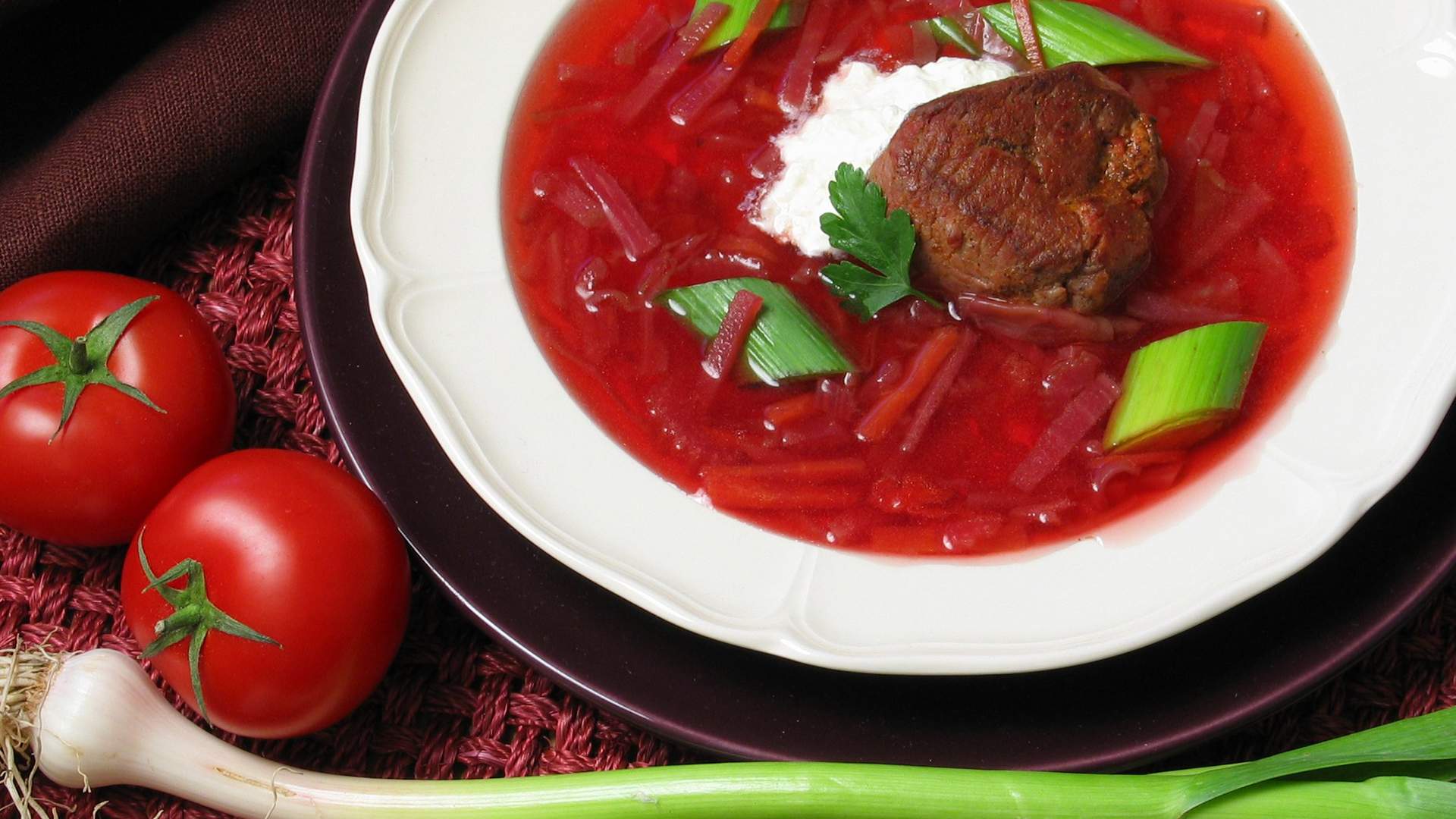
In Russia, there may be a price fork for a "borscht" set and socially significant goods. The Ministry of Industry and Trade of the Russian Federation and retail chains have proposed to establish a mechanism that will fix the cost range from minimum to maximum. In practice, it will not be easy to implement the initiative, since manufacturers cannot sell products below production costs, wholesalers must take into account transportation and logistics costs, and retailers must take into account their own costs, experts warn. Whether it is necessary to set a price range is in the Izvestia article.
Controlled variability
In Russia, they can set minimum and maximum product prices for certain categories of goods. This initiative was initiated by the Ministry of Industry and Trade of the Russian Federation.
"The Russian Ministry of Industry and Trade and retail chains themselves took the initiative to set a price fork (the minimum and maximum prices at which producers can sell their products) for agricultural products that are key to the consumer market," TASS quoted the agency's press service as saying.
The ministry stressed that it is primarily about the products of the "borscht" set, necessary for further food production. They are also sold in large quantities at retail.
A similar pricing policy may affect the most important products and socially significant goods from the point of view of the consumer basket.
"Such products are subject to significant "price fluctuations" due to seasonal factors, possible crop failures, and so on," the Ministry of Industry and Trade explained.
It is expected that the mechanism will create conditions under which producers will receive guaranteed profitability, which will give them the opportunity to plan their investments in further crop cultivation through long-term contracts. This will also be beneficial for retail chains, as they will be able to understand prices in advance when concluding such contracts.
The editorial board of Izvestia sent a request to the Ministry of Industry and Trade of the Russian Federation and the Federal Antimonopoly Service of Russia. No response has been received at the time of publication.
Not a single borscht
Experts use the so-called "borscht" set as an economic indicator, which includes vegetables that almost every Russian buys. This is not a definite parameter, says Alexander Anfinogenov, an independent expert of the FMCG market. But most often we are talking about potatoes, cabbage, carrots, onions, beets.
As of July 7, 2025, the cost of the "borscht" set, according to Rosstat, is estimated at 437.11 rubles. Of these, an average of 103.41 rubles will have to be paid for potatoes, 71.89 rubles for cabbage, and 103.52 rubles for carrots. Onions and beets will cost 72.66 and 85.63 rubles, respectively.
The average margin for the "vegetables-fruits" category, as declared by retail chains, is 20% today, Anfinogenov points out.
— In terms of the usual margin, this is 25%. That is, we pay a quarter of the cost of the "borscht" set to the network. For such a fast—turning product, this is an exorbitantly large amount," the Izvestia interlocutor believes.
The annual increase in the price of the "borscht" set seems strange to the expert, since these vegetables, unlike exotic fruits, are grown in Russia.
— The number of consumers is known, and it is quite clear how much it is necessary to grow the necessary products with a reserve for a year, because the surplus can be processed into canned food, — Anfinogenov emphasizes.
Socially significant goods, in turn, include beef, pork and mutton (except boneless meat). For these types of products, according to Rosstat estimates, you will have to pay 524.61, 430.5 and 736.11 rubles per kilogram, respectively. Chickens (except hams) will cost 322.77 rubles, and frozen undivided fish — 348.49 rubles. Butter is estimated at 1,391.16 rubles per kilogram. A liter of sunflower oil costs 179.54 rubles.
The list also includes drinking milk (131.83 rubles per liter), chicken eggs (74.56 per 10 pieces), sugar and salt (92.17 and 36.83 rubles per kilogram, respectively), black baich tea (981.61 per kilo).
The list also includes other grocery products: ground rice (139.6 rubles per kg), millet (82.8 rubles for the same volume), buckwheat kernels (83.11 rubles per kg) and noodles (80.18 rubles).
Wheat flour will cost 62.79 rubles per kilogram. The price of some types of bread and bakery products varies from 100.92 to 104.7 rubles per piece, respectively.
In addition, socially significant goods include vegetables included in the "borscht" set. Of the fruits, apples are included in the list. Their average cost is 250.19 rubles per kilogram.
In total, such a grocery basket will cost a Russian 4,291.39 rubles.
Meanwhile, in June, prices for 15 out of 25 categories of socially significant products decreased in retail chains, the Association of Retail Companies estimated. The leaders are white cabbage (-13%), salt (-7.9%), beetroot (-5.9%) and rye-wheat bread (-5.2%). There is also a decrease in prices among such categories as noodles, beef, buckwheat, chicken eggs, rice, sugar, onions, milk and potatoes. Prices for sunflower oil and butter decreased by 1%.
The average mark-up of retail chains for socially significant products of the "first price" in June was 2.9%. At the same time, goods such as granulated sugar, carrots, sunflower oil and beets were sold at prices below purchase prices.
"In June, retailers continued their policy of responsible pricing, investing their own funds in price reduction," commented Stanislav Bogdanov, Chairman of the ACORT Presidium.
Theory and practice
The Federal Antimonopoly Service is responsible for reducing unjustified price increases for socially important goods, recalls Anna Tsvetkova, Candidate of Economics, Associate Professor at the RANEPA under the President of the Russian Federation.
— At the moment, in order to limit the price of a socially significant food product, two conditions must be fulfilled simultaneously. The selling prices of products should increase by 10% or more (while excluding the seasonal factor) and the price increase by this percentage occurs for 60 consecutive calendar days. The new initiative to set a price range looks like a reasonable solution, allowing for longer contracts and at the same time taking into account possible price fluctuations in the market, taking into account external conditions, she is convinced.
Prices are significantly influenced by many factors, the Izvestia interlocutor emphasizes. Among them, she highlights the natural conditions that determine yields and production volumes.
—If at the moment the limiting mechanism was marginal prices, then with the new initiative there will be a freer range for maneuvers in market pricing," the economist believes.
It is still unclear how the mechanism will work, since it has not yet received the force of law, said Natalia Milchakova, a leading analyst at Freedom Finance Global. We only know about the initiative of the Ministry of Industry and Trade and retail chains. But there is no understanding of how much it will allow agricultural producers to have guaranteed profitability and plan their investments in growing crops, and it is difficult to predict its effectiveness without details, Alexander Anfinogenov believes.
"It is possible that the mechanism will be able to regulate prices for these socially important products, but we need to start with government support for farmers so that there are more products," the expert is convinced.
The initiative to introduce a "price fork" comes from the convergence of interests of the Russian government, which is concerned about high inflation in the country, and retailers who fear the introduction of state regulation of prices for socially important goods in the event of further cost increases, Milchakova believes.
— The proposed "fork" could provide retailers and wholesalers with a certain choice. They will be able to decide at what price, optimal for both the wholesaler, the retailer, and the buyer, a contract should be concluded," the Izvestia interlocutor points out.
It can be assumed that based on the limits set by the Ministry of Industry and Trade, prices will be formed when concluding long-term contacts for the supply of fruit and vegetable products to retail chains, says Mikhail Khachaturian, Associate professor of the Department of Strategic and Innovative Development at the Financial University. This, in his opinion, would make it possible to streamline the pricing mechanism for the procurement of fruit and vegetable products and form long-term relationships between agricultural producers and retail chains.
— First of all, this will allow you to clearly understand the planning horizon for the workload of your farms, as well as determine your potential income, and, consequently, the possibilities for servicing loans, purchasing machinery, fertilizers, and so on, — the expert lists.
Expected difficulties
However, in practice, it will not be easy to implement such a mechanism, since manufacturers cannot sell products below production costs, wholesalers must take into account transportation and logistics costs, and retailers must take into account their own costs, including ever—increasing rents and housing and communal services, Milchakova points out.
Market players may face difficulties and costs, as often happens when introducing unprocessed mechanics, warns Alexander Anfinogenov.
"I am sure that the political will of government agencies will be needed to study the problem in detail and control end—to—end pricing from the field to the shelf," the expert emphasizes.
Mikhail Khachaturian agrees that the main difficulties may be related to the process of developing and agreeing on such a mechanism. In a market economy where the price is determined by supply and demand, it is difficult to determine a fixed range of costs for a long time.
— In any case, there will be companies on the market that will not work within the framework of this "fork". At the same time, it is impossible for part of the market to follow market pricing, and the other part to follow the established price range," the Izvestia interlocutor points out.
In this case, the market price may be higher or lower than the established price range, which will be unprofitable for suppliers or retail chains, the expert adds. The main risk here is a shortage of supplies and rising prices. In order to avoid problems, it is necessary that this "fork" is based on market mechanics.
At the same time, food security is a strategic task of the state, Anfinogenov recalls. Today, in his opinion, there is a need for a competent managerial approach to pricing for all categories of food products. First of all, this concerns systemically important products.
In this case, according to the expert, it is necessary to create a single state body that would be responsible for fair pricing, preventing individual links in the production—shelf chain from relying on opportunistic over-earnings.
Currently, various mechanisms are being considered to reduce price volatility for seasonal goods, says Stanislav Bogdanov, Chairman of the ACORT Presidium. First of all, this concerns the "borscht" set.
— One of them is formula pricing, which is based on monitoring market prices and smoothly changing the price of the supply contract following market prices. Such monitoring is already being carried out by analytical agencies regarding price dynamics on wholesale exchanges and is used by some networks as an indicator," the source tells Izvestia.
Another initiative concerns the so-called price corridors, he adds.
— The applicability and effectiveness of various approaches are being discussed. There are no ready-made, transparent and understandable solutions yet. Therefore, it is premature to say that one or the other option has been chosen," sums up Bogdanov.
Переведено сервисом «Яндекс Переводчик»
