Inflammatory sign: why the issue of mandatory vaccination against meningitis is overdue
- Статьи
- Local news
- Inflammatory sign: why the issue of mandatory vaccination against meningitis is overdue

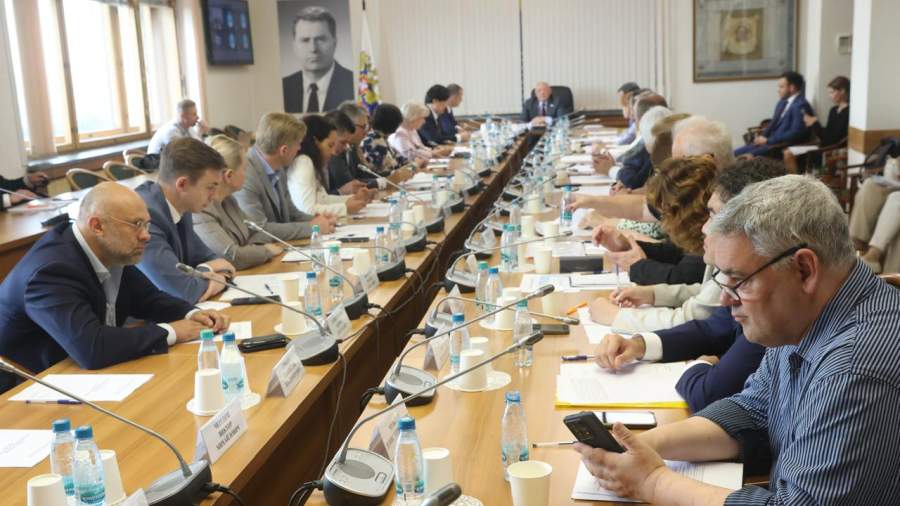
On July 15, the Duma Committee on Health Protection held a meeting of a working group dedicated to vaccination against meningococcal infection. Despite the fact that the incidence of this dangerous infection has doubled in the last year alone, and mortality and disability are the highest among vaccine-controlled infections, meningitis immunization is still not included in the National Vaccination Calendar, and is carried out only for epidemic indications. When meningococcal vaccination will become mandatory, and why it is easier to prevent the disease than to treat it — in the Izvestia article.
Right shift
The strategy for the development of the immunoprophylaxis of infectious diseases for the period up to 2035 and the plan for its implementation were approved by the Russian government in 2021. The roadmap, among other things, includes the addition of the National Meningococcal Vaccine Calendar in 2025. Despite the steady increase in morbidity and the extreme rate of development of life-threatening conditions and death from it, this has not yet happened, experts stressed. The main obstacle is the lack of full-cycle domestic vaccines on the market, which is a key condition for including the drug in the national vaccination program.
Ekaterina Priezdeva, Deputy Head of the Ministry of Industry and Trade, stressed that the agency has been working on the issue of developing and localizing drugs in the Russian Federation together with manufacturers for several years. Petrovax, Nanolek and FSUE SPbNIIVS of the FMBA of Russia are among the key developers of the domestic meningococcal vaccine. In the current conditions, it will be possible to start mass vaccination of the population as early as 2026. Since the vaccine production cycle is six months, in order to start vaccination in the second half of 2026, manufacturers will need to know about this decision at the end of this year and, accordingly, have the necessary funding.
— Today, we have received from the Ministry of Health a total annual requirement of either 2.2 million doses or 2.8 million doses, depending on the vaccination scheme. (...) Today, the technologies from Russian vaccine manufacturers are ready, and the organizational capacities are ready. Both Nanolex and Petrovax, each of them is ready to provide the necessary needs, which are designated by the Ministry of Health,— Priezdayeva said.
At the same time, the representative of the Ministry of Industry and Trade drew attention to the fact that manufacturers have independently invested money in the development of vaccines, and pharmaceutical representatives need to understand that their products will be in demand.
"According to the Ministry of Industry and Trade, the sooner the meningitis vaccine is included in the National Calendar, and this will be a guideline for manufacturers that the vaccine will be purchased, the better, the more confident our manufacturers will feel," she concluded.
For his part, Mikhail Tsyferov, President of Petrovax, said that the company expects to register its development in the spring of 2026, while it is exclusively about full-cycle local production, including the synthesis of the substance.
— We bought the technology in China two years ago. The quadrivalent conjugate vaccine is already being used in China today: several million children have been vaccinated, (...) a clinical trial is underway in Russia, and we hope to publish a report by the end of the year," he said, adding that the drug is currently being registered in other BRICS countries.
Tsyferov also assured that the company is ready to fully cover the existing needs, as well as offer significantly lower prices than the market average.
— We hope to receive a registration certificate in the spring of 2026 and meet 100% of the demand for a fully locally produced vaccine. Our annual production capacity ranges from 40 to 100 million doses," emphasized the President of Petrovax. - The sooner we get access to financing and to the market, the lower the price we will be able to offer the state, because we will start paying back investments earlier and returning the loan funds that we use today.
The invisible enemy
Meningitis is an inflammatory disease affecting the membranes of the brain and spinal cord. It is caused by various pathogens, including bacteria, viruses, and, less commonly, fungi. The most dangerous form is bacterial meningitis caused by meningococcal infection (Neisseria meningitidis): the disease develops rapidly, and mortality is extremely high.
Inflammation of the meninges and impaired blood circulation in the brain caused by meningococcal infection can lead to tissue edema, increased intracranial pressure, epilepsy, and impaired vital functions. Without timely and adequate treatment, meningitis can cause death within a few hours or days, but it is not always possible to diagnose the disease, even upon admission to the hospital. Thus, according to Yuri Lobzin, Honorary President of the Federal Scientific and Clinical Center for Infectious Diseases of the FMBA of Russia, chief freelance specialist in infectious diseases in children of the Ministry of Health of the Russian Federation and the FMBA of Russia, Academician of the Russian Academy of Sciences, patients often lack characteristic signs of meningitis, moreover, doctors often confuse symptoms with seasonal respiratory diseases and acute intestinal infections.
A Russian retrospective multicenter study of the incidence of meningococcal infection in children aged 1 month to 18 years for the period 2012-2021 showed that every fifth patient is hospitalized only on the second day of the disease or later. At the time of hospitalization, 86% of patients have a condition ranging from severe to terminal, while hospitalization is optimal 3-6 hours after the first symptoms appear.
Meningococcal infection often leads to disability — loss of hearing, vision, neurological and cognitive impairments. According to international studies, up to 20-30% of surviving patients face such consequences, which significantly reduces their quality of life and requires long-term rehabilitation.
According to the Meningitis Research Foundation, about 2.3 million cases of meningitis are reported worldwide each year, and the likely number of deaths from this disease in 2021 was 214 thousand. Almost half (43%) of all deaths occur in children under the age of five. This is because their immune system is not ready to resist infection.
Irina Koroleva, MD, Head of the Laboratory of Epidemiology of Meningococcal Infection and Purulent Meningitis at the Central Research Institute of Epidemiology of Rospotrebnadzor, emphasized during the round table that meningitis is the largest medical and social problem. The disease is unpredictable, and the mortality and disability rate among vaccine-controlled infections is the highest for those who have had it. Thus, the only way to combat meningococcus is vaccination.
Natalia Pshenichnaya, Deputy Director for Clinical and Analytical Work at the Central Research Institute of Epidemiology of Rospotrebnadzor, for her part, stressed that morbidity among the adult population is also growing in Russia today.
— We support a timely and systematic decision to introduce a quadrivalent vaccine into the National Vaccination Calendar in the near future. What we are seeing now is group outbreaks among the adult population, mostly migrants," she said, adding that, for example, in Moscow, where meningitis vaccination is included in the regional vaccination calendar, 15% of all cases are children, and the rest are adults, among whom more than 50-60% are children. migrant workers.
Vladimir Chulanov, the chief freelance specialist for infectious diseases at the Ministry of Health, provided similar statistics. According to him, the mortality rate among the adult population is about 16%, and among the adult population over 60, this figure exceeds 30%. At the same time, the dynamics in the incidence of meningitis in the first five months of 2025 is not encouraging: 1,266 cases of infection have been registered, of which 948 are in adults. In fact, this is already twice as much as in the same period in 2024.
At the same time, as of 2023, the socio-economic burden from generalized forms of meningococcal infection (GMI) amounted to 1.4 billion rubles. And as the incidence rate increases, this indicator will continue to grow.
A bet on prevention
Worldwide, vaccination is recognized as the most effective tool for meningitis prevention. Modern conjugated vaccines provide reliable protection against the main serogroups of meningococcus (A, C, W, Y), covering up to 83% of cases of invasive infection. Vaccines contribute to the formation of immunological memory, as well as prevent the transmission of infection in the population.
In 2021, the World Health Organization (WHO) adopted a new strategy to combat meningitis, the roadmap is calculated until 2030. And it is vaccination that is called one of the main measures to combat the disease.
The participants in the discussion agreed that meningococcal infection is a very dangerous disease, and it can only be effectively controlled through preventive vaccination, which means that it must be included in the National Vaccination Calendar as quickly as possible. In this regard, Alexander Rumyantsev, a member of the Duma Committee on Health Protection, noted that parliamentarians could develop legislative changes by the end of 2026 that would allow meningitis vaccination to be included in the National Calendar.
— For us, the next year is still a guideline, in order to introduce legislative initiatives, make decisions, so that manufacturers can prepare all this for vaccination. (...) Probably, we will not wait for 2027, but we must now consider the possibility of documenting and legislating this issue," he stressed.
Переведено сервисом «Яндекс Переводчик»
