You can't get a word out of a book: how Wartime publications preserved the memory of Nazi crimes
- Статьи
- Culture
- You can't get a word out of a book: how Wartime publications preserved the memory of Nazi crimes


From the first emotional pamphlets to the evidence of Nazi crimes — the exhibition "Memory in a Book. Without a statute of limitations" consistently introduces visitors to the tragic pages of the history of the Great Patriotic War. The exhibition, which opened on June 29 at the State Public Historical Library, presents literary and journalistic sources from 1941-1945. This is a joint project with the National Center of Historical Memory. Izvestia was among the first visitors.
Pages of history
In the materials of several stands, a story comes to life — a terrible and inhuman one, where the word became a weapon against brutality. Strong and unadorned. "We will sweep the fascist barbarians from the face of the earth!", "The Soviet people will not forgive them!", "We will destroy the Hitler gang of thugs," exclaim the pamphlets, which began to be published the very next day after the Nazi attack and where every syllable emphasizes the courage of the Soviet man in the face of the beast.
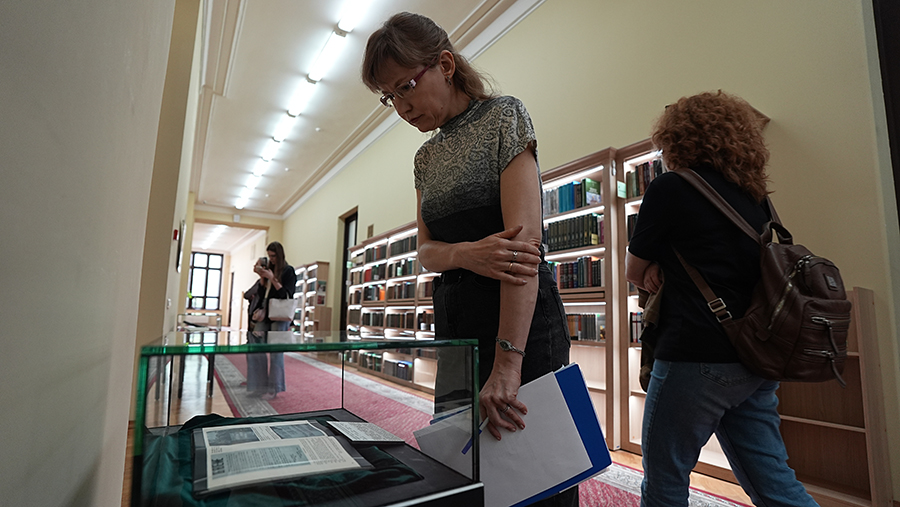
Over time, the emotional language of the first publications was replaced by documenting crimes. In the publications "The Monstrous atrocities of the German Fascists" and "The Eight Hanged in Volokolamsk", the very names conjure up terrible pictures of punitive operations against civilians. The headlines "In Fascist hell" and "German penal servitude" are no less eloquent, followed by the testimonies of people who were captured by the Nazis.
One of the heaviest stands is dedicated to the tragedy that has become one of the most terrible manifestations of inhumanity — the murders of children. The headlines "The atrocities of the fascist barbarians," "We will never forgive this," and many others convey the atmosphere of pain and shock with which contemporaries tried to comprehend these crimes. There is also documentary evidence of the targeted destruction of monuments of national culture and art. The books themselves are authentic witnesses of their era.
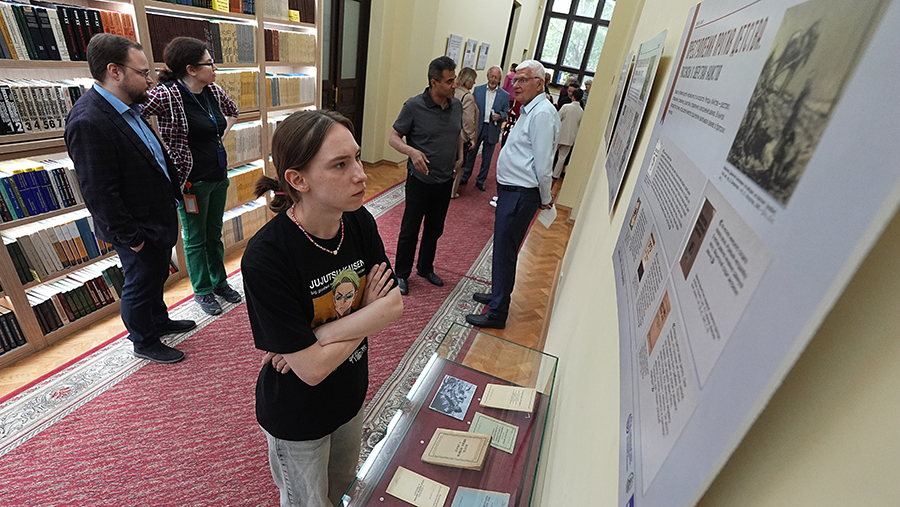
— At each stand, we tried to show special books on a specific topic. In total, the exhibition features just over 50 publications from those that we have selected. I think any book is primarily an emotion. And these books convey not only the feelings of their contemporaries, but also the time itself, because they were published when everything was happening. They survived the war themselves, as did the people who created them. There is no such thing on the Internet. These are contemporary books," Igor Bender, a leading specialist at the National Center for Historical Memory, said in an interview with Izvestia.

"The Nazis understood the criminality of their activities"
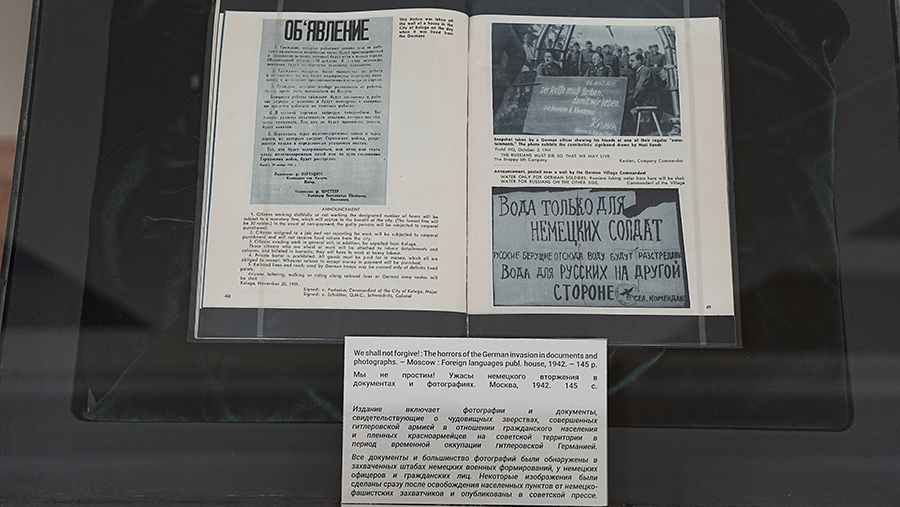
The publication "We will not forgive! The horrors of the German invasion in documents and photographs." It's in English.
"I am interested in this book, which is aimed at a foreign reader," Mikhail Afanasyev, director of the State Public Historical Library of Russia, tells Izvestia. — The Nazis were aware of the criminality of their actions. When it came to the mass extermination of people or their enslavement, they understood that such a thing should not be made public. And they did everything so that no one in the world would find out about it.
However, he added that each exhibit is a rarity. Printing primarily served as a means of rapid transmission of information, so cheap paper was used, not of the highest quality, which did not assume a long service life. Therefore, they treat these things with particular reverence.
The cause of the word, under its leadership, united many people from different parts of the country during the terrible war. The collection includes a work by Latvian Soviet writer Anna Sakse, "The Life and Death of Liedag." One of the main themes of the author's works was the life of her people during the Nazi occupation. The Story of the Strong Settlement by Vitaly Zakrutkin, who was a correspondent for an army and frontline newspaper during the war, is presented. On the pages of his work are the atrocities of the German invaders in the Bolshekrepinskaya settlement. Another example is "Friends, avenge us!" by Fyodor Panferov, editor of October magazine.
— The state, residents, journalists, writers, and artists were already telling the whole world, including abroad, about the atrocities that the occupiers committed on our land. Already in 1941, it was clear that what was happening was contrary to the norms of law and universal principles. It was also clear that those who came to our land had the most terrible intentions," said Maria Ponomareva, deputy head of the National Center for Historical Memory.
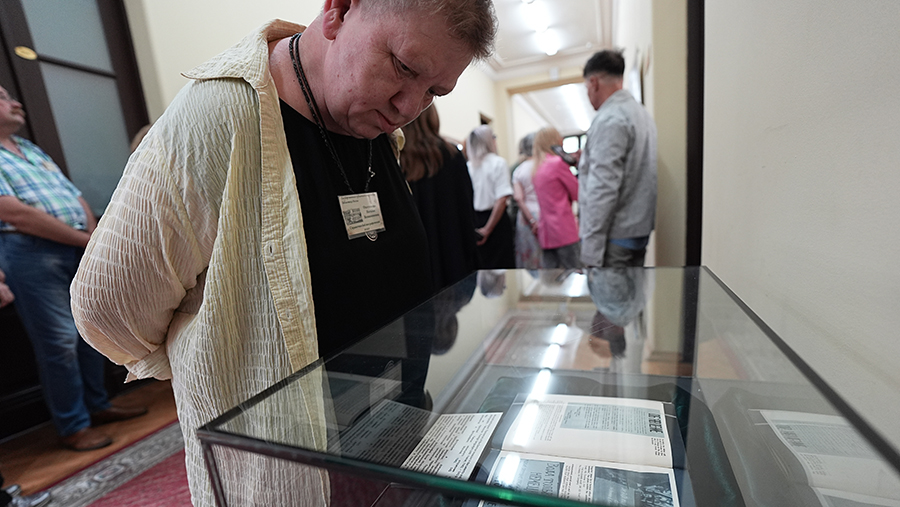
The exhibition "Memory in a book. No statute of limitations" will be open until July 25. The works can be viewed in person, and some of them have already been digitized and are available in an open electronic library. This is a story that is stored not only in archives, but also between the pages of books, and as long as they continue to turn over, this chapter remains open to new generations.
Переведено сервисом «Яндекс Переводчик»
