
Cable deal: virtual fiber will help the digitalization of the North

Scientists have created a digital twin of optical fiber — this technology opens up new opportunities for digitalization of the Far North, where communication infrastructure and sensors operate in conditions of extreme cold and sudden temperature fluctuations. An accurate model allows you to predict the behavior of fiber lines and navigation systems in advance, reducing the risk of failures and simplifying the deployment of networks in remote regions. This is especially important for the development of Arctic projects, from resource extraction to unmanned vehicles.
How the new technology works
Perm Polytechnic University scientists were the first in the world to create a digital twin of fiber-optic sensors. It predicts the behavior of optical fibers with up to 90% accuracy over a wide range of temperatures and at different rates of change.
— The essence of the development is to create a "digital twin" of the polymer coating. For several years, we have been conducting experimental work: samples of two key types of coatings — internal soft and external hard — were tested in the extreme range from -110 to +120 degrees. They were stretched at different frequencies, heated and cooled with liquid nitrogen, recording thousands of parameters — how the material deforms, accumulates and dissipates elastic energy," explained Alexander Trufanov, First Vice—Rector, Vice—Rector for Informatization, Professor of the Department of Computational Mathematics, Mechanics and Biomechanics, Doctor of Technical Sciences.
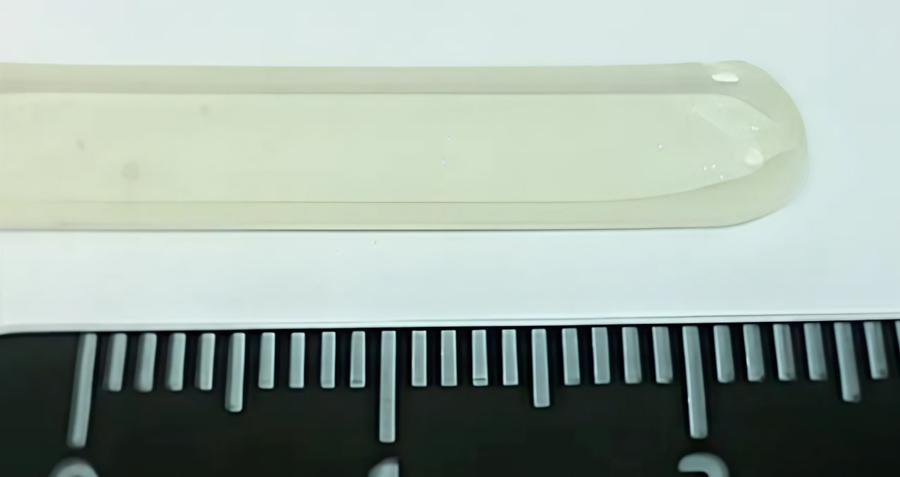
According to him, such technologies are especially important for the conditions of the Far North. At low temperatures, the protective shell polymers become brittle and change their properties, which reduces the accuracy of the sensors and can lead to their failure. Digital models make it possible to create effective navigation devices, sensor and monitoring systems for engineering and logistical tasks in harsh climates.
"The developed twins make it possible to create sensor systems for the Far North: navigation devices for unmanned vehicles that do not depend on GPS or GLONASS, monitoring systems for complex engineering structures, control systems for oil production facilities and wells," said Alexander Trufanov.

The team created a digital analogue of two protective coating polymers, a mathematical model of their behavior. To test the accuracy, the scientists conducted parallel experiments: field experiments on real samples, as well as virtual experiments in a software environment. In both cases, the temperature, frequency of mechanical impacts, and type of loads were changed from cyclic to permanent.
— Unlike existing approaches that evaluate the properties of materials only in the elastic region and in a narrow temperature range, our method takes into account extreme values, the rate of transition between them and the change in the mechanical state of the material under the influence of temperature. This radically increases the accuracy of the forecast," said Anna Kamenskikh, Associate Professor of the Department of Computational Mathematics, Mechanics and Biomechanics, Head of the Laboratory of Digital Engineering of Machine-building Processes and Productions, PhD.
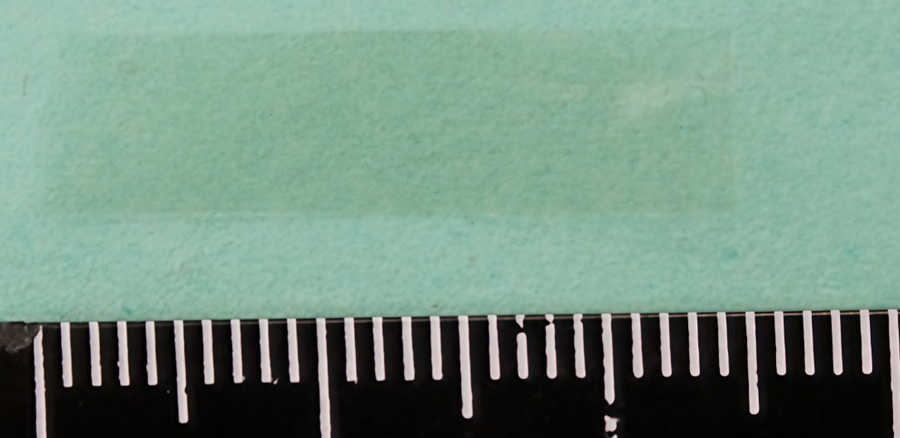
She added that fiber-optic microphones allow recording sound at any point of the fiber and are used, in particular, in the study of seismic processes. There are also temperature and pressure sensors that provide monitoring along the entire length of the fiber, including in oil production. At the same time, due to their high sensitivity, such systems significantly depend on temperature fluctuations and the rate of their change.
— The safety of technological processes directly depends on measuring devices. Navigation devices such as gyroscopes and accelerometers determine the course of vehicles, so it is extremely important that they operate stably and accurately over the entire operating temperature range," concluded Alexander Trufanov.
Applications of digital fiber
The development can become a significant factor in improving the efficiency of laying fiber-optic networks in the Far North. It allows you to plan routes more accurately, predict maintenance costs and build systems for monitoring the condition of the cable infrastructure, says Mikhail Khachaturian, Associate Professor of the Department of Strategic and Innovative Development at the Financial University under the Government of the Russian Federation, Candidate of Economics.

— The solution is able to reduce the design time of fiber—optic networks in the northern regions by 4-5%, and maintenance and repair costs by 5-7%. In a sense, this is a breakthrough: until now, digital twins have been used primarily for modeling industrial, chemical and physical processes," he said.
Engineers get the opportunity to "drive" virtual optical fiber through extreme temperature conditions even at the design stage and identify vulnerabilities in advance without the risk of damaging the real sample, said Daniil Arzhakov, chief Specialist of the Digital Development and Digital Project Implementation Service of the Federal Target Market and Social Protection Center. This reduces the cost of development and increases the reliability of systems designed for Arctic and space applications.
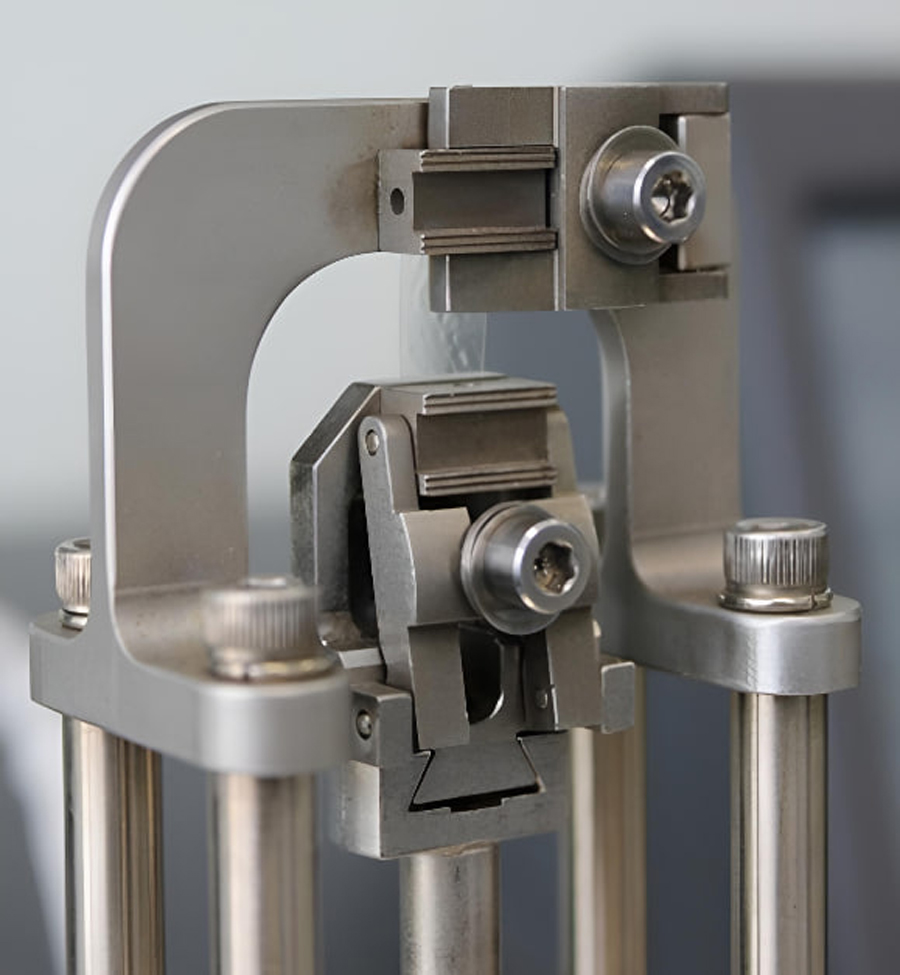
— Similar tasks have already been solved in Russia, but on a different level. For example, the T8 company, together with Rostelecom, developed digital counterparts of main communication lines for remote control and forecasting of accidents. Perm Polytechnic University has gone deeper — to the physics level of the sensor itself. As a result, a two—level trend is forming: some are creating a smart network, while others are creating a smart sensor element for extreme conditions," the expert explained.
In addition to optimizing design and operation, the technology demonstrates a high potential for synergy with artificial intelligence systems and unmanned complexes. It is possible to create a fully autonomous infrastructure serviced by robotic systems, whose behavior algorithms have been previously developed in a digital environment. This will minimize human presence in aggressive climatic and industrial conditions, says Svyatoslav Pegov, director of the Center for Sports Programming, Algorithmic Robotics, Cybersecurity and Esports at Ufa University of Science and Technology.
Переведено сервисом «Яндекс Переводчик»
