Common guardian: genetic networks will help to adapt potatoes to global warming
- Статьи
- Science and technology
- Common guardian: genetic networks will help to adapt potatoes to global warming


Russian scientists have deciphered the genetic mechanism that allows potatoes and tomatoes to protect themselves from heat and drought. Using big data analysis techniques, researchers have identified gene networks — complexes of genes, proteins, and regulatory elements — that are activated in response to stress. The mechanism turned out to be common to nightshade crops, which indicates the antiquity and universality of this survival program. The discovery gives breeders new tools to create varieties that are resistant to climate change. At the same time, experts say, high-quality and verified data is needed for correct analysis.
How genetic networks are activated to protect against stress
Scientists from the Siberian Federal University, the Institute of Cytology and Genetics of the Siberian Branch of the Russian Academy of Sciences and Novosibirsk State University have deciphered an ancient genetic strategy that allows potatoes and tomatoes to adapt to heat and drought. This achievement gives breeders new tools to accelerate the creation of varieties capable of adapting to global warming conditions.
According to current forecasts, the average global temperature may rise by 1-7 degrees by the end of the 21st century, experts explained. In many regions, this will lead to reduced precipitation and increased droughts. To adapt to climate change, plant varieties that are resistant to new conditions are needed, so the researchers set the task of determining which genes are activated under temperature stress and which remain inactive.
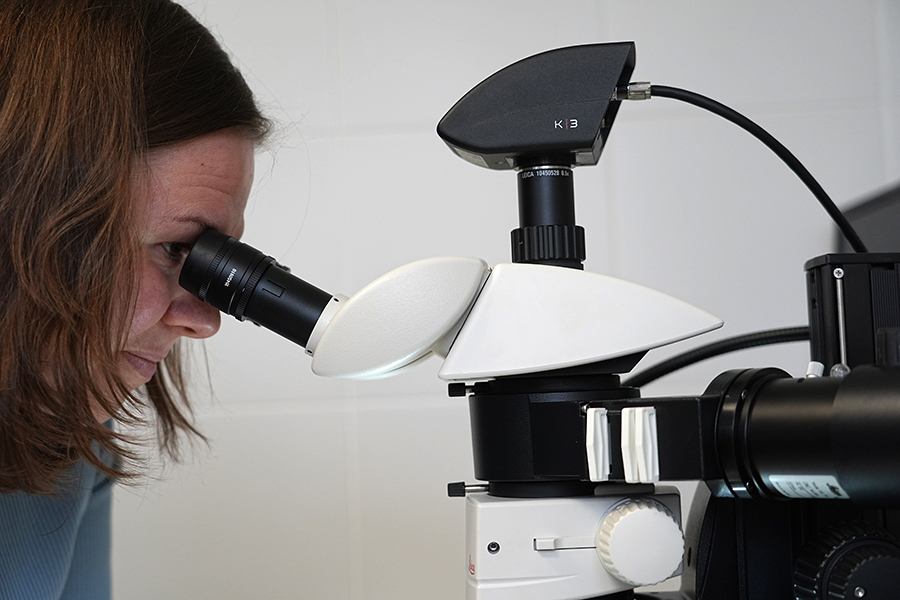
— The research is based on the modern RNA-seq method, which allows for in-depth analysis of all RNA molecules (ribonucleic acids) in a sample. These are intermediate structures between genes and proteins, and studying them makes it possible to determine which genetic "instructions" are being read and implemented and which are not. In total, 450 potato and tomato samples were analyzed as part of the work," said Evgeniya Bondar, one of the researchers, a researcher at the Laboratory of Forest Genomics, associate professor at the Department of Genomics and Bioinformatics at SibFU.

As a result, reproducible genetic networks have been obtained — complexes that include more than 5,000 genes, proteins and regulatory elements that change plant behavior in response to heat and drought, she added. It turned out that both plants use a similar survival strategy: they suppress growth and photosynthesis programs to save resources and at the same time activate protective mechanisms.
— The discovered mechanism represents a large-scale restructuring of the internal "program", — Evgeniya Bondar added. — First of all, the basic processes of photosynthesis and plant growth are slowed down. At the same time, increased production of chaperones, a special class of proteins that protect other proteins from destruction, is launched. They also activate systems to combat oxidative stress, a dangerous condition in which aggressive forms of oxygen accumulate in cells.
The work provided a systematic understanding of how nightshade crops, including potatoes and tomatoes, adapt to stressful conditions at the level of entire gene networks, rather than individual genes, she stressed. The commonality of stress response mechanisms indicates that they have been formed and preserved over millions of years of evolution.
How an ancient program helps plants survive
According to the researchers, this indicates the exceptional importance of the found "survival program" — it is so important that nature has kept it unchanged even after the separation of species. Understanding this opens the way to the creation of universal approaches in breeding.
—Stress resistance is the coordinated work of many genes, a whole regulatory network," added Evgenia Bondar. — Understanding how it works helps to reasonably select candidate genes that are responsible for certain traits in order to increase plant resistance. In the future, the proposed approach can be applied in practice, choosing the best plants based on DNA markers, as well as crossing cultivated varieties with wild ones to give them strength.
According to her, the work focused on the nightshade family, but the method is applicable to other plant species.
— Meta-analysis methods allow using digital tools to work with larger amounts of data, revealing patterns of stress response in different species. In addition, they make it possible to determine the "individual" responses of individual groups of genotypes to various factors," explained Ekaterina Krylova, senior researcher, head of the Functional Genetics group at the N.I. Vavilov VIR.
Such a comprehensive analysis, in particular, makes it possible to identify candidate genes whose products are involved in plant responses to stress factors. This creates the basis for generalizing the data and planning further experiments, the results of which are of key importance for targeted breeding.

At the same time, the expert added, certain difficulties may be associated with a lack of data for meta—analysis, for example, in cases where a particular stress factor has not been sufficiently studied. However, as the number of studies increases and new results accumulate, the potential of the proposed approach will expand.
— The introduction of advanced technologies is extremely important. For potatoes, we don't even provide half of the production needs with Russian seeds," said Viktor Khlystun, Academician of the Russian Academy of Sciences, Scientific Director of the State University for Land Management.

In his opinion, the slow spread of domestic varieties is partly due to the fact that foreign competitors accompany their offers with service packages — consulting, protective equipment, fertilizers, etc. Russian research centers do not have similar capabilities.
In addition, domestic breeders have enough base for breeding and replicating new varieties, the expert noted. The zoning process also takes a long time. Nevertheless, over the past three to four years, the share of domestic varieties in Russian farms in potato production has increased by about 15%, he added.

—Work on identifying genes responsible for resistance mechanisms is of fundamental importance both in the context of climate change and for solving the problem of creating varieties suitable for cultivation in regions where these crops have not been cultivated before," said Natalia Shagaida, Director of the Center for Agri—Food Policy at the Presidential Academy.
According to her, one of the significant problems is the reduction of the species diversity of tomatoes on the market: the number of varieties represented decreases from year to year. This is due to the fact that manufacturers focus on the most convenient solutions for them and specialize in them. Competition is necessary to preserve diversity. In particular, it is important to support domestic research teams and producers so that their varieties can successfully compete with foreign ones without resorting to import closures.
Переведено сервисом «Яндекс Переводчик»
