Galloping to Europe: Moldova will leave the CIS by spring 2027


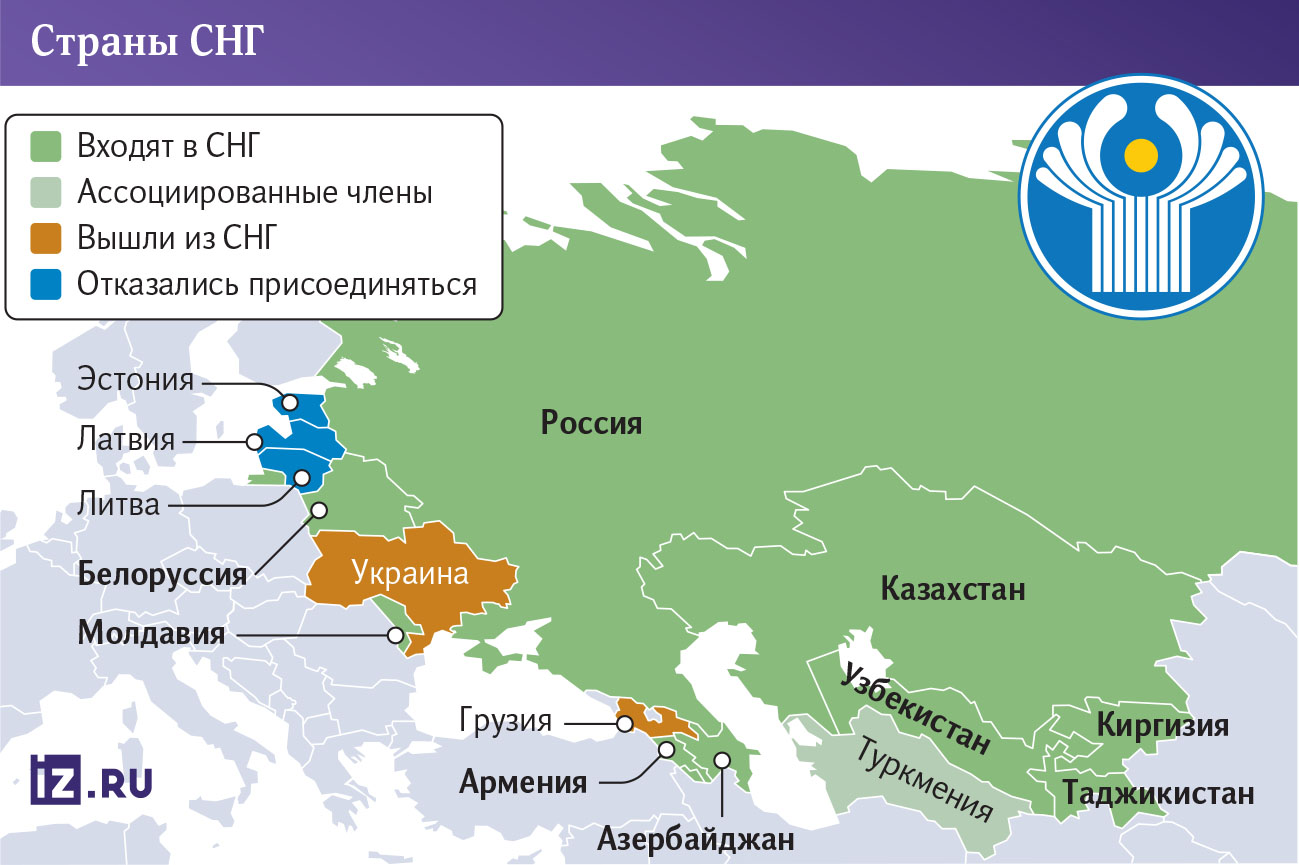
Moldova will leave the CIS no earlier than 2027. A vote on the denunciation of the main agreements is expected in late February or early March, the country's parliament told Izvestia. However, it will take another 12 months to fully complete the procedure for severing ties with the organization. Moldova began to curtail its participation in the work of the CIS in 2022, which corresponds to the government's course towards European integration. But the opposition claims that Moldova will suffer enormous losses from leaving the commonwealth, and the gains are not at all obvious.
Moldova's withdrawal from the CIS
Chisinau has made the final decision to withdraw from the CIS. However, the country will not be able to officially leave the organization until the spring of 2027. The parliament's vote on withdrawal from the organization may take place in late February or early March, Bogdan Tsyrdea, a deputy from the Patriotic Bloc, told Izvestia.
— The parliament begins to sit approximately from February 2. The deputies are returning from vacation, and there is no agenda yet, it must be formed by the Permanent Bureau of the Moldovan Parliament," said Tsyrdea.
The Parliament will denounce three fundamental documents: the CIS charter, the agreement on the establishment of the commonwealth and its annex. This will give Moldova the right to declare that, from a legal point of view, the republic is no longer part of the CIS. If the legislature approves the denunciation, it will be approved by President Maia Sandu. She needs to do this within 14 days. Then the Ministry of Foreign Affairs of the country will send an official notice of withdrawal — the procedure will be completed after a year. The Member State shall notify the Executive Committee in writing of its intention to withdraw 12 months before withdrawal.
The process of Moldova's withdrawal from the organization was the result of a long-term policy of distancing itself from post-Soviet structures, which was consolidated after Maia Sandu came to power in 2020, who never participated in the CIS summits. As stated by the Head of the Ministry of Foreign Affairs of the Republic Mikhail Popshoy, the denunciation of the basic agreements with the CIS is an important step in strengthening the European orientation of the state. Moldova has had the status of an EU candidate since 2022. The decision will strengthen the government's image as pro-European, which meets the expectations of Western countries. At the same time, Moldovan politicians do not provide detailed calculations of the economic benefits of leaving the CIS.

The decision of the republic's authorities did not come as a surprise to the Russian Federation, since Moldova's participation in the work of the CIS has been frozen for a long time, said Dmitry Peskov, a spokesman for the Russian president. "One can only express regret," he added. In January 2024, Chisinau announced plans to withdraw from participation in 119 of the 282 existing agreements. In 2025, Moldova stopped paying membership fees.
What will Moldova lose from leaving the CIS
The opposition regularly criticizes the current authorities' plans to leave the CIS. In particular, the Victory bloc called this another step towards the destruction of the country, while the Communist and Socialist Bloc noted that leaving the organization would hit local citizens.
— Moldova's participation in the CIS is also important for migrant workers (regimes of mutual recognition of documents, work experience), — said Natalia Kharitonova, Professor at the RANEPA under the President of the Russian Federation, Chief Researcher at the Russian State University of Economics.
Moldovans currently enjoy benefits when applying for employment in the Russian Federation. Citizens of the republic can legally work without having to pay for a patent. According to former President Igor Dodon, ignoring cooperation with the CIS and the EAEU has already led to losses of $4 million over four years. Denunciation of the agreements will lead to the severance of economic ties, which have always been important for Moldovan farmers and exports.
It is obvious that Moldova will be excluded from the customs agreements with the participation of the CIS countries, which means that no benefits will be provided to Chisinau, which will greatly affect the republic's exports. For example, Moldova has a zero VAT rate in trade with the organization's countries. Its exporters do not pay tax when selling goods to the CIS countries, which makes their products more competitive in foreign markets. The benefit is especially important for the agricultural sector, which is key to the Moldovan economy. In addition, withdrawal from the CIS automatically means the loss of logistics corridors, including in relations with China, as well as with other countries of Central and Southeast Asia.
"We are talking not only about the fact that there will be nowhere to sell agricultural products, but also about the growing small business organized by supplying cheap personal goods from China," Nicole Bodishteanu, an analyst at the Center for Comprehensive European and International Studies at the National Research University Higher School of Economics, added in an interview with Izvestia.
The decision to withdraw does not enjoy the full support of the population. The largest opinion polls were conducted in 2023. For example, according to the iData marketing agency, 52.6% of respondents out of more than 1,000 opposed the republic leaving the commonwealth. 34.9% supported the idea. In another survey conducted by CBS AXA, 33.5% of respondents were categorically opposed, 15.8% said they rather disagree, and 12.9% agreed. Meanwhile, Moldovan society is divided on the issue of the country's accession to the EU: in the referendum in 2024, 50.08% voted in favor, 49.92% opposed.

The domestic political perception of the issue of leaving the CIS remains heterogeneous, says Artyom Purchun, an employee of the Faculty of World Economy and World Politics at the Center for Comprehensive European and International Studies at the National Research University Higher School of Economics. According to him, a part of the electorate focused on European integration considers a possible exit as the logical conclusion of the post-Soviet stage. At the same time, representatives of the pro-Russian and politically neutral segments perceive it as a symbolic break with the previous political course.
However, withdrawal from the CIS does not automatically mean the closure of Moldova's channels of interaction with the members of the commonwealth, including Russia, said Perchun. The nature and intensity of contacts in the future will depend on the political priorities and decisions of the Moldovan leadership, as well as on the general dynamics of regional relations, the expert added. For example, Tbilisi continues to be a member of 34 agreements concluded within the framework of the CIS. The situation is the same with Ukraine. Kiev remains a party to 103 agreements within the framework of the Commonwealth.
Переведено сервисом «Яндекс Переводчик»
