It will be anomalous: Russian gamers have made AI voice acting for the game Hell is Us
- Статьи
- Culture
- It will be anomalous: Russian gamers have made AI voice acting for the game Hell is Us


The Hell is Us game received a text translation into Russian, but they did not do a separate voice acting for Russia at the Rogue Factor studio in Montreal. The enthusiasts eventually announced the project on their own. They improved the game with the help of neural network technologies — for this they attracted specialists in synthesized dubbing. About why Russians need such a voice—over and why Hell is Us is remarkable in general, see the Izvestia article.
What will the new game tell you about?
The game Hell is Us failed in the world, but found unexpected popularity in Russia. By genre, this is a dark, atmospheric adventure that breaks out of the standard action game templates. Developed by Rogue Factor studio and released by Nacon, the game sets an ambitious goal — not just to entertain the user, but to make him feel isolation, uncertainty and internal struggle, reflected both in the plot and in the mechanics.
The action takes place in the fictional country of Hadea, which is in a state of civil war and at the same time struck by a supernatural phenomenon — a mysterious anomaly that gave birth to unknown creatures. The main character Remy returns to his homeland in search of the truth about his own past and the fate of his parents. As events unfold, it becomes clear that the monsters inhabiting the world are not just enemies, but symbols of deeply personal and societal traumas.

From the very first minutes, Hell is Us makes it clear that the player will have to rely on himself. There is no familiar map, no markers on the screen, quest pointers or clear navigation lines. All landmarks are part of the environment: architecture, footprints, sounds, atmospheric changes. This solution makes the game more dense, thoughtful and honest. She does not push by the hand, does not rush, but, on the contrary, requires attentiveness, observation and patience. This may put off those who are used to a more "friendly" experience, but it will be a gift for fans of classic immersive adventures.
The combat system requires no less attention. The main weapons are cold weapons, from swords to spears, with clearly felt physics and different tactical roles. Fights are built on reaction, timing, and good work with endurance and distance. Sometimes the enemies seem impassable, especially in the first encounters, but as you master the mechanics and get new equipment, the situation gradually evens out. At the same time, the opponents are not the same type: visually and mechanically they differ, each battle carries a sense of threat and requires a restructuring of thinking. All this is complemented by an unusual work with sound and visual metaphor — the monsters here are not just biomass, but manifestations of fear, pain, guilt and memory, as if torn from the subconscious.
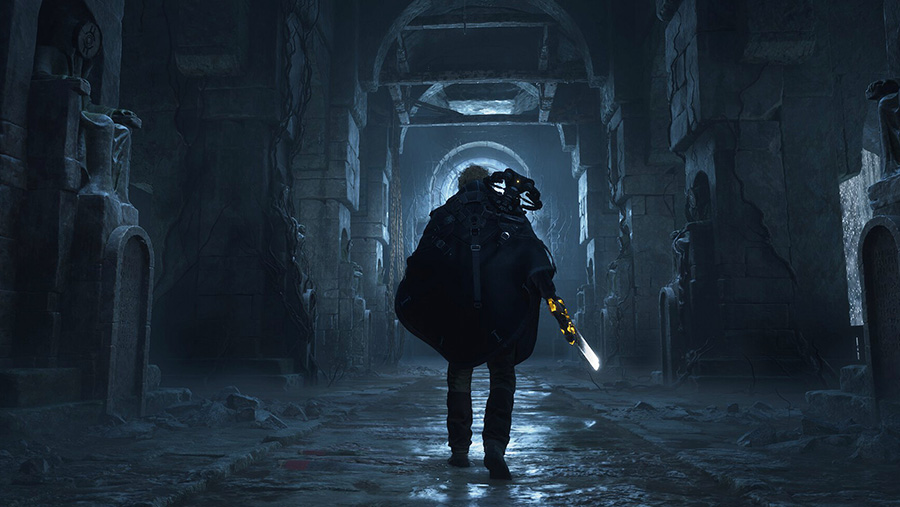
Graphically, Hell is Us relies on the power of the Unreal Engine 5. The locations are striking in their elaboration, and the lighting and shadows add additional drama to what is happening. The visual style tends towards realistic gloom with elements of surrealism, especially in areas infected by the anomaly. There's a game of contrasts here: The forced silence is replaced by a flurry of aggression, the emptiness turns into a thick, heavy density of visual noise. All this affects not only perception, but also the psychological state during the passage — Hell is Us does not just keep you in suspense, but sometimes deliberately exhausts you so that the emotional response becomes deeper. A copy of the game for review was provided by the Russian distributor of video games and consoles, Achivka.

What was the Russian voice acting like?
The game's plot is presented through dialogues, internal monologues, discoveries in the environment, and events taking place right in front of the player's eyes. The texts have been translated into Russian, which makes the project accessible to a wide domestic audience. However, there is no voice localization, and the SynthVoiceRu project unexpectedly but confidently entered this vacuum, releasing the full Russian neural sound of the game, created with the help of artificial intelligence. This is a fan-made work, but it deserves special attention in terms of scale and level of detail.
The creators of the voiceover warn in advance about its features: speech can be accelerated or slowed down, accents are not always correct, there may be a misynchronization between speech and the movement of the characters' lips, and in some cases, the original English track can be heard in the background. Despite this, many players note that the experience of playing with voice acting becomes more complete and expressive. In dialogues without sudden emotional outbursts — for example, in scenes of flashbacks or ordinary communication — neural voices sound quite confident and allow you to perceive the story more smoothly. However, in tense scenes where screaming, desperation, or rage are required, the AI can't handle it yet: the lines sound smooth, without the necessary strain, and this can knock you out of immersion.
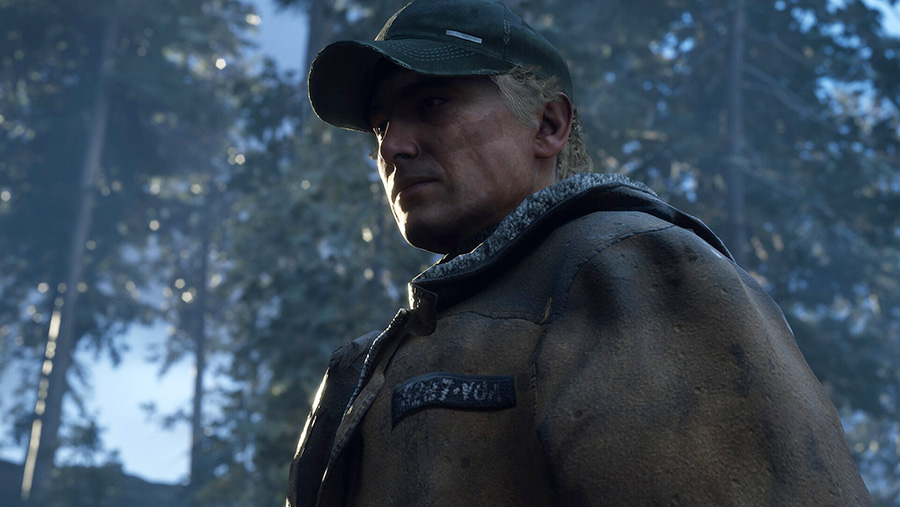
Reviews of the fan-dubbing vary. Some players are grateful for the opportunity to listen to dialogues in their native language without being distracted by subtitles, while others criticize the lack of emotion and technical flaws. One of the gamers wrote: "When a character says, 'I won't leave them in the dark,' his voice sounds clear, but without any tension at all—like he's reading an ad on the subway." Another noted: "In combat scenes, when the hero has to scream, the neural network doesn't seem to know how to convey it — and the voice remains calm, which destroys the dynamics of the moment." At the same time, in calm fragments, where content and intonation without emotion are important, AI shows itself at its best. Such voice acting is not a full—fledged substitute for professional dubbing, but for many it is a real way to feel the atmosphere of the game closer.

It is important to note that Hell is Us was released against the backdrop of one of the most anticipated releases of recent years — Hollow Knight: Silksong. Comparisons between them are inevitable. Silksong offers polished gameplay, proven visual aesthetics, and a recognizable metroidvania formula that many adore. Against this background, Hell is Us seems less "polished", less ambitious, but at the same time much more experimental. She's not afraid to be uncomfortable, heavy, or even intimidating. This is her main strength and main weakness. While Silksong appeals to a wide range of players, Hell is Us is aiming for a niche — those who are willing to endure and explore without expecting quick rewards. The creators really took a risk and released their project on the same day as Hollow Knight: Silksong, the main contender for the title of the best game of 2025. And even despite this risk, they were able to find their loyal audience, primarily among Russians.
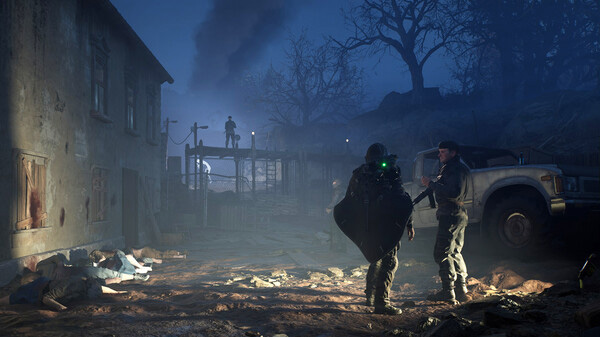
From a technical point of view, the game feels stable: it works well on modern systems, supports high graphics settings, and on a PC it shows itself confidently even in 4K — provided that the user has a powerful enough graphics card. According to the developers, work is underway to optimize for the Steam Deck, which can further expand the potential audience.
As a result, Hell is Us is not a game for everyone, it is really a niche game. The release abandons the usual comforts, challenges the player and at the same time offers an atmosphere that is lacking in more "convenient" projects. This is a story about pain, choice, and self-discovery in a world crushed by war and fear. And the presence of the text in Russian, complemented by the fan neuro-sound, makes the game a notable event on the Russian stage. Despite its rough edges, both the project itself and the initiative from SynthVoiceRu deserve attention.: at least for striving to overcome borders, and at most for trying to make games more convenient for users from the Russian Federation.
Переведено сервисом «Яндекс Переводчик»
