- Статьи
- Internet and technology
- Reality Tag: Invisible paint and AI will simplify anonymous surveillance of employees

Reality Tag: Invisible paint and AI will simplify anonymous surveillance of employees

The Moscow-based company has introduced a new generation system that allows anonymous tracking of people and objects without the use of biometrics. A special composition of invisible paint is applied to clothing, equipment or inventory. The cameras record the marks and transmit the data to the analytical module, where the AI creates a digital profile of the movements. Where the technology will find application and whether it violates the law is in the Izvestia article.
Employee tracking without collecting biometrics
BPA Technologies, a resident of the Lomonosov cluster and a member of the Moscow Innovation Cluster, has introduced a new generation system that allows anonymous tracking of people and objects without the use of biometrics. This was reported to Izvestia by the Department of Entrepreneurship and Innovative Development of the city of Moscow.
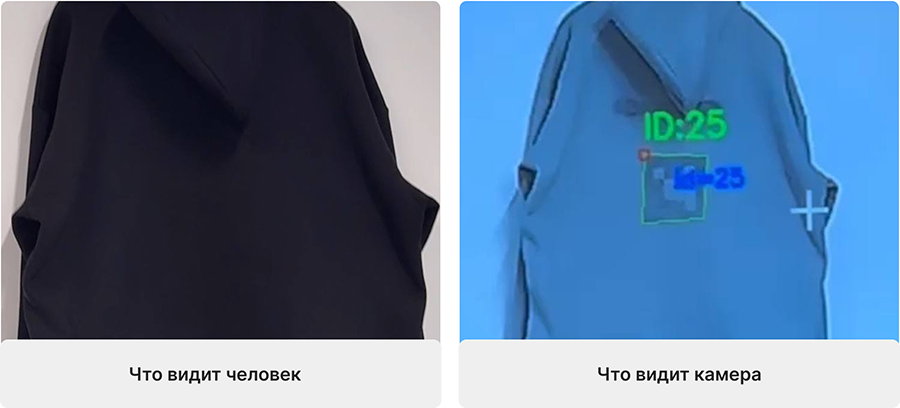
The technology is based on the principle of visual labeling: a special paint composition designed specifically for this system is applied to clothing, equipment or inventory. It is invisible to the eye, but clearly visible to specialized cameras. The composition is safe for humans and the environment, resistant to external influences and does not fade upon contact, the developers said. The cameras record such marks and transmit the data to the analytical module, where real-time machine vision algorithms build a digital profile of movements. Thanks to the use of this compound, the system maintains high accuracy in low light conditions, high object density, and motion dynamics.
― It allows you to solve a wide range of tasks: from analyzing customer behavior and optimizing service in retail to monitoring equipment and logistics processes in warehouses and in industry. In transport, the system helps to manage passenger flows and improve safety, while in offices it helps to use workspaces efficiently and automate cleaning. Its versatility and anonymity make it applicable where the use of biometrics is impossible or undesirable," Vadim Medyanik, technical director of BPA Technologies, told Izvestia.
How does monitoring work at enterprises?
Currently, biometrics monitoring in Russia is mainly implemented through face and voice recognition technologies. For this purpose, the Unified Biometric System (UBS) is used, created under Federal Law No. 572-FZ. It was developed for banking and government services: you can use it to verify your identity when receiving services.

The technology works like this: the camera captures the image, highlighting the vector of the face, and compares it with the stored information in the system, and if the identity is confirmed. However, the widespread use of such solutions is limited: for inclusion in the EBS, personal consent and verification procedures in authorized organizations are required, which slows down the activation process. In addition, biometrics is always associated with issues of personal data protection and a high burden on the infrastructure. Therefore, in most cases, such technologies are applied point—by-point - where identification is needed, the developers said.

According to them, some large-scale factories are already using methods of visual marking of work uniforms, for example, applying QR codes to uniforms. The new technology will be simpler and cheaper.
— Such solutions are implemented by the decision of the management and with the consent of the employees. Here, "anonymity" means that the system does not use biometrics and personal data. For her, each tag is just an individual number in the system, without reference to a full name or personal information. For employees, this means that their actions can be analyzed within the framework of production processes, but at the same time privacy remains protected," Vadim Medyanik said.

It is important that such labeling is mainly used not only for people. Tags are applied to equipment, construction equipment, inventory, containers, or storage units — everything that requires tracking and analyzing movements. This makes it easier to control production and construction sites, logistics and service areas.
Where the new technology will find application
Such a system will increase the accuracy and efficiency of non-biometric identification thanks to machine vision algorithms, Leonid Drobyshevich, NTI technology expert, told Izvestia. Such a development optimizes and automates individual processes in logistics, retail and will find application in industry, on large infrastructure and construction projects. It will also help to plan and control labor costs, he noted.
— The method developed by Russian engineers will allow for "smart" time tracking. Using AI technologies, the system will be able to analyze the time spent on completing tasks to generate forecasts of the sequence of stages of construction, installation or logistics projects, the specialist believes.

Federal Law No. 572-FZ establishes that the collection of biometric data is possible only with the voluntary written consent of a person and provides for the denial of other methods of obtaining services. The main provisions include a ban on the forced collection of biometrics, the need for consent, the right to refuse to use biometrics without prejudice, and the ability to manage your biometric data in your Gosuslug personal account, lawyer Gleb Stepanov told Izvestia.

― The tracking system provided does not fall under the list of requirements stipulated by the relevant law. Currently, the legislation does not regulate tracking systems with anonymized data and anonymous tags. If the tracking settings do not involve collecting biometrics and working with personal data, then there are no restrictions regarding the use of the technology. In other words, such systems are legal and therefore operate within the legal framework," the lawyer noted.
The company uses anonymous tags instead of biometric identifiers, which excludes the processing of personal data, as defined by the law, added Igor Bederov, head of the Information and Analytical research Department at T.Hunter.

— Tags are just an individual number without being linked to a full name or other personal information, which reduces the risk of privacy violations. Employers have the right to implement performance monitoring systems if this does not violate the rights of employees and is provided for in employment contracts or internal regulations," he said.
However, its disadvantages are also obvious, the expert added. This is, first of all, the linking of tracking to elements of workwear, which may be used by third parties or transferred between employees, as well as the ability to decrypt and fake anonymous tags. There is also a risk of data leakage from tracking databases, for example, from the one that stores the binding of a unique identifier to an employee's full name, as well as the risk of surveillance of employees outside office premises, that is, invasion of privacy, said Igor Bederov.
Переведено сервисом «Яндекс Переводчик»
